New York, the City of the Covenant
'Abdu'l-Bahá, The Promulgation of Universal Peace, (1912), Bahá'í Publishing Trust · Read original
When in Bahá'í history
New York City (today: New York, USA)
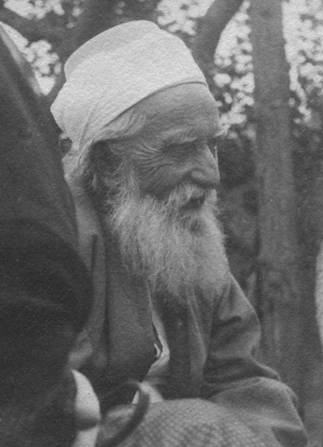
A retelling drawn from The Promulgation of Universal Peace (talks of 23 November and 2 December 1912), with the events of 19 June 1912 from Shoghi Effendi's God Passes By (ch. 19) and H. M. Balyuzi's 'Abdu'l-Bahá: The Centre of the Covenant, and details from Mahmúd's Diary.
'Abdu'l-Bahá arrived in New York on 11 April 1912 and left from there on 5 December. Between His journeys across the United States and Canada He kept returning to the city. On 2 December He told the friends: "I have stayed a long time with you in New York. My stay in other towns has not been a tenth as long."
On 19 June 1912, at a general gathering of the Bahá'ís of New York, the newly translated Tablet of the Branch was read. It had been revealed by Bahá'u'lláh in Adrianople and speaks of 'Abdu'l-Bahá in the loftiest terms. The Master then spoke of it and declared His own station as the Centre of the Covenant. Balyuzi writes that because He made this statement in public in New York, the city was given that distinction. Shoghi Effendi records that New York was "designated henceforth as the 'City of the Covenant.'"
Months later, on 23 November, the New York Bahá'ís held a banquet at the Great Northern Hotel to commemorate the Day of the Covenant and the Master's journey. More than three hundred guests came. After an address of welcome pledging the friends' firmness in the Covenant, 'Abdu'l-Bahá spoke of the oneness of humanity, then walked among the tables perfuming the guests with attar of rose.
On 2 December, three days before He sailed, He spoke at the home of Mr. and Mrs. Edward B. Kinney about the teachings of Bahá'u'lláh. He came last to the one He called the greatest: "As to the most great characteristic of the revelation of Bahá'u'lláh, a specific teaching not given by any of the Prophets of the past: It is the ordination and appointment of the Center of the Covenant. By this appointment and provision He has safeguarded and protected the religion of God against differences and schisms, making it impossible for anyone to create a new sect or faction of belief."
He warned them that some would try to turn them toward another than the appointed Centre by praise and insinuation. They were to ask any such person: "Where are your proofs and writings? Where is your authority from the pen of the Center of the Covenant?" And He gave them a standard by which to judge: "But when you find a person living up to the teachings of Bahá'u'lláh, following the precepts of the Hidden Words, know that he belongs to Bahá'u'lláh; and, verily, I proclaim that he is of me."
On 5 December 1912 He sailed from New York on the Celtic.
This is a retelling. For the fuller account, see The Promulgation of Universal Peace by 'Abdu'l-Bahá, God Passes By by Shoghi Effendi, and Mahmúd's Diary.
Cite this story
'Abdu'l-Bahá. (1912). *The Promulgation of Universal Peace*. Bahá'í Publishing Trust. https://www.bahai.org/library/authoritative-texts/abdul-baha/promulgation-universal-peace/
Record yourself reading this story
Recording stays on this device only. Nothing is uploaded.
Related stories
The Covenant as an Ark of Salvation
On her 1905 pilgrimage to 'Akká, Julia Grundy wrote down a talk of 'Abdu'l-Bahá on obedience, in which He likened the Covenant of God to a Lifeboat and an Ark of Salvation, and the believers to fishes in the sea.
How the Day of the Covenant Began
When the Bahá'ís begged for a day to celebrate as His, 'Abdu'l-Bahá would not let it be His birthday, which belonged to the Báb, and gave them 26 November instead. A tablet of His calls the believers to be firm.
How the Day of the Covenant Began
'Abdu'l-Bahá would not let His birthday be kept, for May 23 belonged to the Báb's Declaration. When the Bahá'ís begged for a day of His own, He gave them November 26. Star of the West records how they kept it.
The Household in the Days of Danger
After Bahá'u'lláh's passing, enemies within His own family slandered 'Abdu'l-Bahá to Ottoman officials. The Chosen Highway recalls the Commission of Inquiry, the family's anxious waiting, and the Master's release in 1908.