How the Day of the Covenant Began
Bahá'í periodical (1910-1924), Star of the West, (1919), Bahá'í News Service · Read original
When in Bahá'í history
'Akká (today: Acre, Israel)
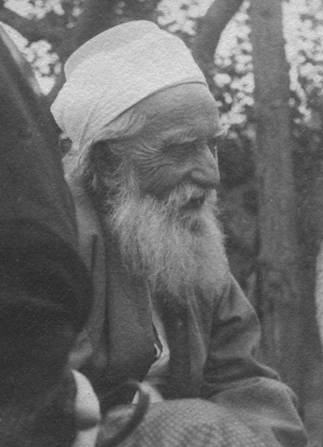
A retelling drawn from H. M. Balyuzi's 'Abdu'l-Bahá: The Centre of the Covenant (ch. 2, n. 9, and its accounts of 23 May 1912 and 1913) and from reports and Tablets printed in the Bahá'í periodical Star of the West (vol. 9, no. 15; vol. 10, nos. 3 and 4).
'Abdu'l-Bahá was born in Ṭihrán on 23 May 1844, the same night that the Báb declared His mission in Shíráz. The Bahá'ís wished to keep that date as the Master's birthday. He told them that it was not, under any circumstances, to be celebrated as His day of birth. It was the day of the Declaration of the Báb, and belonged to the Báb alone.
The Bahá'ís begged Him for a day that could be celebrated as His. He gave them November 26, to be observed as the day of the appointment of the Centre of the Covenant. In Persian it was called Jashn-i-A'ẓam, the Greatest Festival, because 'Abdu'l-Bahá was the Ghuṣn-i-A'ẓam, the Greatest Branch. In the West it became known as the Day of the Covenant.
He held to this on His travels. On 23 May 1912 He was in Boston, where the Bahá'ís had planned a double celebration at the home of Mrs. Alice Breed. He spoke to them about the Báb. When a cake with sixty-eight candles was brought in, He lit one candle so as not to disappoint them, and the others lit the rest. A year later in Paris, when Bahá'ís came to Him with flowers on His birthday, He told them the day was to be celebrated only as the anniversary of the Báb's Declaration.
Star of the West shows how the American Bahá'ís kept the day He had given them. On the evening of 26 November 1918, a few weeks after the armistice, the Chicago Bahá'ís held a feast for the Day of the Covenant in the Grill Hall of the Stevens Building on Wabash Avenue. About a hundred people came, of several nations and races, and many Black believers were among them. Dr. Zia Bagdadi spoke about the need for a Centre toward which all could turn. He also sang a Persian poem that Bahá'í students at Beirut College had written in praise of 'Abdu'l-Bahá, and after each verse the gathering took up the Arabic refrain: "Long live the Branch of Eternity, His Holiness Abdul-Baha!"
Other Bahá'ís wrote to the Master about their own celebrations. In a Tablet to Isabella D. Brittingham, printed in Star of the West in April 1919, He wrote: "Ye had celebrated the Feast of the Covenant. It was very proper." He mentioned a couple, Mr. and Mrs. Zim, who had gathered the friends in their home that day.
That spring the American Bahá'ís met in New York, at the Hotel McAlpin, from 26 to 30 April 1919, for their annual convention. It was there that the Tablets of the Divine Plan were presented and read to them. Before it met, 'Abdu'l-Bahá sent a cable: "Let this be the Convention of the Covenant." Star of the West reported the convention under that name.
This is a retelling. For the sources, see H. M. Balyuzi, 'Abdu'l-Bahá: The Centre of the Covenant of Bahá'u'lláh, and Star of the West, vol. 9, no. 15 (12 December 1918), vol. 10, no. 3 (28 April 1919) and vol. 10, no. 4.
Cite this story
(1910-1924), B. P.. (1919). *Star of the West*. Bahá'í News Service. https://bahai.works/Star_of_the_West
Record yourself reading this story
Recording stays on this device only. Nothing is uploaded.
Related stories
The Book of the Covenant
Bahá'u'lláh wrote His Will and Testament, the Kitáb-i-'Ahd, in His own hand and entrusted it to 'Abdu'l-Bahá during His last illness. Opened nine days after His ascension, it directed His family and followers to turn to the Most Mighty Branch.
The Tablet of the Branch
In Adrianople, years before His ascension, Bahá'u'lláh revealed the Súriy-i-Ghuṣn, the Tablet of the Branch, which praises the station of 'Abdu'l-Bahá and calls Him "the Limb of the Law of God" and "the Trust of God."
The Center of the Covenant
Bahá’u’lláh indicated in many ways that ‘Abdu’l-Bahá was to direct the Cause after His own ascension.
The Name 'Abdu'l-Bahá Chose
After Bahá'u'lláh's passing, His eldest Son set aside the exalted titles His Father had given Him and asked to be known only as 'Abdu'l-Bahá, the Servant of Bahá.