Aboard the Train to Portland
Mírzá Maḥmúd-i-Zarqání, Mahmúd's Diary: The Diary of Mírzá Maḥmúd-i-Zarqání, (1998), George Ronald
When in Bahá'í history
Portland (today: Portland, Oregon, USA)
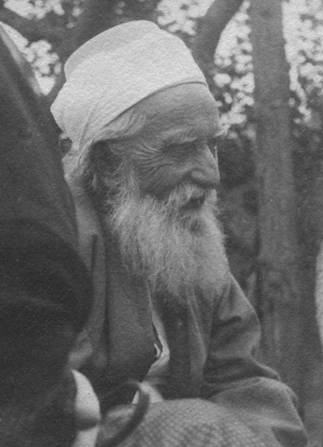
In the early days of October 1912, after several days at Salt Lake City and following a brief stop at Glenwood Springs in Colorado for the Master's rest, 'Abdu'l-Bahá and His party boarded the Oregon Short Line train westbound for Portland. The journey was long: across the Bonneville salt flats; up through the high country of southern Idaho; over the Snake River canyons; along the Columbia River through the Cascade mountains; down the broad valley to Portland itself. Three days, with several night stops in sleeper berths.
Mahmúd records the small life of the parlour car. The Master preferred, even on the longest train journeys, to spend the days seated upright in the parlour car among the other passengers rather than retiring to His private compartment. He took breakfast there. He spent the morning watching the landscape, speaking briefly with His attendants, occasionally exchanging pleasantries with the American passengers seated nearby. He took a midday meal in the dining car. He rested briefly after lunch. He resumed his afternoon position in the parlour car.
The conversations Mahmúd preserves from the train days are unhurried and broad. The Master spoke of the great mountain ranges they were crossing — the geological depth of the Wasatch and the Cascade chains, the ages over which they had been raised. He spoke of the small homestead farms visible from the windows — the great hopes the American settlers had brought with them; the difficulty of the climate; the slow work of building a permanent life in the high desert. He spoke of the railway itself — its newness, its physical audacity, its quiet completion of a task that the American settlers of fifty years before could not have imagined.
These iron rails will one day bind the human family into a single household.
The phrase, set down by Mahmúd somewhere on the third day's travel, gave the Master's view of the great American railway system not as a piece of engineering but as a piece of the emerging world order. The transcontinental rail lines, the Atlantic cable, the wireless telegraphy then being developed, the steamship lines across the oceans — all these, the Master observed, were the material substrate of the unified world that the spiritual teachings of Bahá'u'lláh were inviting humanity to inhabit. The infrastructure had been built. The spiritual infrastructure of unity had now to be built upon it.
The train pulled into the old Union Station at Portland on the evening of the 8th of October. The Portland friends were waiting on the platform. The Master stepped down. The westbound journey was complete.
Paraphrased from Mahmúd's Diary: The Diary of Mírzá Maḥmúd-i-Zarqání (George Ronald, 1998), entries for early October 1912 train journey to Portland; see original for full text.
Cite this story
Maḥmúd-i-Zarqání, M.. (1998). *Mahmúd's Diary: The Diary of Mírzá Maḥmúd-i-Zarqání*. George Ronald.
Record yourself reading this story
Recording stays on this device only. Nothing is uploaded.
Related stories
The Long Ride to Portland
On a train climbing over the great mountains, 'Abdu'l-Bahá looked out at the new railway and saw something wonderful — a world that could one day be joined together like one big family.
The Small Room in Baltimore
Only a handful of friends gathered in one little parlour, but 'Abdu'l-Bahá came to them anyway — and told them that keeping the Faith in a quiet place is one of the most important jobs of all.
Ten Days Across the Sea
On a great ship crossing the wide Atlantic Ocean, 'Abdu'l-Bahá sailed all the way to America to meet His friends — and to share the truth with a whole new land.
An Afternoon in the Middle of America
A few friends in the very middle of America asked if 'Abdu'l-Bahá's train could stop for just one afternoon — and to their joy, He said yes.