Baltimore: A Day of Rest on the Eastern Seaboard
Mírzá Maḥmúd-i-Zarqání, Mahmúd's Diary: The Diary of Mírzá Maḥmúd-i-Zarqání, (1998), George Ronald
When in Bahá'í history
Baltimore (today: Baltimore, Maryland, USA)
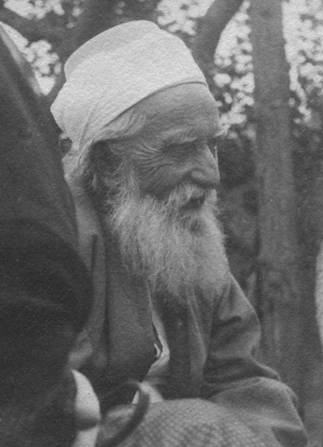
Mahmúd's Diary records that on the journey from Washington back to New York in early November 1912, the Master's party broke the journey overnight in Baltimore. The stop had been suggested by friends in Washington, who had said that the small Baltimore community — perhaps three families in total — would be heartbroken if the Master passed through Maryland without acknowledging them.
The Master accepted the suggestion. The party arrived in the early afternoon. Most of the day was given to rest. The Master was tired from the considerable Washington schedule of the preceding week. He took an extended midday rest in the rooms that had been engaged at a downtown hotel and was not available to visitors during the afternoon.
In the evening, He came down to the parlour for a small reception that had been arranged at the home of one of the Baltimore families. The transfer to the family's house took only a short carriage ride. The reception was small — perhaps fourteen people in total, including the three Baltimore Bahá'í families, two inquirers, and several friends who had come down from Philadelphia for the occasion.
Mahmúd records the talk that the Master gave that evening as brief and pastoral. He spoke without notes, seated on a chair the host had placed before the small gathered group. He addressed, in particular, the situation of the small isolated Bahá'í family in a city without an established community. The family that holds the Faith between visits — between the rare visits of travelling teachers, between the rare opportunities to meet another believer — bears, the Master said, a particular kind of spiritual responsibility. The private prayer of such a family, the patient correspondence with distant friends, the small acts of teaching by personal example, are the seeds from which, in the providence of God, larger communities will in time grow.
The reception lasted perhaps two hours. The Master then returned to His hotel and retired early. The party departed the following morning by the northbound train for New York.
The Baltimore visit was, in the public record, hardly an event. No notable sermon was preached. No celebrated conversion was made. Yet the three Baltimore families preserved, in their household memories, the November evening in the parlour of one of their homes as a foundational moment. Their small Local Spiritual Assembly, when it was eventually formed in the late 1920s, would be elected by descendants of the families who had hosted the Master that evening.
Paraphrased from Mahmúd's Diary: The Diary of Mírzá Maḥmúd-i-Zarqání (George Ronald, 1998), entry for the Baltimore stop, November 1912; see original for full text.
Cite this story
Maḥmúd-i-Zarqání, M.. (1998). *Mahmúd's Diary: The Diary of Mírzá Maḥmúd-i-Zarqání*. George Ronald.
Record yourself reading this story
Recording stays on this device only. Nothing is uploaded.
Related stories
The Small Room in Baltimore
Only a handful of friends gathered in one little parlour, but 'Abdu'l-Bahá came to them anyway — and told them that keeping the Faith in a quiet place is one of the most important jobs of all.
Across the Continent by Rail: A Long Quiet Crossing
Mahmúd's Diary records the long quiet stretches of the transcontinental train journey from Chicago to the Pacific in September-October 1912 — the Master at His prayers in the parlour car, the night plains rolling past, the small acts of hospitality to the train staff.
Ten Days Across the Sea
On a great ship crossing the wide Atlantic Ocean, 'Abdu'l-Bahá sailed all the way to America to meet His friends — and to share the truth with a whole new land.
An Afternoon in the Middle of America
A few friends in the very middle of America asked if 'Abdu'l-Bahá's train could stop for just one afternoon — and to their joy, He said yes.