Across the Continent by Rail: A Long Quiet Crossing
Mírzá Maḥmúd-i-Zarqání, Mahmúd's Diary: The Diary of Mírzá Maḥmúd-i-Zarqání, (1998), George Ronald
When in Bahá'í history
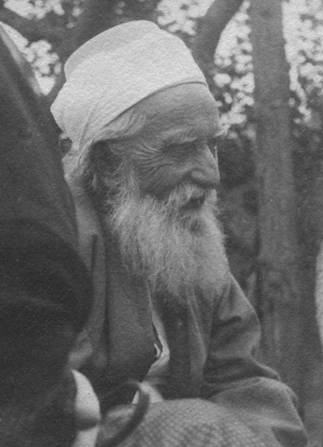
Mahmúd's Diary records, between the celebrated public events of the western tour, the long quiet stretches of train travel that joined them. The transcontinental crossings of September and October 1912 — Chicago to Minneapolis to the Pacific Northwest, then south down the coast to California, then back east through the southern route — together added up to many days of motion in which the principal occupant of the parlour car was the Master, alone with the moving country.
Mahmúd records the rhythm of those days. The Master rose early. He performed the dawn prayer in His private compartment as the country was still dark beyond the windows. He took a light breakfast — usually only tea and a piece of bread — at the small folding table the porter had set out. He then spent the first morning hour at His correspondence: dictating Tablets to Mahmúd in response to letters that had reached Him at the last station, signing the small Persian script that closed each Tablet with His own hand.
By the middle of the morning the country was visible in daylight. The Master would stand at the parlour-car window for long stretches, watching the changing terrain. Mahmúd notes particularly the prairie crossings — the Nebraska and Kansas distances of unbroken horizon — as moments when the Master seemed especially absorbed. He made few comments on the landscape itself. Mahmúd interprets the absorption as contemplative.
The midday meal was taken in the parlour car with the small travelling party — the Master, Mahmúd himself, the interpreter, the secretary, occasionally a visiting believer who had joined for a portion of the route. Conversation was easy. The Master often used the meal to ask after the particular communities the next stop would bring them to.
The afternoon was given to private rest, further correspondence, and the saying of the afternoon prayer. The Master frequently called for the train porter or the sleeping-car attendant — both, in 1912, generally African American men working under the difficult conditions of the Pullman service. He addressed each by name, asked about the family at home, and in several recorded instances pressed a small gift or a generous tip into the porter's hand at the end of the journey. Mahmúd notes that several porters along the western route, by the time of the return crossings, were already known to the Master by name and were greeting Him with familiarity at each successive train.
The evening prayer was said as the country darkened. Supper was light. The Master retired early. The train rolled on through the night.
These long quiet days were not, in the public record, events. They were the connective tissue between the events. Mahmúd preserves them because, in their ordinariness, they reveal the Master's habitual conduct of life when no audience was present.
Paraphrased from Mahmúd's Diary: The Diary of Mírzá Maḥmúd-i-Zarqání (George Ronald, 1998), entries for the long train stretches of September-October 1912; see original for full text.
Cite this story
Maḥmúd-i-Zarqání, M.. (1998). *Mahmúd's Diary: The Diary of Mírzá Maḥmúd-i-Zarqání*. George Ronald.
Record yourself reading this story
Recording stays on this device only. Nothing is uploaded.
Related stories
The Small Room in Baltimore
Only a handful of friends gathered in one little parlour, but 'Abdu'l-Bahá came to them anyway — and told them that keeping the Faith in a quiet place is one of the most important jobs of all.
The Long Ride Across the Country
On a train crossing all the way to the ocean, 'Abdu'l-Bahá kept His prayers, watched the wide land roll by, and learned the names of the men who worked aboard.
Baltimore: A Day of Rest on the Eastern Seaboard
Mahmúd's Diary records a brief stop in Baltimore in November 1912 — chiefly a day of rest in transit between Washington and New York, but with a small evening reception at the home of one of the city's three Bahá'í families.
Ten Days Across the Sea
On a great ship crossing the wide Atlantic Ocean, 'Abdu'l-Bahá sailed all the way to America to meet His friends — and to share the truth with a whole new land.