A Day in Pittsburgh
Mírzá Maḥmúd-i-Zarqání, Mahmúd's Diary: The Diary of Mírzá Maḥmúd-i-Zarqání, (1998), George Ronald
When in Bahá'í history
Pittsburgh (today: Pittsburgh, Pennsylvania, USA)
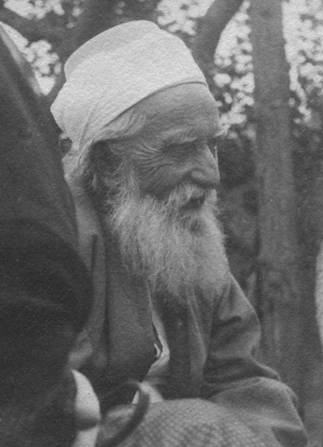
On the morning of May 7, 1912, 'Abdu'l-Bahá left Cleveland by train at eight o'clock and reached Pittsburgh around noon. Mahmúd records that the friends of Pittsburgh, told of His coming by telegram, were waiting at the station. They were overjoyed to see Him and followed Him to the Hotel Schenley, where He was to stay.
After an hour's rest He received many people whom the friends had invited to meet Him. Among them, Mahmúd notes, were leaders of the Jewish community, who invited Him to address their congregations. He could not accept, because of a prior commitment to the peace conference in New York.
In the evening there was a large meeting at the hotel. His talk, taken down by Suzanne Beatty and published in The Promulgation of Universal Peace, was a brief exposition of the teachings of Bahá'u'lláh "in order that you may be informed of the nature and significance of the Bahá'í movement." He spoke of how Bahá'u'lláh had united the bitterly divided peoples of Persia, and then named the principles one by one: the investigation of truth; the oneness of the world of humanity; the agreement of religion and science; the readjustment of the economic standards of humankind; the abandonment of religious, racial, patriotic and political prejudice; the equality of women and men; universal education; and the world's need for the breath of the Holy Spirit.
On the economic question He said that under present conditions the poor suffer the greatest need and distress, while others live in luxury far beyond their actual necessities. "The remedy must be legislative readjustment of conditions. The rich too must be merciful to the poor, contributing from willing hearts to their needs without being forced or compelled to do so."
He spoke too of what material progress had brought. Schools, colleges, hospitals and scientific academies had been founded, He observed, yet side by side with them the weapons of destruction had multiplied — dreadnoughts, torpedoes, shells and bombs. Only when material and divine civilization progress together, He said, will the happiness of humanity be assured. Mahmúd records the closing words of the address: "The East must acquire material civilization from the West and the West must learn divine civilization from the East."
Later that evening a group of philosophers, doctors and journalists met with Him, and He spoke with them about the causes and cure of disease. Why is it, He asked them, that animals, which know nothing of medicine, instinctively avoid what harms them when they are sick, while a sick man so often inclines to what is harmful? They had no answer, and said that the Master knew the answer better than they did.
Early the next morning He left Pittsburgh for Washington.
A retelling based on Mahmúd's Diary: The Diary of Mírzá Maḥmúd-i-Zarqání (George Ronald, 1998), entry for May 7, 1912, with the text of the talk in The Promulgation of Universal Peace. For the fuller account, see the originals.
Cite this story
Maḥmúd-i-Zarqání, M.. (1998). *Mahmúd's Diary: The Diary of Mírzá Maḥmúd-i-Zarqání*. George Ronald.
Record yourself reading this story
Recording stays on this device only. Nothing is uploaded.
Related stories
From Willing Hearts
In Pittsburgh in 1912, 'Abdu'l-Bahá taught that laws should help the poor and that the rich should give to them from willing hearts.
The Answer at Ford Hall
In Boston in 1912, a speaker warned a large audience that a false Christ had come to America. 'Abdu'l-Bahá, speaking next, told them of the truth of all the Prophets of God, and especially of Christ.
A Question at Temple Emanu-El
In a San Francisco synagogue, 'Abdu'l-Bahá spoke about Moses and then asked His Jewish listeners why they should not also praise Christ and Muḥammad.
Two Pathways
In a large church in Philadelphia, 'Abdu'l-Bahá spoke about two pathways, the way of nature and the way of religion, and said that religion must bring people together.