Denver: The Master and the Women's Auxiliary
Mírzá Maḥmúd-i-Zarqání, Mahmúd's Diary: The Diary of Mírzá Maḥmúd-i-Zarqání, (1998), George Ronald
When in Bahá'í history
Denver (today: Denver, Colorado, USA)
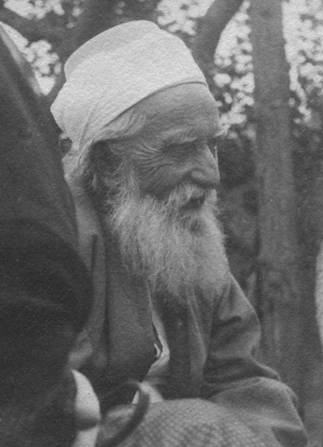
Mahmúd's Diary records, in the entries from the Denver leg of the western tour, a particular afternoon gathering arranged at the home of a local suffragist who had asked the Master to address the women of her circle on the question of equality.
The gathering was small — perhaps twenty women, with one or two husbands accompanying. The hostess was a prominent figure in the Colorado women's-suffrage movement, which would in the following decade succeed in winning the vote for the women of the state. The Master arrived, took the chair offered Him, and spoke briefly without preamble.
He addressed the spiritual basis for the equality of women and men. He said, in a phrase Mahmúd preserves verbatim, that the world of humanity has two wings — one is woman, the other man. Until both wings are equally developed, He explained, the bird of humanity cannot fly. The flight is not a metaphor. It is a description of the actual condition the human race must achieve before it can move into its destined maturity.
The talk continued by addressing, with the practical concreteness the Master often brought to American audiences, the specific questions the suffragists were asking. The vote — the Master named — was a necessary instrument. But the vote alone was insufficient. The deeper work was the education of the girls and women, in every quarter of society, to the same standard the boys and men were being educated. Without education, the vote is the franchise of the uninformed.
He went further. The education of women, He said, was in some respects more important than the education of men. The mother is the first teacher of the child. The civilisation of the next generation rests, in its earliest formative years, on the education of the women who will mother it. To educate the women is, in this sense, to educate the future of humanity.
The Denver suffragists received the address with attention. Several of them, Mahmúd notes, asked specific questions afterwards about the position of women in the Bahá'í administrative bodies — and the Master answered each with His usual care.
The afternoon ended with refreshments and continued conversation. The Master, before departing, addressed the hostess particularly, thanking her for the courage of opening her home to a teaching that would one day, He predicted, be the universal possession of the human race.
Paraphrased from Mahmúd's Diary: The Diary of Mírzá Maḥmúd-i-Zarqání (George Ronald, 1998), entry for the Denver afternoon, late September 1912; see original for full text.
Cite this story
Maḥmúd-i-Zarqání, M.. (1998). *Mahmúd's Diary: The Diary of Mírzá Maḥmúd-i-Zarqání*. George Ronald.
Record yourself reading this story
Recording stays on this device only. Nothing is uploaded.
Related stories
Two Wings of One Bird
In a living room full of women working to win the vote, 'Abdu'l-Bahá explained why the world needs women and men to be equal — like a bird that needs both of its wings to fly.
The City That Was Ready
When 'Abdu'l-Bahá came to Boston, He found a city whose people had been waiting and getting ready, in their own way, for a very long time.
The Talk That Moved Outside
A famous university built its biggest hall for 'Abdu'l-Bahá's talk — but so many people came that He decided to step outside and speak to everyone at once.
The City of Smoke and the Quiet Parlour
'Abdu'l-Bahá crossed the mountains by train to two new cities — one loud with steel mills, one quiet with friends in their homes — and showed both the same warm welcome.