The Master at Temple Emanu-El
Mírzá Maḥmúd-i-Zarqání, Mahmúd's Diary: The Diary of Mírzá Maḥmúd-i-Zarqání, (1998), George Ronald
When in Bahá'í history
San Francisco (today: San Francisco, California, USA)
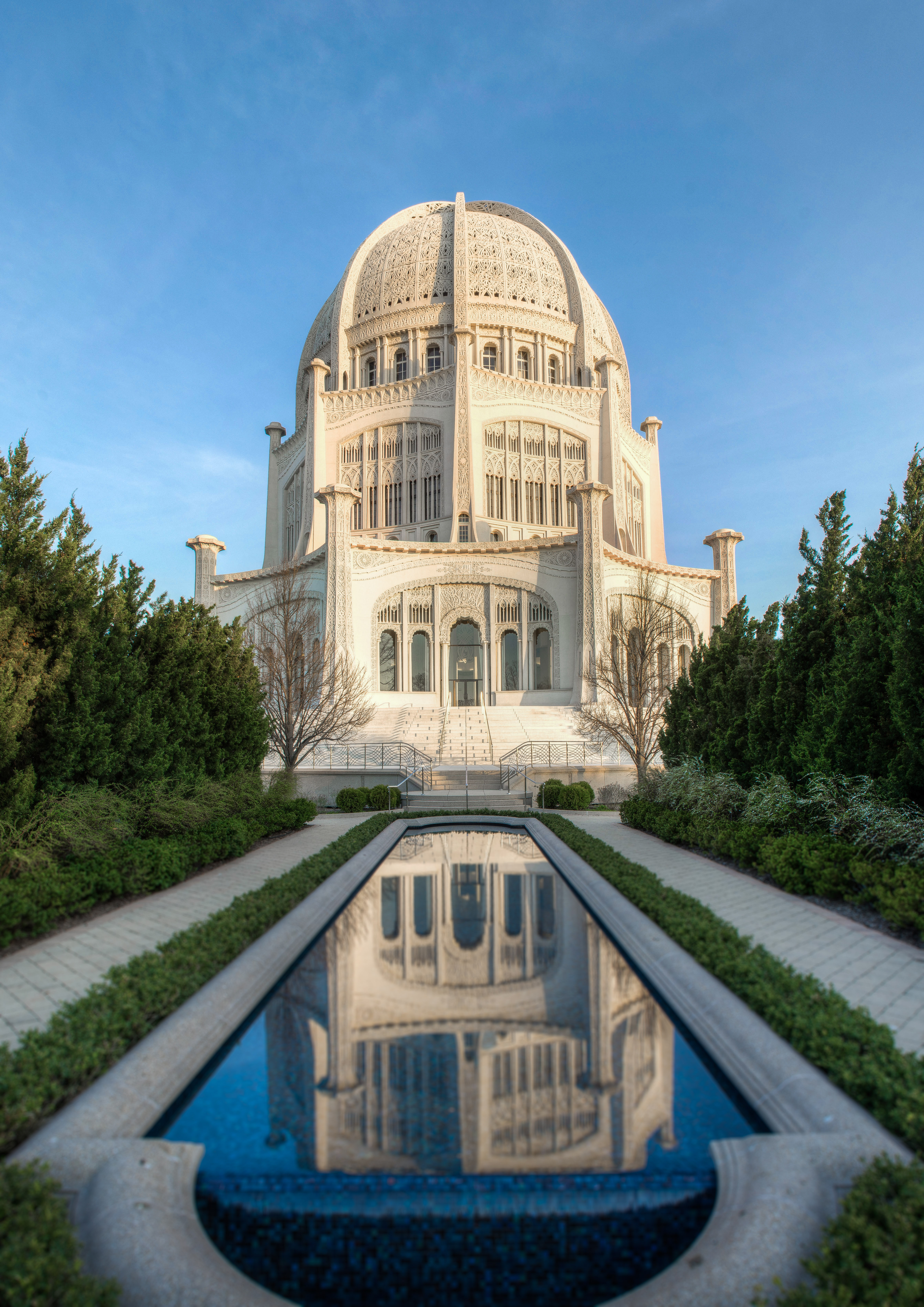
On the morning of Saturday, October 12, 1912, ‘Abdu’l-Bahá spoke at Temple Emanu-El in San Francisco. His audience, Mírzá Maḥmúd records, was some two thousand Jews. The chairman welcomed Him as "a great teacher of our age and generation," and announced that He would speak, in His native tongue through an interpreter, on "The Fundamental Unity of Religious Thought."
After speaking of Abraham, the Master turned to Moses. The children of Israel, He said, had been in bondage and degradation in Egypt when Moses appeared. Moses freed them, brought them to the Holy Land and educated them, until even the philosophers of Greece came there to study with them. The foundation Moses laid had raised His people; the blind imitations that crept in later had brought them low.
Hence, the foundation of the religion of God which was laid by Moses was the cause of eternal honor, the advancement and development of the nation and the life of the Hebrew people.
The essential, spiritual teachings of all the Prophets, He said, are one. Then He spoke of Christ, who had proclaimed the validity of Moses and made His name known in Persia, India and Europe, where it had not been heard before. He spoke of Muḥammad, who in His first address to His people called on them to believe in Moses and the Torah; the story of Moses, He said, is told seven times in Muḥammad's Book, and in every passage Moses is praised. Christians and Muslims had lost nothing by honouring Moses. Then He asked:
Why should not the children of Israel praise now Christ and Muḥammad?
What harm would there be, He went on, if the Jews said that Christ was the Spirit of God and Muḥammad the Messenger of God? He declared before them that Moses was the Prophet of God, and said that as a Bahá’í He lost nothing by saying it.
Near the end He spoke of the age itself:
This century is the century of science... Does it behoove us in this century to linger in our fanaticism and tarry in our prejudice?
Mírzá Maḥmúd writes that after the talk many came humbly to express their gratitude, and only a very few left in dismay.
A retelling based on Mahmúd's Diary: The Diary of Mírzá Maḥmúd-i-Zarqání (George Ronald, 1998), entry for October 12, 1912, which gives the full text of the address. For the fuller account, see the original.
Cite this story
Maḥmúd-i-Zarqání, M.. (1998). *Mahmúd's Diary: The Diary of Mírzá Maḥmúd-i-Zarqání*. George Ronald.
This story shares quotes with 1 other story
“Hence, the foundation of the religion of God which was laid by”
Also in
- A Question at Temple Emanu-El— Mírzá Maḥmúd-i-Zarqání, Mahmúd's Diary: The Diary of Mírzá Maḥmúd-i-Zarqání
“Moses was the cause of eternal honor, the advancement and”
Also in
- A Question at Temple Emanu-El— Mírzá Maḥmúd-i-Zarqání, Mahmúd's Diary: The Diary of Mírzá Maḥmúd-i-Zarqání
“development of the nation and the life of the Hebrew people.”
Also in
- A Question at Temple Emanu-El— Mírzá Maḥmúd-i-Zarqání, Mahmúd's Diary: The Diary of Mírzá Maḥmúd-i-Zarqání
“Why should not the children of Israel praise now Christ and”
Also in
- A Question at Temple Emanu-El— Mírzá Maḥmúd-i-Zarqání, Mahmúd's Diary: The Diary of Mírzá Maḥmúd-i-Zarqání
“This century is the century of science... Does it behoove us”
Also in
- A Question at Temple Emanu-El— Mírzá Maḥmúd-i-Zarqání, Mahmúd's Diary: The Diary of Mírzá Maḥmúd-i-Zarqání
Record yourself reading this story
Recording stays on this device only. Nothing is uploaded.
Related stories
A Question at Temple Emanu-El
In a San Francisco synagogue, 'Abdu'l-Bahá spoke about Moses and then asked His Jewish listeners why they should not also praise Christ and Muḥammad.
The Answer at Ford Hall
In Boston in 1912, a speaker warned a large audience that a false Christ had come to America. 'Abdu'l-Bahá, speaking next, told them of the truth of all the Prophets of God, and especially of Christ.
Two Pathways
In a large church in Philadelphia, 'Abdu'l-Bahá spoke about two pathways, the way of nature and the way of religion, and said that religion must bring people together.
From Willing Hearts
In Pittsburgh in 1912, 'Abdu'l-Bahá taught that laws should help the poor and that the rich should give to them from willing hearts.