The Black Rose
Howard Colby Ives, Portals to Freedom, (1937), George Ronald · Read original
When in Bahá'í history
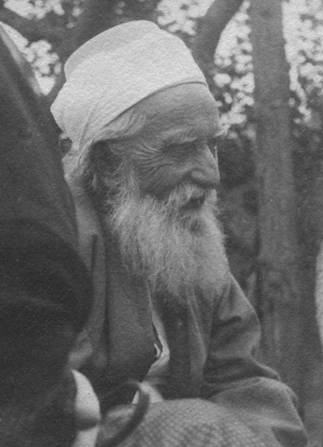
A retelling for children, based on Portals to Freedom by Howard Colby Ives (George Ronald, 1937). The phrase "a black rose" is 'Abdu'l-Bahá's own, as Ives wrote it down.
One Sunday afternoon in the spring of 1912, twenty or thirty boys from the East Side of New York came to the home of a lady named Mrs. Kinney. A few days before, she had met them in the street and invited them to her home to see 'Abdu'l-Bahá.
The boys were taken upstairs to His room. 'Abdu'l-Bahá stood at the door and greeted each boy as he came in, with a handshake or an arm around a shoulder, and always with smiles and laughter.
Among the last to come in was a boy of about thirteen. He was the only Black boy in the group, and he was afraid he might not be welcome. When 'Abdu'l-Bahá saw him, His face lit up. He raised His hand in welcome and said, in a loud voice so that everyone could hear, that here was a black rose.
The room went quiet. The boy's face shone with happiness, and the other boys looked at him with new eyes. Howard Colby Ives, who was there, wrote that the boy had surely been called many things before, but never a black rose.
Later a big box of chocolates arrived. 'Abdu'l-Bahá carried it around the circle Himself and gave a handful to every boy. Then He picked out one long chocolate that was very dark. He looked at it, and then at the boys, who were watching Him. Without a word, He walked across the room to the boy, held the chocolate against his cheek, and put His arm around his shoulders.
Ives understood what He meant. The boys ate dark chocolates and found them good. Perhaps, if they got to know this boy, they would find him good and sweet as well.
The other boys looked at him as if they had never really seen him before. He himself had eyes only for 'Abdu'l-Bahá.
This is a retelling for children. For the fuller account, see "A Black Rose" and Portals to Freedom by Howard Colby Ives.
Cite this story
Ives, H. C.. (1937). *Portals to Freedom*. George Ronald. https://bahai-library.com/ives_portals_freedom
Record yourself reading this story
Recording stays on this device only. Nothing is uploaded.
Related stories
A Black Rose
A group of boys from New York's East Side came to meet 'Abdu'l-Bahá. The only Black boy among them feared he might not be welcome, and the Master greeted him before them all as "a black rose."
A Black Rose
A crowd of boys came to meet 'Abdu'l-Bahá in New York. The only Black boy among them was afraid he would not be welcome, but 'Abdu'l-Bahá greeted him, loud enough for all to hear, as a black rose.
The Bowery Boys and the Black Rose
Howard Colby Ives recalls a Sunday in New York in April 1912 when some twenty or thirty boys from the East Side came to see 'Abdu'l-Bahá, and He welcomed the only Black boy among them, before them all, as a black rose.
The Black Rose
Boys who had shouted and thrown sticks at 'Abdu'l-Bahá's party in New York came to meet Him. He welcomed each one, called the only black boy a black rose, and gave them all chocolates.