A Coin in Every Hand
Mírzá Maḥmúd-i-Zarqání, Mahmúd's Diary: The Diary of Mírzá Maḥmúd-i-Zarqání, (1998), George Ronald
When in Bahá'í history
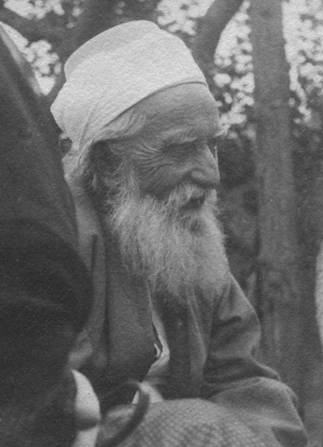
A retelling for children, based on Mahmúd's Diary and the talk in The Promulgation of Universal Peace (April 1912).
In the city of New York there is a street called the Bowery. On it stood a hall called the Bowery Mission.
One evening in April 1912, 'Abdu'l-Bahá went to the Bowery Mission for a meeting held to help the poor. About four hundred men had gathered there to hear Him.
"Tonight I am very happy," He began, "for I have come here to meet my friends. I consider you my relatives, my companions; and I am your comrade."
Then He reminded them of Jesus. Jesus, He said, was poor. He had no home and no place to lay His head. And it was the poor who first believed in Him. He told them that Bahá'u'lláh, too, had once left all His riches behind and lived among the poor for two years, and had called Himself "the Poor One." The poor, 'Abdu'l-Bahá said, are very dear to God.
At the end of His talk He said: "I ask you to accept 'Abdu'l-Bahá as your servant."
Then He said that He wished to serve them. The man in charge of the meeting announced that 'Abdu'l-Bahá would stand by the door. One by one, the men came past Him. He shook each man's hand and placed a silver coin in his palm.
Some people said there would not be enough money for so many men. But there was enough for everyone, and some was even left over. It was given to other poor people, and to children, outside on the street.
Mahmúd, who traveled with 'Abdu'l-Bahá and kept a diary, wrote that His words that night went so deep that even the people there who were not poor felt envious when they heard how He described the poor.
This is a retelling for children. For the fuller account, see "'Abdu'l-Bahá at the Bowery Mission".
Cite this story
Maḥmúd-i-Zarqání, M.. (1998). *Mahmúd's Diary: The Diary of Mírzá Maḥmúd-i-Zarqání*. George Ronald.
Record yourself reading this story
Recording stays on this device only. Nothing is uploaded.
Related stories
'Abdu'l-Bahá at the Bowery Mission
In April 1912 'Abdu'l-Bahá spoke at the Bowery Mission in New York to about four hundred poor men, telling them that Jesus Himself had been poor and that the poor are very dear to God. Then He stood at the door and gave each man a coin.
The Chronicler of the Master’s Journey
Mírzá Maḥmúd-i-Zarqání completed the first volume of his chronicle of ‘Abdu’l-Bahá’s 1912 journey in America at the end of 1913; at his sudden death the Guardian cabled that his outstanding services would shine evermore.
Nettie's Stone
Nettie Tobin wanted to give something for the new temple, so she brought a rejected stone from Chicago in an old baby carriage. 'Abdu'l-Bahá chose it as the cornerstone.
Nettie Tobin's Stone
On 1 May 1912 'Abdu'l-Bahá dedicated the site of the first Bahá'í House of Worship in the West. For the cornerstone He chose a rejected building stone that Nettie Tobin had brought from Chicago by baby carriage and streetcar.