'Abdu'l-Bahá at the Bowery Mission
Mírzá Maḥmúd-i-Zarqání, Mahmúd's Diary: The Diary of Mírzá Maḥmúd-i-Zarqání, (1998), George Ronald
When in Bahá'í history
New York (today: New York, NY, USA)
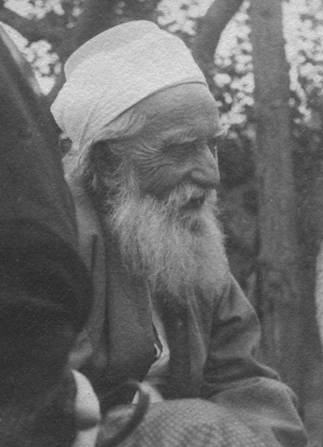
In April 1912, near the end of His first stay in New York, 'Abdu'l-Bahá went to the Bowery Mission, a hall at 227 Bowery. Mahmúd records the visit as one of two public meetings held that day; the other was at the home of Mrs Marshall Emery. (Mahmúd's diary places the meeting on April 18; the published transcript of the talk gives April 19.) The meeting, he writes, was held "to help and assist the poor and destitute." About four hundred men were present.
'Abdu'l-Bahá's talk, taken down in stenographic notes and published in The Promulgation of Universal Peace, began: "Tonight I am very happy, for I have come here to meet my friends. I consider you my relatives, my companions; and I am your comrade."
He told them that they should be thankful to God that they were poor, for Jesus had said, "Blessed are the poor," and had never said, "Blessed are the rich." Jesus Himself was poor, He reminded them; He had no place to lay His head, and it was the poor who first accepted Him. Bahá'u'lláh, too, while still possessed of great wealth in Baghdád, had left everything and lived for two years among the poor. He had chosen for one of His names the title of The Poor One, and in His Writings He often refers to Himself as Darvísh, which in Persian means poor. The poor, 'Abdu'l-Bahá said, are very dear to God, and nearer to His threshold than the rich, because their reliance is upon Him. "So, my comrades," He said, "you are following in the footsteps of Jesus Christ." He closed: "I ask you to accept 'Abdu'l-Bahá as your servant."
Mahmúd writes that His words were so penetrating that even those present who were not poor envied His description of the station of poverty. When He had finished, 'Abdu'l-Bahá said that He wished to serve the poor. The chairman announced that He would stand near the door, so that the men could come to Him from one side and leave by the other. The transcript records that He stood at the Bowery entrance to the Mission hall, "shaking hands with four or five hundred men and placing within each palm a piece of silver."
Because there were so many men, some said that the Master's money would not be enough for all of them. Instead, Mahmúd records, some was left over, and it was given to other destitute people and to children outside the Bowery. The meeting was reported in many newspapers.
A retelling based on Mahmúd's Diary: The Diary of Mírzá Maḥmúd-i-Zarqání (George Ronald, 1998), with the text of the talk in The Promulgation of Universal Peace. For the fuller account, see the originals.
Cite this story
Maḥmúd-i-Zarqání, M.. (1998). *Mahmúd's Diary: The Diary of Mírzá Maḥmúd-i-Zarqání*. George Ronald.
Record yourself reading this story
Recording stays on this device only. Nothing is uploaded.
Related stories
A Coin in Every Hand
'Abdu'l-Bahá visited about four hundred poor men at the Bowery Mission, called them His friends and companions, and placed a coin in every hand.
The Chronicler of the Master’s Journey
Mírzá Maḥmúd-i-Zarqání completed the first volume of his chronicle of ‘Abdu’l-Bahá’s 1912 journey in America at the end of 1913; at his sudden death the Guardian cabled that his outstanding services would shine evermore.
The Answer at Ford Hall
In Boston in 1912, a speaker warned a large audience that a false Christ had come to America. 'Abdu'l-Bahá, speaking next, told them of the truth of all the Prophets of God, and especially of Christ.
Summer Days in the Hills
When 'Abdu'l-Bahá went to stay in the green hills of New Hampshire, His hostess hoped He could rest. But He said He had come to work and to serve, and He welcomed the many people who came to see Him.