'Abdu'l-Bahá at Hull House
'Abdu'l-Bahá, The Promulgation of Universal Peace, (1922), Bahá'í Publishing Trust · Read original
When in Bahá'í history
Chicago (today: Chicago, Illinois, USA)
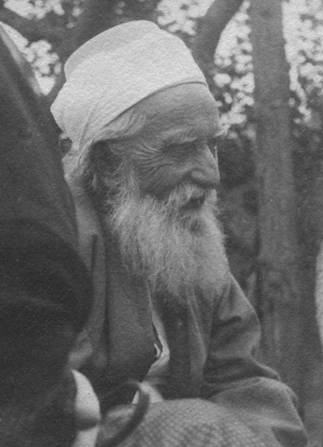
On April 30, 1912, the day after He reached Chicago, ‘Abdu’l-Bahá spoke at Hull House, the settlement house on Halsted Street that Jane Addams and Ellen Gates Starr had founded in 1889 among the immigrant neighbourhoods of the city’s West Side. The meeting was held in Bowen Hall. Miss Addams herself presided and introduced Him, and Dr. Zia Bagdadi, a Chicago physician who had known Him in the Holy Land, interpreted. Ruth Moffett’s later account of the visit records that the hall, which seated 750, was far too small for the crowd that came. Mírzá Maḥmúd noted that both Black and white people attended.
The Master began with a distinction that runs through all of creation: every living thing has points of contact it shares with others, and points of distinction that set it apart. If the points of contact overcome the points of distinction, unity is assured; if the reverse, disunion and weakness result. He then applied this to the fellowship and equality of the white and colored races. In body, in intelligence, in citizenship, language, civilization and religion, He said, they are one and the same; the single point of distinction is color.
Shall this, the least of all distinctions, be allowed to separate you as races and individuals?
A superior power was needed to overcome such prejudice, He said, and that irresistible power is the love of God. He then recalled that Bahá’u’lláh had declared difference of race and color to be like the variegated beauty of flowers in a garden. If all the flowers were of one color, the effect would be monotonous and wearying to the eye.
Let all associate, therefore, in this great human garden even as flowers grow and blend together side by side without discord or disagreement between them.
The same account records that at the close of the meeting He went out into the crowded street, mingled with the children and the poor of the neighbourhood, and gave to them freely from a bag of coins.
A retelling based on The Promulgation of Universal Peace (talk of 30 April 1912 at Hull House, Chicago; notes by Joseph H. Hannen), Mahmúd’s Diary, and Ruth Moffett’s account “‘Abdu’l-Bahá’s Historic Meeting with Jane Addams” (Star of the West, vol. 25, March 1935; bahai-library.com/moffett_abdul-baha_jane_addams). For the fuller account, see the original.
Cite this story
'Abdu'l-Bahá. (1922). *The Promulgation of Universal Peace*. Bahá'í Publishing Trust. https://www.bahai.org/library/authoritative-texts/abdul-baha/promulgation-universal-peace/
Record yourself reading this story
Recording stays on this device only. Nothing is uploaded.
Related stories
A Coin in Every Hand
'Abdu'l-Bahá visited about four hundred poor men at the Bowery Mission, called them His friends and companions, and placed a coin in every hand.
'Abdu'l-Bahá at the Bowery Mission
In April 1912 'Abdu'l-Bahá spoke at the Bowery Mission in New York to about four hundred poor men, telling them that Jesus Himself had been poor and that the poor are very dear to God. Then He stood at the door and gave each man a coin.
The Master Arrives in Denver
After a sleepless night on the train, ‘Abdu’l-Bahá reached Denver on 23 September 1912. Within hours He was meeting reporters, and that evening He spoke to a crowded gathering at the home of Mrs. Roberts.
Refuge at Abú-Sinán
When war came in 1914, ‘Abdu’l-Bahá moved the Bahá’ís of Haifa to the Druze village of Abú-Sinán, where vegetables He had taught them to grow and corn from ‘Adasíyyih kept many from hunger.