From Willing Hearts
Mírzá Maḥmúd-i-Zarqání, Mahmúd's Diary: The Diary of Mírzá Maḥmúd-i-Zarqání, (1998), George Ronald
When in Bahá'í history
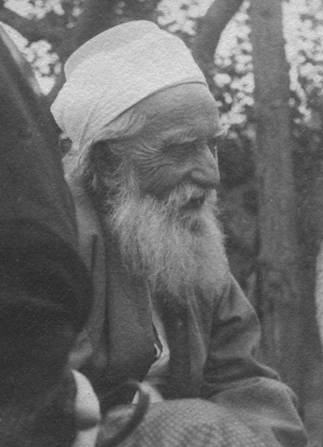
A retelling for children, based on Mahmúd's Diary (entry of 7 May 1912) and the talk in The Promulgation of Universal Peace.
On the morning of the 7th of May, 1912, 'Abdu'l-Bahá left Cleveland by train. At about noon He arrived in the city of Pittsburgh. The Bahá'ís there had received a telegram saying He was coming, and they were waiting at the station, overjoyed to see Him. They went with Him to the Hotel Schenley, where He would stay.
After resting for an hour, 'Abdu'l-Bahá met many visitors whom the Bahá'ís had invited. Some of them were leaders of the Jewish community, who asked Him to come and speak at their places of worship. He could not accept, because He had already promised to speak at a peace conference in New York.
That evening a big meeting was held at the hotel. 'Abdu'l-Bahá explained the teachings of Bahá'u'lláh: that all people are one family; that we should search for the truth for ourselves; that science and religion agree; that women and men are equal; that everyone should be educated; and that prejudice must be put away.
He also talked about rich and poor. Today, He said, the poor suffer great need, while others live with far more than they need. The laws, He said, should be changed to put this right. And the rich, He said, "must be merciful to the poor, contributing from willing hearts to their needs without being forced or compelled to do so."
Mahmúd, His traveling companion, wrote down the words that ended the talk: "The East must acquire material civilization from the West and the West must learn divine civilization from the East." The world, 'Abdu'l-Bahá taught, needs both kinds of progress together.
Later that night, some doctors, thinkers and newspaper writers came to talk with Him. He asked them a question: when animals are sick, they know without being taught to stay away from what is bad for them, so why do people, when they are sick, so often want what is bad for them? The visitors could not answer, and said that 'Abdu'l-Bahá knew the answer better than they did.
Early the next morning He left for Washington.
This is a retelling for children. For the fuller account, see "A Day in Pittsburgh".
Cite this story
Maḥmúd-i-Zarqání, M.. (1998). *Mahmúd's Diary: The Diary of Mírzá Maḥmúd-i-Zarqání*. George Ronald.
Record yourself reading this story
Recording stays on this device only. Nothing is uploaded.
Related stories
A Day in Pittsburgh
On May 7, 1912, 'Abdu'l-Bahá spent a day in Pittsburgh. At the Hotel Schenley He met visitors, set out the teachings of Bahá'u'lláh at an evening meeting, and then spoke with a group of philosophers, doctors and journalists.
The Answer at Ford Hall
In Boston in 1912, a speaker warned a large audience that a false Christ had come to America. 'Abdu'l-Bahá, speaking next, told them of the truth of all the Prophets of God, and especially of Christ.
A Question at Temple Emanu-El
In a San Francisco synagogue, 'Abdu'l-Bahá spoke about Moses and then asked His Jewish listeners why they should not also praise Christ and Muḥammad.
Two Pathways
In a large church in Philadelphia, 'Abdu'l-Bahá spoke about two pathways, the way of nature and the way of religion, and said that religion must bring people together.