Blessed Are the Poor
Juliet Thompson, The Diary of Juliet Thompson, (1947), Kalimát Press · Read original
When in Bahá'í history
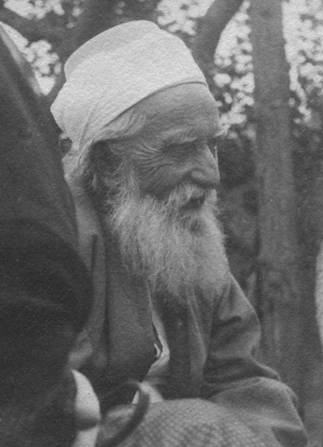
A retelling based on The Diary of Juliet Thompson (Kalimát Press; account of 19 April 1912). The narrative is retold in our own words; the quoted words of 'Abdu'l-Bahá are as recorded in the Diary. Read the full text for Juliet's own account.
In February 1912 Dr Hallimond invited Juliet Thompson to give the Bahá'í Message at the Bowery Mission in New York. Afterwards he told the men that 'Abdu'l-Bahá would be there in April and asked who would like to invite Him to speak, and all three hundred rose to their feet. On 16 April 1912 the Master agreed. "I am in love with the poor," He told her, and He gave her and Edward Getsinger each a thousand-franc note to change into quarters at the bank.
On the night of 19 April Juliet met Him in the chapel of the Mission, carrying a large white bag of quarters. Edward came with a bag of the same size. The long hall was packed to the doors with men who slept on park benches and doorsteps. Dr Hallimond asked Juliet to introduce the Master, and then He rose to speak.
He called the men His friends, His relatives and His companions, and Himself their comrade. He told them that the poor are very dear to God, and that Christ Himself had been poor and had no place to lay His head:
You must be thankful to God that you are poor, for His Holiness Jesus Christ has said: 'Blessed are the poor.' He never said: blessed are the rich!
He ended by asking them to accept 'Abdu'l-Bahá as their servant.
After the service He walked down the aisle toward the door while the men stayed in their seats. At the end of the aisle He stopped and asked Juliet and Edward to stand on either side of Him with their bags. Then the three hundred men came down the aisle in single file.
The Master clasped each man's hand and left in it a few quarters, the price of a bed for the night. One of the men, John Good, later told Juliet that the completely destitute received the most. Not a man, she wrote, was without shelter that night.
What Juliet remembered most was the way the men looked at Him. A man would glance up in surprise, his eyes would meet the Master's, and the Master's eyes answered with a deeper love. She saw this repeated scores of times. Some of the men shuffled past and took their gift ungraciously, but most of them responded as the first had done.
A retelling based on The Diary of Juliet Thompson. For the fuller account, see the original.
Cite this story
Thompson, J.. (1947). *The Diary of Juliet Thompson*. Kalimát Press. https://bahai-library.com/thompson_diary
Record yourself reading this story
Recording stays on this device only. Nothing is uploaded.
Related stories
Let Them Come Now
Worn out after seeing a hundred and forty people and speaking at the Mortens’ home in New York, ‘Abdu’l-Bahá went up to rest, but crowds followed. When Juliet Thompson asked to shut the door, He gently said to let them come.
Not Even a Salad
At a Washington luncheon in April 1912, asked whether the spirit could heal broken bones, 'Abdu'l-Bahá laughed that all the spirits in the air could not create a salad. Two days later, at the Turkish Embassy, He answered high praise very simply.
A Farewell in Minneapolis
On September 20, 1912, the friends went with 'Abdu'l-Bahá to the station as He left Minneapolis. His parting words asked them to love and help the poor.
No Taxes in the Kingdom of God
In New York on 13 April 1912 a young single-taxer asked ‘Abdu’l-Bahá what message to take to his friends. The Master laughed and told him that in the Kingdom of God there is plenty of land and no taxes.