The Accident of Color
'Abdu'l-Bahá, The Promulgation of Universal Peace, (1922), Bahá'í Publishing Trust · Read original
When in Bahá'í history
Chicago (today: Chicago, Illinois, USA)
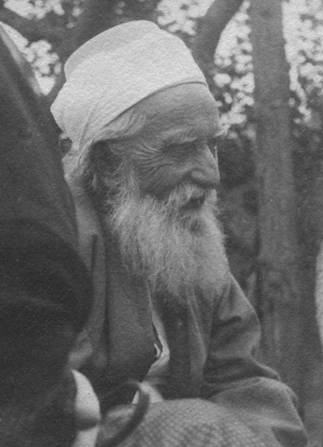
On April 30, 1912, ‘Abdu’l-Bahá spoke at Handel Hall in Chicago before the Fourth Annual Conference of the National Association for the Advancement of Colored People. He had arrived in America less than three weeks earlier. Earlier the same day He had spoken at Hull House.
The talk, taken down by Joseph H. Hannen, is short. He began with the verse of Genesis, “Let us make man in our image, after our likeness,” which, He said, means that
the perfections of God, the divine virtues, are reflected or revealed in the human reality.
What, then, is the standard by which a human being is measured? He asked whether it could be wealth, or honor and fame, or the color of a person’s skin, and answered that color is of no importance, for color is accidental in nature. The spirit and intelligence of man, He said, are what is essential. Whoever is the image and likeness of God is acceptable at the threshold of God, whether his color be white, black or brown; it matters not. The standard of divine measure is intelligence and spirit.
He continued:
A man’s heart may be pure and white though his outer skin be black; or his heart be dark and sinful though his racial color is white. The character and purity of the heart is of all importance.
The heart illumined by the light of God, He concluded, is nearest and dearest to God, and man’s station as the image of God is not to be sacrificed by the mere accident of color.
A retelling based on The Promulgation of Universal Peace (talk of 30 April 1912 at the Fourth Annual Conference of the NAACP, Handel Hall, Chicago). For the fuller account, see the original.
Cite this story
'Abdu'l-Bahá. (1922). *The Promulgation of Universal Peace*. Bahá'í Publishing Trust. https://www.bahai.org/library/authoritative-texts/abdul-baha/promulgation-universal-peace/
Record yourself reading this story
Recording stays on this device only. Nothing is uploaded.
Related stories
A Place of Honor for Louis Gregory
On April 23, 1912, at a Washington luncheon given in 'Abdu'l-Bahá's honor by Ali-Kuli Khan, the Master asked for Louis Gregory, who had not been invited, and gave him the seat of honor at His right.
The First Convention for Amity Between the Races
When Agnes Parsons made her pilgrimage in 1920, 'Abdu'l-Bahá asked her to arrange a convention in Washington for amity between the white and colored races. It met in May 1921, and Mountfort Mills read a message from the Master to it.
The Marriage of Louis and Louisa Gregory
Louis Gregory, an African American lawyer, and Louisa Mathew, an Englishwoman, met as pilgrims in 1911. 'Abdu'l-Bahá expressed the wish that they marry, and on 27 September 1912 they became the first interracial Bahá'í couple in America.
A Garden of Many Flowers
In Paris on 28 October 1911 'Abdu'l-Bahá compared humanity to a garden. A garden where every plant was the same would be dull, He said, and the diversity of the human family should be the cause of love and harmony.