Speaking to the Japanese YMCA in Oakland
'Abdu'l-Bahá, The Promulgation of Universal Peace, (1922), Bahá'í Publishing Trust · Read original
When in Bahá'í history
Oakland (today: Oakland, California, USA)
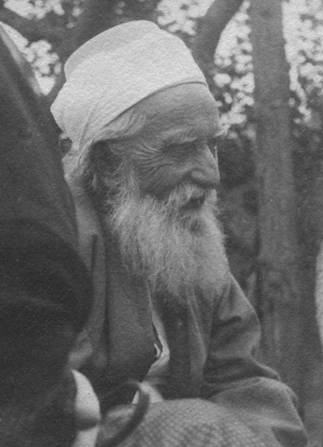
On the seventh of October, 1912, ‘Abdu’l-Bahá visited the Japanese Independent Church in Oakland, California, and addressed the Japanese Young Men’s Christian Association. It was an evening meeting; He told them He had long wished to meet the Japanese, whose nation had made extraordinary progress in a short time and who, by report, were not bound by prejudice. His subject was the harm done by prejudice.
When we review history from the beginning of human existence to the present age in which we live, it is evident all war and conflict, bloodshed and battle, every form of sedition has been due to some form of prejudice—whether religious, racial or national—to partisan bias and selfish prejudice of some sort.
He pointed to the upheaval then under way in the Balkans as a war of religious prejudice, and recalled one He had seen Himself. Rumelia was the European part of the Ottoman Empire, where Bahá’u’lláh and His family had lived in exile at Adrianople.
Some years ago when I was living in Rumelia, war broke out among the religious peoples. There was no attitude of justice or equity whatever amongst them. They pillaged the properties of each other, burning each others’ homes and houses, slaughtering men, women and children, imagining that such warfare and bloodshed was the means of drawing near to God.
Religion, the Master told them, was meant to be the cause of fellowship and agreement. Religion must be the cause of love. The bonds of patriotism, race and politics had all proved insufficient; the real bond was religious, for the foundation of all the divine religions is one. Moses, Buddha, Christ, Zoroaster, Krishna, Confucius and Muḥammad had all been Educators of humanity, and it was the imitations of ancestral forms of worship, which arose among the nations, that had made religion a cause of dissension and war. If religion becomes the cause of enmity and bloodshed, He said, irreligion is to be preferred.
Near the close He addressed His hearers as people of the Orient, the dawning point of lights, and asked them to shine as stars radiating the light of love toward all mankind.
Make peace with all the world. Love everybody; serve everybody.
A retelling based on The Promulgation of Universal Peace (talk of 7 October 1912 to the Japanese Young Men’s Christian Association, Japanese Independent Church, Oakland, California). For the fuller account, see the original.
Cite this story
'Abdu'l-Bahá. (1922). *The Promulgation of Universal Peace*. Bahá'í Publishing Trust. https://www.bahai.org/library/authoritative-texts/abdul-baha/promulgation-universal-peace/
Record yourself reading this story
Recording stays on this device only. Nothing is uploaded.
Related stories
The Fifth Principle—The Abolition of Prejudices
4 Avenue de Camöens, Paris, November 13th All prejudices, whether of religion, race, politics or nation, must be renounced, for these prejudices have caused the world’s sickness.
The Accident of Color
Addressing the NAACP's Fourth Annual Conference in Chicago on April 30, 1912, 'Abdu'l-Bahá said that color is accidental, that the true measure of a person is spirit and intelligence, and that the purity of the heart is what matters.
Racial and Patriotic Prejudices
The Bahá’í doctrine of the unity of mankind strikes at the root of another cause of war, namely, racial prejudice.
Prejudices
The Universal Races Congress was good, for it was intended for the furtherance and progress of unity among all nations and a better international understanding.