Prejudices
'Abdu'l-Bahá, 'Abdu'l-Bahá in London, (1912) · Read original
When in Bahá'í history
London (today: London, UK)
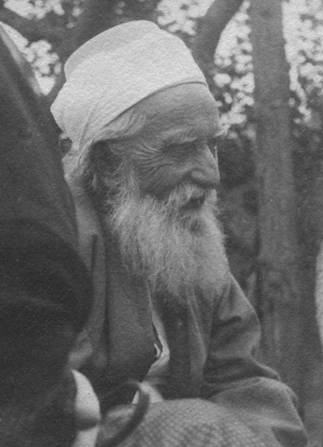
The Universal Races Congress was good, for it was intended for the furtherance and progress of unity among all nations and a better international understanding. The purpose was good. The causes of dispute among different nations are always due to one of the following classes of prejudice: racial, lingual, theological, personal, and prejudices of custom and tradition. It requires a universal active force to overcome these differences. A small disease needs a small remedy, but a disease which pervades the whole body needs a very strong remedy. A small lamp may light a room, a larger would light a house, a larger still might shine through the city, but the sun is needed to light the whole world.
The differences in language cause disunion between nations. There must be one universal language. The diversity in Faiths is also a cause of separation. The true foundation of all faiths must be established, the outer differences abolished. There must be a Oneness of Faith. To end all these differences is a very hard task. The whole world is sick, and needs the power of the Great Healer.
These meetings teach us that Unity is good, and that suppression (slavery under the yoke of tradition and prejudice) is the cause of disunion. To know this is not enough. All knowledge is good, but it can bear no fruit except by action. It is well to know that riches are good, but that knowledge will not make a man rich; he must work, he must put his knowledge into practice. We hope the people realize and know that unity is good, and we also hope that they will not be content to stand still in that knowledge. Do not only say that Unity, Love and Brotherhood are good; you must work for their realization.
The Czar of Russia suggested the Hague Peace Conference and proposed a decrease in armament for all nations. In this Conference it was proved that Peace was beneficial to all countries, and that war destroyed trade, etc. The Czar’s words were admirable though after the conference was over he himself was the first to declare war (against Japan).
Knowledge is not enough; we hope by the Love of God we shall put it into practice. A spiritual universal Force is needed for this. Meetings are good for engendering spiritual force. To know that it is possible to reach a state of perfection, is good; to march forward on the path is better. We know that to help the poor and to be merciful is good and pleases God, but knowledge alone does not feed the starving man, nor can the poor be warmed by knowledge or words in the bitter winter; we must give the practical help of Loving-kindness.
Source: 'Abdu'l-Bahá, 'Abdu'l-Bahá in London (1912). Public domain text from Project Gutenberg eBook #19250.
Cite this story
'Abdu'l-Bahá. (1912). *'Abdu'l-Bahá in London*. https://www.gutenberg.org/cache/epub/19250/pg19250-images.html
Record yourself reading this story
Recording stays on this device only. Nothing is uploaded.
Related stories
Peace
During the last six thousand years nations have hated one another, it is now time to stop.
'Abdu'l-Bahá at Lake Mohonk
In May 1912 'Abdu'l-Bahá spoke at the peace conference at Lake Mohonk in New York State. Mahmúd's Diary records His address, His comparison of some peace workers to wine sellers, and His farewell gift of a Persian carpet.
Differences
God has created the world as one—the boundaries are marked out by man.
London
The magnet of your love brought me to this country.