Robert Turner's Pilgrimage to 'Akká
Shoghi Effendi, God Passes By, (1944), Bahá'í Publishing Trust · Read original
When in Bahá'í history
'Akká (today: Acre, Israel)
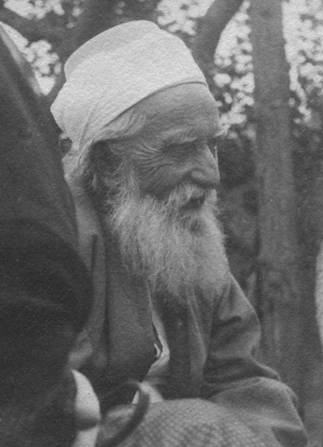
A retelling based on God Passes By by Shoghi Effendi and on May Maxwell's An Early Pilgrimage. Words in quotation marks are quoted from those books, except where another source is named.
Robert Turner was the butler of Phoebe Hearst, a wealthy woman of California. In the winter of 1898–99, fifteen pilgrims from the West reached the prison-city of 'Akká in three parties, the first Western believers to visit 'Abdu'l-Bahá. Mrs. Hearst travelled with one of these parties, and she brought Robert Turner with her.
May Maxwell, who was in the same party, recalled the morning of their arrival. After they had rested, the Master called them all to Him in a long room overlooking the Mediterranean. He sat in silence, looking out of the window. Then He asked whether everyone was present, and seeing that one of the believers was missing, He said, "Where is Robert?"
"In a moment," May Maxwell wrote, "Robert's radiant face appeared in the doorway and the Master rose to greet him, bidding him be seated, and said, 'Robert, your Lord loves you. God gave you a black skin, but a heart white as snow.'" H. M. Balyuzi, telling the same story in 'Abdu'l-Bahá: The Centre of the Covenant, notes that the Master made Robert, a servant, sit down with the rest.
Shoghi Effendi records that Robert Turner was "the first member of his race to embrace the Cause of Bahá'u'lláh in the West," and that he "had been transported by the influence exerted by 'Abdu'l-Bahá in the course of that epoch-making pilgrimage." Mrs. Hearst later became estranged from the Faith. Robert Turner did not. "Such was the tenacity of his faith," Shoghi Effendi writes, "that even the subsequent estrangement of his beloved mistress from the Cause she had spontaneously embraced failed to becloud its radiance."
He died in California in 1909. Ali-Kuli Khan, who had visited him during his last illness, reported his passing to 'Abdu'l-Bahá, and the Master replied, in Khan's translation: "As to Mr Robert (Turner), the news of his ascension saddened the hearts. He was in reality in the utmost sincerity." The Tablet is quoted in Marzieh Gail's Arches of the Years.
This is a retelling. For the fuller account, see God Passes By by Shoghi Effendi (chapter XVI) and An Early Pilgrimage by May Maxwell.
Cite this story
Effendi, S.. (1944). *God Passes By*. Bahá'í Publishing Trust. https://www.bahai.org/library/authoritative-texts/shoghi-effendi/god-passes-by/
Record yourself reading this story
Recording stays on this device only. Nothing is uploaded.
Related stories
Where Is Robert?
On pilgrimage to 'Akká, 'Abdu'l-Bahá noticed that Robert Turner, Phoebe Hearst's butler, was absent, asked for him, and rose to greet him with words of love. Shoghi Effendi later praised the tenacity of his faith.
The First Western Pilgrims to 'Akká
In December 1898 the first of fifteen Western pilgrims, travelling in three parties arranged by Phoebe Hearst, reached 'Akká and met 'Abdu'l-Bahá. Shoghi Effendi saw in their visit the opening of a new epoch for the Faith in the West.
May Maxwell’s First Meeting with the Master
May Bolles, one of the first Western pilgrims, recalls her journey from Marseilles by way of Port Said to Haifa and the morning she first met ‘Abdu’l-Bahá.
Louis George Gregory
Born in Charleston to formerly enslaved parents, Louis G. Gregory became a Bahá'í in 1909, was seated by 'Abdu'l-Bahá at His right in Washington, gave decades to teaching and race unity, and was posthumously named a Hand of the Cause.