Shaykh Salmán, the Trusted Courier
'Abdu'l-Bahá, Memorials of the Faithful, (1915), Bahá'í Publishing Trust · Read original
When in Bahá'í history
'Akká (today: Acre, Israel)
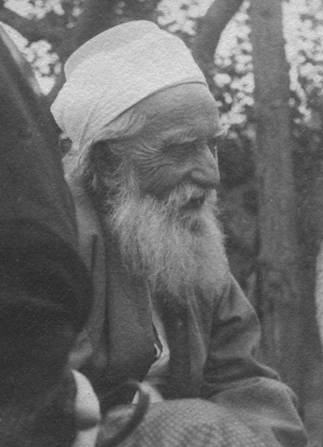
A retelling drawn from 'Abdu'l-Bahá's account of Shaykh Salmán in Memorials of the Faithful. Words in quotation marks are quoted from that book.
Shaykh Salmán was in Hindíyán, in Persia, when in 1266 A.H. (1849–50) he first heard the summons of the new Faith, and, 'Abdu'l-Bahá writes, "his heart leapt for joy." He walked all the way to Ṭihrán and secretly joined the believers there.
He was soon arrested. Police officers had followed him through the bázár, where he was walking with Áqá Muḥammad Taqíy-i-Káshání, and the next day they took him to their chief, who questioned him about the man. Salmán said he had sold him an 'abá and was waiting to be paid, and that a money-changer had guaranteed the payment. When the money-changer was asked, he knew nothing about it, and the officer declared Salmán a Bábí. As they passed a crossroads, a merchant from Shúshtar came out of his shop, embraced Salmán and greeted him as Khájih Muḥammad-'Alí, vouching for him as a devout Muslim. He paid the officer and Salmán was set free. Inside the shop Salmán told him, "I am not Khájih Muḥammad-'Alí." The merchant, astonished at the likeness, asked for his money back. Salmán handed it over at once, left the city and went home to Hindíyán.
When Bahá'u'lláh arrived in 'Iráq, the first messenger to reach His presence was Salmán, who returned with Tablets for the believers in Hindíyán. From then on he made the journey every year. From 1269 A.H. until the ascension of Bahá'u'lláh in 1309 A.H. (1892), he came on foot from Persia to 'Iráq, or to Adrianople, or to the Most Great Prison at 'Akká, bringing the believers' letters. Then he walked back, carrying Tablets to Iṣfáhán, Shíráz, Káshán, Ṭihrán and other cities, and delivered each one to the person it was meant for.
He had "remarkable powers of endurance." On the road he usually ate nothing but onions and bread, and in all those years "he was never once held up and never once lost a letter or a Tablet." In Iṣfáhán he was severely tried again and again, but he remained "patient and thankful under all conditions," and people who were not Bahá'ís called him "the Bábís' Angel Gabriel." 'Abdu'l-Bahá writes that he was close to the heart of Bahá'u'lláh, Who looked on him with especial favour, and that Tablets were revealed in his name.
After Bahá'u'lláh's ascension Salmán remained faithful to the Covenant. He kept coming to 'Akká every year with the believers' mail and returning to Persia with the answers, until in Shíráz "he winged his way to the Kingdom of glory."
'Abdu'l-Bahá's tribute to him reads: "From the dawn of history until the present day, there has never been a messenger so worthy of trust; there has never been a courier to compare with Salmán."
This is a retelling. For the fuller account, see Memorials of the Faithful by 'Abdu'l-Bahá.
Cite this story
'Abdu'l-Bahá. (1915). *Memorials of the Faithful*. Bahá'í Publishing Trust. https://www.bahai.org/library/authoritative-texts/abdul-baha/memorials-faithful/
Record yourself reading this story
Recording stays on this device only. Nothing is uploaded.
Related stories
Shaykh Salmán, the Faithful Courier
Every year for some forty years Shaykh Salmán walked from Persia to Bahá'u'lláh with the believers' letters and carried His Tablets home, never losing one. After the ascension he served 'Abdu'l-Bahá in the same way.
The Teacher Promised a Long Life
Hájí Muhammad-Tahir of Yazd begged Bahá’u’lláh for martyrdom and was told he would live long to teach the Cause. He served for decades as a teacher, historian and protector of the families of Yazd’s martyrs.
Siyyid Muḥammad-Taqí Manshadí
‘Abdu’l-Bahá recalls Siyyid Muḥammad-Taqí Manshadí, who welcomed pilgrims at his little shop in Haifa, handled the Tablets and the believers' mail, stayed loyal to the Covenant, and carried on that service in Port Sa‘íd until his death.
Ḥájí Amín, the Trusted One
Ḥájí Abu'l-Ḥasan of Ardikán was the first pilgrim to see Bahá'u'lláh in 'Akká. From 1881 until his death in 1928 he served as Trustee of the Ḥuqúqu'lláh, travelling among the believers and keeping nothing for himself.