Planting Trees Under Threat of Exile
Shoghi Effendi, God Passes By, (1944), Bahá'í Publishing Trust · Read original
When in Bahá'í history
'Akká (today: Acre, Israel)
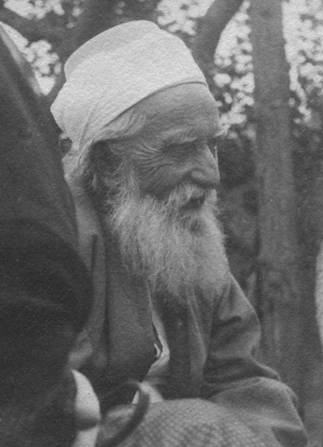
A retelling based on chapter XVII of God Passes By by Shoghi Effendi, "Renewal of 'Abdu'l-Bahá's Incarceration." Words in quotation marks are from that history.
In August 1901 the Sultán, 'Abdu'l-Ḥamíd, ordered that the restrictions on 'Abdu'l-Bahá, which had been gradually relaxed, be imposed again, and that He be strictly confined within the walls of 'Akká. His enemies sent the capital a stream of false charges: that He was raising an army, building a fortress on Mount Carmel and plotting against the Sultán. A commission was appointed to inquire. Summoned before it several times, 'Abdu'l-Bahá refuted each charge and declared Himself ready to submit to any sentence the court might pass.
The danger was real. He reduced and for a time suspended the visits of pilgrims, had the Bahá'í writings removed to a place of safety, and urged the believers to move to Egypt. Spies watched His house. Yet He would not halt the building of the Shrine of the Báb on Mount Carmel, and the Tablets He wrote in reply to letters from East and West did not stop. Eye-witnesses said He wrote as many as ninety in a single day. On Friday mornings He still gave alms with His own hands to the poor who filled His courtyard.
Friends urged Him to escape. The Spanish Consul went so far as to place an Italian freighter at His disposal, ready to take Him to any port He named. He would not go. Shoghi Effendi writes that He was "adamant in His determination to follow the example of both the Báb and Bahá'u'lláh."
"So imperturbable was 'Abdu'l-Bahá's equanimity that, while rumors were being bruited about that He might be cast into the sea, or exiled to Fizán in Tripolitania, or hanged on the gallows, He, to the amazement of His friends and the amusement of His enemies, was to be seen planting trees and vines in the garden of His house." When the storm had passed, He had His gardener, Ismá'íl Áqá, pick the fruit and present it to those same friends and enemies when they came to visit.
Early in the winter of 1907 a second commission of four officers arrived with full powers from the Sultán. A few days before, 'Abdu'l-Bahá had told the believers of a dream: a ship anchored off 'Akká, and birds like sticks of dynamite flew from it, circled His head, and returned to the ship without exploding. The commission took over the telegraph and post, set guards on His house and gathered witnesses against Him. He refused to meet its members. A ship stood ready to carry Him away. Through it all, Shoghi Effendi records, His serenity "remained unclouded, and His confidence unshaken." He told the believers: "The meaning of the dream I dreamt is now clear and evident. Please God this dynamite will not explode."
One evening the ship left Haifa and headed toward 'Akká, and the family and the few remaining believers expected it to stop and take Him on board. He walked alone and silent in His courtyard. As dusk fell, the ship changed course and sailed for Constantinople.
The commission's report was set aside. In 1908 the Young Turk Revolution forced the Sultán to restore the constitution and release all religious and political prisoners. A telegram was sent to Constantinople to ask whether 'Abdu'l-Bahá was included, and the answer came back that He was. His forty-year confinement was over. The next year the Sultán himself was deposed, and 'Abdu'l-Bahá laid the remains of the Báb to rest in the Shrine on Mount Carmel.
This is a retelling. For the full account, see chapters XVII and XVIII of God Passes By by Shoghi Effendi.
Cite this story
Effendi, S.. (1944). *God Passes By*. Bahá'í Publishing Trust. https://www.bahai.org/library/authoritative-texts/shoghi-effendi/god-passes-by/
Record yourself reading this story
Recording stays on this device only. Nothing is uploaded.
Related stories
The Name 'Abdu'l-Bahá Chose
After Bahá'u'lláh's passing, His eldest Son set aside the exalted titles His Father had given Him and asked to be known only as 'Abdu'l-Bahá, the Servant of Bahá.
The Name He Chose for Himself
After Bahá'u'lláh passed away, His eldest Son set aside the high titles He had been given and asked to be called by one name only: 'Abdu'l-Bahá, the Servant of Bahá.
The First Summer
“We had no communication whatever with the out-side world. Each loaf of bread was cut open by the guard to see that it contained no message. All who believed in the Bahá’í manifestation, children, men and women, were imprisoned with us.”
The Governor in Bahá'u'lláh's Cloak
Urged on by the Master's enemies, the governor of Haifa visited ‘Abdu’l-Bahá wearing Bahá’u’lláh’s cloak and spectacles. The Master said nothing and treated him with courtesy, and later hastened to free him from prison.