Good for Evil in 'Akká
Lady Blomfield, The Chosen Highway, (1940), Bahá'í Publishing Trust
When in Bahá'í history
'Akká (today: Acre, Israel)
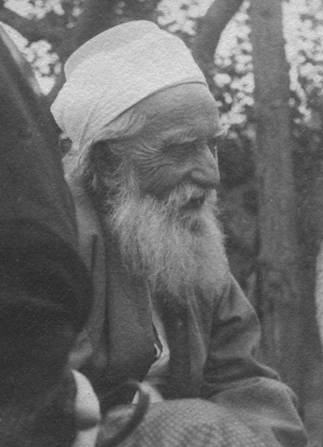
A retelling based on The Chosen Highway by Lady Blomfield, which gathers the recollections of 'Abdu'l-Bahá's family and friends. Words in quotation marks are as that book records them.
Lady Blomfield writes that during the years in the prison city of 'Akká, "many and great difficulties beset 'Abdu'l-Bahá, mainly through those enemies who were of His own kindred." They carried false reports about Him to the governors of the town. Some governors refused to listen. Others believed what they were told, and the Master and His family were made to suffer for it.
One unfriendly Governor decided to ruin the Bahá'ís' livelihood. He ordered the police to lock up the fifteen shops owned by Bahá'ís early the next morning and bring him the keys. That evening 'Abdu'l-Bahá called the Bahá'ís to Him and said: "Do not open your shops to-morrow, but wait and see what God will send to us."
In the morning the shops stayed shut, and the Governor waited in vain for his keys. While he waited, the Mufti came to him, and the Governor learned from a telegram that the Válí of Damascus had removed him from office and ordered the police to take him to Damascus. The shops were saved.
When 'Abdu'l-Bahá heard what had happened, He went to see the man. "You must not be sad because of this; everything in this world changes. Can I do anything for you?" The Governor's worry was for his family, who would be left alone in 'Akká, and he wished they could go to Damascus. The Master told him to trust Him, and sent the family after him with a trustworthy escort, mules and everything needed for the journey. When they arrived, the Governor offered to pay for the journey and to give the escort a present. The escort refused both, saying he was only obeying the Master's command. The Governor then wrote a letter to 'Abdu'l-Bahá: "I pray you pardon me. I did not understand. I did not know you. I have wrought you great evil. You have rewarded me with great good."
The Chosen Highway tells of another official, appointed Governor of 'Akká in 1908, who was "very unfriendly to the Master" and kept His friends from approaching Him. He was soon recalled to Beirut and dismissed from his post there. When 'Abdu'l-Bahá heard of his downfall, He sent a messenger to ask after his health, with a precious ring as a gift and the assurance that He was ready to do everything in His power for him. The book records that the man was ashamed and asked to be forgiven, and "the Master forgave all the evil done to Himself."
Once, when 'Abdu'l-Bahá was asked about the relatives who opposed Him, He answered: "I do not wish to mention them, much less to speak against them; only do I wish to say unto you that calumny and persecution are of no importance. As nothing can prevent the fall of rain from heaven to give life to the gardens of earth, so no human power is able to prevent the fulfilment of the Word of God."
This is a retelling. For the fuller account, see The Chosen Highway by Lady Blomfield.
Cite this story
Blomfield, L.. (1940). *The Chosen Highway*. Bahá'í Publishing Trust.
Record yourself reading this story
Recording stays on this device only. Nothing is uploaded.
Related stories
A Gift for a Dismissed Governor
A governor of 'Akká who had kept the Bahá'ís from visiting their Master was dismissed. 'Abdu'l-Bahá, Himself still a prisoner, sent him good wishes and a precious ring and offered to help him.
Kindness to an Unkind Governor
A governor of 'Akká who tried to shut the Bahá'ís' shops was suddenly dismissed. 'Abdu'l-Bahá visited him, comforted him, and sent his family safely to Damascus, and the humbled governor wrote to beg His pardon.
Shaykh Maḥmúd at the Mosque
Shaykh Maḥmúd of 'Akká hated the Bahá'ís. Angered to hear 'Abdu'l-Bahá praised, he went to the mosque and laid hands on Him. The Master's calm reply took away his anger; days later he begged forgiveness and became a devoted Bahá'í.
The Governor in Bahá'u'lláh's Cloak
Urged on by the Master's enemies, the governor of Haifa visited ‘Abdu’l-Bahá wearing Bahá’u’lláh’s cloak and spectacles. The Master said nothing and treated him with courtesy, and later hastened to free him from prison.