The Enemy at the Mosque: Shaykh Maḥmúd of 'Akká
bahaistories.com archive · Read original
When in Bahá'í history
'Akká (today: Acre, Israel)
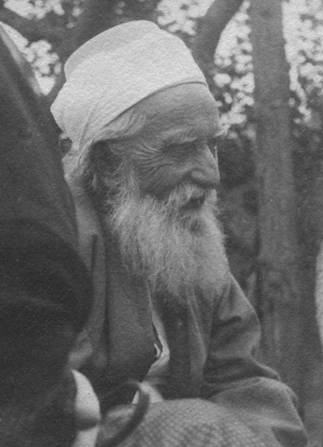
A retelling preserved in the bahaistories.com archive (Subject: enemies), drawing on the recollections of the early believers of 'Akká. The short phrases in quotation marks — the saying of the Prophet that 'Abdu'l-Bahá repeated, and Shaykh Maḥmúd's plea for forgiveness — are the words preserved in that account.
The Feast of Qudrat sets before us the power of God to transform hearts; and of all the kinds of heart that power can reach, the hardest is the heart of a settled enemy — one who has made up his mind, who has chosen his hatred deliberately and holds to it as a matter of principle. There is a story from the prison-city of 'Akká that shows what can happen even to such a heart when it is brought, face to face, before a soul filled with the power of the Cause. It is the story of Shaykh Maḥmúd.
To understand it, one must remember what 'Akká was when Bahá'u'lláh and His family were brought there as prisoners. The Ottoman authorities had chosen the place precisely because it was a walled penal colony with an evil reputation, a town whose people had been told that the new arrivals were enemies of God and of the state, dangerous criminals to be shunned. So at the beginning the city closed its heart against them. The inhabitants kept their distance; some were openly hostile; and the prisoners endured not only the bars and the bad air but the suspicion and contempt of a whole population that had been taught to despise them before it ever laid eyes on them.
But contempt, it turned out, could not survive contact. As the years passed, the people of 'Akká began, one by one, to see for themselves what manner of man the eldest Son of Bahá'u'lláh was. They saw 'Abdu'l-Bahá — whom they would in time call simply the Master — going on foot through their lanes to the bedsides of the sick, paying for the medicine of the poor, settling their quarrels, asking nothing for Himself. The verdict of the city began, slowly, to turn. Where once He had been a suspected criminal, men now spoke of Him in their gatherings as a good man, a remarkable man. The reputation that the authorities had tried to destroy was being rebuilt, not by argument, but by the plain evidence of His life.
Not everyone turned. There was a certain Shaykh Maḥmúd — a man of religion, learned, respected, and fixed in his opinions. While many of his fellow-townsmen were gradually coming to realise how very wrong they had been, and were beginning to speak of the prisoners with appreciation and even praise, Shaykh Maḥmúd remained adamant. His hatred did not soften with the rest. If anything, the growing admiration of his neighbours hardened him, for it seemed to him a kind of madness, a delusion spreading through the town, and he set his face against it.
One day he found himself at a gathering where the talk turned, as it now so often did, to 'Abdu'l-Bahá — to His goodness, His bearing, His remarkable qualities. The Shaykh listened with mounting fury. He could bear it no longer. He rose and stormed out of the company, declaring as he went that he would put an end to this folly: he would go and expose this 'Abbás Effendi for what He really was, and show them all their error.
In a blaze of anger he made straight for the mosque, where he knew the Master could be found at that hour. He did not go to debate. He went, the account tells us, in such a state of wrath that when he reached 'Abdu'l-Bahá he laid violent hands upon Him — an act of open assault upon a man at prayer, in the house of God, by a respected divine of the city. It is hard to imagine a more hostile encounter. Here was the enemy at his most dangerous: not scheming from a distance, but standing over the Master with hatred in his hands.
And here is where the power that the Feast of Qudrat celebrates shows itself — quietly, and in a single sentence. The Master did not recoil. He did not call for help, did not strike back, did not so much as raise His voice. He looked at the Shaykh, the account says, with that serenity and dignity which were His alone. And then He answered the man's violence not with violence and not even with argument, but by reminding him of his own faith — by quoting to him a saying of the Prophet Muḥammad, the very Prophet in whose name Shaykh Maḥmúd imagined himself to be acting:
Be generous to the guests, even should one of them be an unbeliever.
That was all. One verse of the man's own tradition, spoken to him in perfect calm, in the moment of his fury. It went through Shaykh Maḥmúd like a sword. For he had come to the mosque believing himself the defender of religion and the Master its enemy — and in that one sentence the positions were reversed before his eyes. He stood there having just laid hands on a defenceless Man at prayer, and that Man had answered him by gently invoking the law of hospitality, the duty of generosity even toward an enemy, the very heart of the faith Shaykh Maḥmúd professed. Who, then, was the man of God in that mosque, and who the transgressor?
He turned away. And as he turned, the account preserves, his wrath had left him. So had his hate. The settled hostility of years, the deliberate enmity he had nursed and defended, was simply gone, dissolved in an instant, and in its place there rose up in him a deep sense of shame and a bitter compunction. He did not stay to argue or to save his face. He fled to his own house and barred the door behind him, and there, alone, he wrestled with what had happened to him.
The wrestling lasted some days. Then Shaykh Maḥmúd did the thing that proved the change in him was real and not a passing emotion. He went, of his own accord, straight into the presence of the Man he had assaulted. He did not come with explanations or conditions. He fell upon his knees before 'Abdu'l-Bahá and begged His forgiveness, with words that have been kept ever since — the cry of a heart that has discovered, too late and yet not too late, where its true refuge lies:
Which door but Thine can I seek; whose bounty can I hope for but Thine?
He was forgiven. And Shaykh Maḥmúd — the learned enemy who had marched to the mosque to destroy the Master — became from that day a devoted Bahá'í, his hatred transmuted into love, his hostility into service.
This is what the Feast of Qudrat asks us to ponder. The Master held no office and no power in 'Akká; He was Himself a prisoner, a man under guard, who could not even leave the city. He commanded nothing. And yet, with a single sentence and a serene look, He overturned a hatred that years had hardened, and turned an assailant into a disciple — not by force, for He had none, and not even by reasoned argument, but by the sheer power of a soul so filled with the spirit of the Cause that even its enemies, brought close enough, could not help but be transformed. Force can compel an enemy's body and never touch his heart. The power that flowed through the Master went the other way entirely: it left the body untouched and conquered the heart completely.
This is a retelling preserved in the bahaistories.com archive. The episode is also recounted in published collections of the life of 'Abdu'l-Bahá.
Cite this story
Various. *bahaistories.com archive*. https://bahaistories.com/subject/enemies
This story shares quotes with 1 other story
“Which door but thine can I seek; whose bounty can I hope for but thine?”
Also in
- It is related of Shaykh Mahmud of 'Akka that he 'hated the Bahá’ís— Various, bahaistories.com archive
Record yourself reading this story
Recording stays on this device only. Nothing is uploaded.
Related stories
Good for Evil: The Master and Those Who Wronged Him
Through the long years in 'Akká, 'Abdu'l-Bahá was surrounded not only by friends but by enemies — men who slandered Him, plotted against Him, and even schemed for His death. The recollections preserved in The Chosen Highway show how He answered them: with unfailing courtesy, with help sent quietly to their households, and with kindness returned for every injury — the perfection of a character that would not let another's evil change its own goodness.
MAN AND NATURE
From the time of the creation of Adam to this day there have been two pathways in the world of humanity; one the natural or materialistic, the other the religious or spiritual. The pathway of nature is the pathway of the animal realm.…
SERVE THE KINGDOM
When the darkness of ignorance and heedlessness concerning the realm of eternity and bereavement from the True One had encircled the universe, then the resplendent Luminary dawned and the brilliant Light illumined the horizon of the…
THE MOST GREAT PEACE
Today there is no greater glory for man than that of service in the cause of the “Most Great Peace.” Peace is light whereas war is darkness. Peace is life; war is death. Peace is guidance; war is error. Peace is the foundation of God;…