The Master and the Poor of 'Akká
Lady Blomfield, The Chosen Highway, (1940), Bahá'í Publishing Trust
When in Bahá'í history
'Akká (today: Acre, Israel)
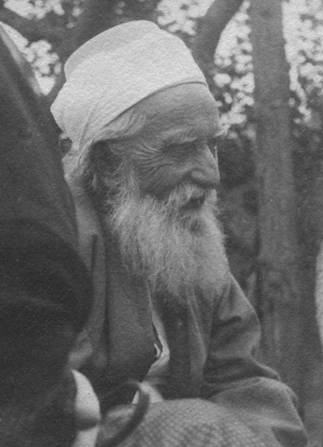
A retelling based on The Chosen Highway by Lady Blomfield and on the eyewitness account of Myron H. Phelps, who spent December 1902 in 'Akká, as quoted in H. M. Balyuzi's 'Abdu'l-Bahá: The Centre of the Covenant. Words in quotation marks are from those books.
'Abdu'l-Bahá lived for forty years in the fortress town of 'Akká, for most of that time as a prisoner. Throughout those years He cared for the poor of the town.
Lady Blomfield visited 'Akká in May 1922, a few months after His passing. At the great mosque she was shown the large courtyard where the poor had gathered every Friday to receive alms and to bring their appeals to 'Abdu'l-Bahá, their "Beloved Father of the Poor." At the old Khán, the inn where early pilgrims had stayed, she noted that on Feast Days the Master used to assemble the poor of 'Akká there, especially the children, Christian and Muslim alike, and give them sweets, cakes, fruit and tea.
Myron Phelps, a New York lawyer, described a gathering in the narrow street below the house where he was staying. About a hundred people had collected there, many of them blind, aged or ill, some of the women carrying infants, with many children besides. 'Abdu'l-Bahá came out, spoke words of greeting as He passed through them, and stood at a narrow angle of the street. He let them pass Him one by one and placed some small coins in each open hand. "He knows them all," Phelps wrote. He stopped to question some of them and fondly stroked a woman's baby, and to all He said Marhaba, a form of greeting. Phelps added that this scene could be seen almost any day of the year.
At the beginning of each winter the poor of 'Akká gathered at one of the shops where clothes were sold and received cloaks from the Master. Phelps wrote that there were five or six hundred poor in the town, and that every one of them received a warm garment each year. Upon many of them, especially the most infirm or crippled, He placed the garment Himself and adjusted it with His own hands. On feast days He visited the poor in their homes, asked about their health, mentioned by name those who were absent, and left gifts for all. To the "respectable poor who cannot beg, but must suffer in silence," He sent bread secretly.
The sick were His concern whatever their religion. "If He hears of any one sick in the city — Moslem or Christian, or of any other sect, it matters not — He is each day at their bedside, or sends a trusty messenger," Phelps recorded. If the patient was poor and needed a physician, He brought or sent one, and the medicine too. If He found a leaking roof or a broken window endangering someone's health, He called a workman and waited to see the repair done. "He is the kind father of all the people," Phelps wrote.
The same care continued in the years of the First World War. Lady Blomfield records that as early as 1912 'Abdu'l-Bahá began preparing for the hardship that came to the land in 1917 and 1918. Provisions He had grown had been stored, some of them buried in underground pits. When the British arrived in Haifa it was discovered that He had given them out to the civilians of every nation living there and had saved them from starvation. The British Government afterwards conferred a knighthood upon Him, which He accepted as a courteous gift "from a just king."
At the mosque, Lady Blomfield wrote, everybody said: "Oh, what a loss to the world. He was Comforter, Protector, and Benefactor to all!"
This is a retelling. For the fuller accounts, see The Chosen Highway by Lady Blomfield, and Myron Phelps's description as quoted in H. M. Balyuzi, 'Abdu'l-Bahá: The Centre of the Covenant, pp. 98–101.
Cite this story
Blomfield, L.. (1940). *The Chosen Highway*. Bahá'í Publishing Trust.
Record yourself reading this story
Recording stays on this device only. Nothing is uploaded.
Related stories
The Master and the Sick of 'Akká
During His years of strict confinement in 'Akká, 'Abdu'l-Bahá visited the sick in their homes, brought doctors and medicine to the poor, and gave the city's poor warm clothing each winter, whatever their religion.
Caring for the Sick
‘Abdu’l-Bahá visited the sick, sent daily to ask after them, and quietly paid a doctor to care for the poor of ‘Akká. When a poor, crippled woman with measles was shunned, He arranged her care and, at the last, her funeral.
Strict Imprisonment Renewed
In consequence of this and other equally unfounded charges, in 1901, ‘Abdu’l-Bahá and His family, who for more than twenty years had been allowed the freedom of the country for some miles around Akká, were again, for over seven years …
The Master's Care for Na'um
In ‘Akká, where there was no hospital, ‘Abdu’l-Bahá quietly paid a doctor to treat the poor. When a crippled woman named Na'um caught measles and was shunned, He gave her a room, His own bedding and every care.