The Master and the Sick of 'Akká
J. E. Esslemont, Bahá'u'lláh and the New Era, (1923), George Allen & Unwin · Read original
When in Bahá'í history
'Akká (today: Acre, Israel)
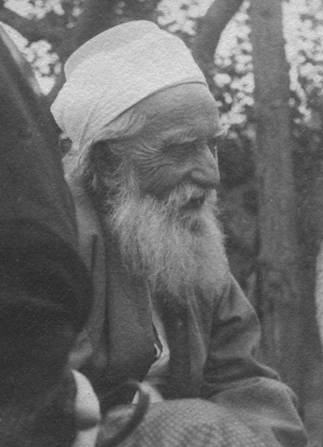
A retelling drawing on Bahá'u'lláh and the New Era by J. E. Esslemont, together with the account of Myron H. Phelps, who spent December 1902 in 'Akká, as quoted in H. M. Balyuzi's 'Abdu'l-Bahá: The Centre of the Covenant. Words in quotation marks are theirs.
In 1901 'Abdu'l-Bahá and His family, who for more than twenty years had been allowed to move freely in the country around 'Akká, were again confined within the walls of the prison-city. The strict confinement lasted more than seven years. Esslemont writes of this time: "Much of His time was spent in visiting the sick and the afflicted in their own homes; and in the poorest quarters of Akká no visitor was more welcome than the 'Master.'"
Myron Phelps, an American lawyer who stayed in 'Akká for a month at the end of 1902, described what he saw. "If he hears of any one sick in the city -- Moslem or Christian, or of any other sect, it matters not -- he is each day at their bedside, or sends a trusty messenger. If a physician is needed, and the patient poor, he brings or sends one, and also the necessary medicine." If the Master found a leaking roof or a broken window endangering someone's health, He called a workman and waited to see the repair done.
His care for the sick was part of His care for all the poor of the city. Every Friday morning the poor gathered in the street outside His house, and He went from one to another, putting a few coins into each hand, speaking a word to each, and sending their portion to those too feeble to come. At the beginning of each winter the poor of 'Akká were gathered at a clothing shop to receive cloaks from Him. On many of them, especially the most infirm or crippled, He put the garment on with His own hands. Phelps wrote that there were "five or six hundred poor in Akka, to all of whom he gives a warm garment each year." To the respectable poor who could not bring themselves to beg, He sent bread secretly.
He kept little for Himself. Esslemont records that two simple meals a day were enough for Him and that He owned very few garments, of inexpensive material: "He could not bear to live in luxury while others were in want."
Phelps noticed the effect on the city. "His jailors have become his friends," he wrote. The Governor and the Commander of the Army Corps respected and honoured the Master "as though he were their brother." "He is the beloved of all the city, high and low."
The same care continued long after the prison years. During the First World War, Esslemont writes, 'Abdu'l-Bahá organized farming near Tiberias and secured a large supply of wheat, by which famine was averted "not only for the Bahá'ís but for hundreds of the poor of all religions in Haifa and Akká."
This is a retelling. For an account of 'Abdu'l-Bahá's life and ministry, see Bahá'u'lláh and the New Era by J. E. Esslemont, and Myron H. Phelps as quoted in 'Abdu'l-Bahá: The Centre of the Covenant by H. M. Balyuzi.
Cite this story
Esslemont, J. E.. (1923). *Bahá'u'lláh and the New Era*. George Allen & Unwin. https://www.gutenberg.org/ebooks/19241
Record yourself reading this story
Recording stays on this device only. Nothing is uploaded.
Related stories
The Master and the Poor of 'Akká
In 'Akká 'Abdu'l-Bahá gave coins to the poor in the street, a warm garment each winter to every poor person in the town, and help to the sick of every faith. During the First World War He saved the civilians of Haifa from starvation.
Caring for the Sick
‘Abdu’l-Bahá visited the sick, sent daily to ask after them, and quietly paid a doctor to care for the poor of ‘Akká. When a poor, crippled woman with measles was shunned, He arranged her care and, at the last, her funeral.
Strict Imprisonment Renewed
In consequence of this and other equally unfounded charges, in 1901, ‘Abdu’l-Bahá and His family, who for more than twenty years had been allowed the freedom of the country for some miles around Akká, were again, for over seven years …
The Master's Care for Na'um
In ‘Akká, where there was no hospital, ‘Abdu’l-Bahá quietly paid a doctor to treat the poor. When a crippled woman named Na'um caught measles and was shunned, He gave her a room, His own bedding and every care.