The Master and the Turkish Commissions
J. E. Esslemont, Bahá'u'lláh and the New Era, (1923), George Allen & Unwin · Read original
When in Bahá'í history
'Akká (today: Acre, Israel)
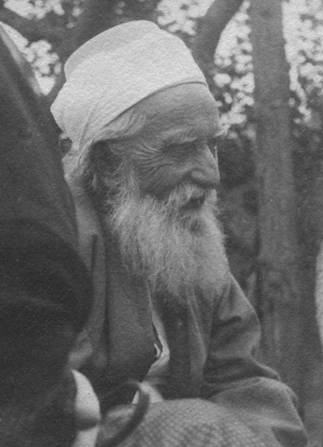
A retelling based on the section "Turkish Commissions of Investigation" in Bahá'u'lláh and the New Era by J. E. Esslemont. Words in quotation marks are Esslemont's.
In the first years of the twentieth century 'Abdu'l-Bahá was still a prisoner of the Ottoman government in 'Akká. In 1904 and again in 1907 the government in Constantinople appointed commissions to inquire into charges brought against Him, and lying witnesses gave evidence against Him.
'Abdu'l-Bahá answered the charges, and at the same time said He was entirely ready to submit to any sentence the tribunal chose. He declared that if they should throw Him into jail, drag Him through the streets, curse Him, spit upon Him, stone Him, hang Him or shoot Him, He would still be happy.
Esslemont writes: "Between the sittings of the Commissions of Investigation He pursued His ordinary life with the utmost serenity, planting fruit trees in a garden and presiding at a marriage feast with the dignity and radiance of spiritual freedom."
The Spanish Consul offered to arrange a safe passage for Him to any foreign port He might choose. 'Abdu'l-Bahá refused, "gratefully but firmly," saying that whatever the consequences He must follow in the footsteps of the Báb and Bahá'u'lláh, Who had never tried to save Themselves or run away from Their enemies. He did urge most of the Bahá'ís to leave the neighbourhood of 'Akká, which had become very dangerous for them, and He remained with a few of the faithful to await what would come.
The four officials of the last commission arrived in 'Akká early in the winter of 1907, stayed a month, and left for Constantinople ready to report that the charges had been proved and to recommend His exile or execution. Soon after they reached Turkey the Revolution broke out, and the four commissioners, men of the old regime, had to flee for their lives. The Young Turks set free all the political and religious prisoners of the empire. In September 1908 'Abdu'l-Bahá was released, and the following year Sulṭán ʻAbdu'l-Ḥamíd was himself made a prisoner.
This is a retelling. For the full passage, see Bahá'u'lláh and the New Era by J. E. Esslemont.
Cite this story
Esslemont, J. E.. (1923). *Bahá'u'lláh and the New Era*. George Allen & Unwin. https://www.gutenberg.org/ebooks/19241
Record yourself reading this story
Recording stays on this device only. Nothing is uploaded.
Related stories
The Mother Who Went Out by Night
In 1852, while Bahá'u'lláh lay chained in an underground dungeon in Tihrán, His wife went out late at night to learn whether He still lived, and their daughter waited in the dark with her baby brother.
Ḥájí Ákhúnd, Never Vanquished
Mullá ʻAlí-Akbar, known as Ḥájí Ákhúnd, taught the Faith so openly in Ṭihrán that he was the first to be arrested whenever trouble broke out. 'Abdu'l-Bahá remembers his chains, his composure and his constancy: he was never vanquished.
‘Abdu’l-Ḥamíd’s Committee
“One year before ‘Abdu’l-Ḥamíd was dethroned, he sent an extremely overbearing, treacherous and insulting committee of investigation. The chairman was one of the governor’s staff, Árif Bey, and with him were three army commanders…
Some of the Experiences of His Forty Years’ Imprisonment
In an apartment in Cadogan Gardens sits a spiritually illumined Oriental, whose recent advent in London marks the latest junction of the East and West.