The Guardian Translates the Gleanings
Rúḥíyyih Khánum, The Priceless Pearl, (1969), Bahá'í Publishing Trust
When in Bahá'í history
Haifa (today: Haifa, Israel)
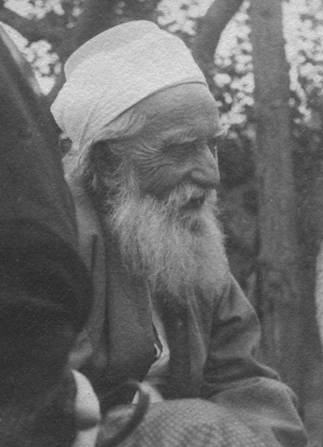
A retelling based on The Priceless Pearl by Rúḥíyyih Khánum, her biography of Shoghi Effendi. Words in quotation marks are quoted in that book.
Shoghi Effendi prepared for the work of translation long before he became Guardian. Rúḥíyyih Khánum writes that as a young student "the entire course of Shoghi Effendi's studies was aimed by him at fitting himself to serve the Master, interpret for Him and translate His letters into English." When he went to England to enter Oxford University, his avowed purpose was "to perfect his English in order to better translate the Tablets of 'Abdu'l-Bahá, as well as the other sacred writings, into this language." From Oxford he wrote to a friend in Persian: "I am engaged in this land, day and night, in perfecting myself in the art of translation...I do not have a moment's rest."
From his student days in Beirut until almost the end of his life he kept notebooks of English words and typical phrases. He was a great reader of the King James version of the Bible and of the historians Carlyle and Gibbon. Rúḥíyyih Khánum notes that "the biblical English is reflected in his translations of Bahá'u'lláh's Prayers, The Hidden Words and Tablets."
She describes him as "meticulous in translating." Once, in Persian, he read her a paragraph from one of Bahá'u'lláh's Tablets and asked how one could translate it into English. They worked at it for about two hours. When she offered a sentence that conveyed the meaning, he said, "Ah, but that is not translation! You cannot change and leave out words in the original and just put what you think it means in English." In the end he gave it up, saying he did not think it could ever be properly translated into English.
Gleanings
After his translations of the Kitáb-i-Íqán and Nabíl's narrative, The Dawn-Breakers, Shoghi Effendi published Gleanings from the Writings of Bahá'u'lláh in 1935. In a letter to Sir Herbert Samuel he described it as "consisting of a selection of the most characteristic and hitherto unpublished passages from the outstanding works of the Author of the Bahá'í Revelation." The book gathers 166 passages.
Rúḥíyyih Khánum writes that the Gleanings alone "seems to provide a source of guidance and inspiration sufficient for the spiritual Dispensation of any Prophet." Professor Norman Bentwich, thanking the Guardian for a copy, wrote: "I prize it with the other fruits of your industrious piety." Queen Marie of Romania told Martha Root that "even doubters would find a powerful strength in it, if they would read it alone, and would give their souls time to expand." Shoghi Effendi wrote to the Queen that, since she had benefited from reading it, he felt his efforts in translating those extracts were fully rewarded.
This is a retelling. For the fuller account, see The Priceless Pearl by Rúḥíyyih Khánum.
Cite this story
Khánum, R.. (1969). *The Priceless Pearl*. Bahá'í Publishing Trust.
Record yourself reading this story
Recording stays on this device only. Nothing is uploaded.
Related stories
Shoghi Effendi Translates The Hidden Words
Rúḥíyyih Khánum records that early in his ministry Shoghi Effendi sent the American believers his revised translation of The Hidden Words, and describes the long study of English behind his translations.
The Journey to England in 1940
In May 1940 the Guardian, Rúḥíyyih Khánum and her father tried to reach England from Italy. A British Consul who remembered ‘Abdu’l-Bahá stamped their passport, and after anxious days at St Malo they sailed for Southampton.
Amatu’l-Bahá Rúḥíyyih Khánum
Mary Maxwell of Montreal married Shoghi Effendi on 25 March 1937 in a simple, private wedding; as Rúḥíyyih Khánum she later served as a Hand of the Cause and travelled to 185 countries and territories.
Rúḥíyyih Khánum First Meets the Guardian
On her first pilgrimage in 1923, the twelve-year-old Mary Maxwell stood guard at the door of her sleeping mother, May Maxwell, only to learn that the visitor she had challenged was Shoghi Effendi.