A Garden of Many Flowers
'Abdu'l-Bahá, Paris Talks, (1912), Bahá'í Publishing Trust · Read original
When in Bahá'í history
Paris (today: Paris, France)
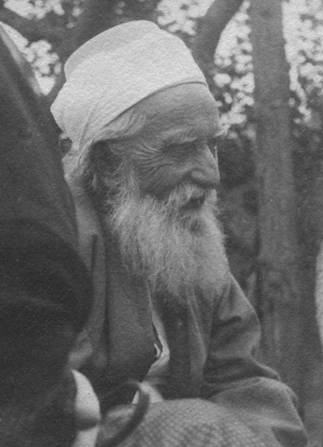
A retelling built around 'Abdu'l-Bahá's talk "Beauty and Harmony in Diversity," given in Paris on 28 October 1911 and recorded in Paris Talks. The sentences in quotation marks are His words as preserved in that book.
After His first visit to London, 'Abdu'l-Bahá went on to Paris in the autumn of 1911 and spent some weeks there, speaking to those who came to hear Him. On 28 October He spoke of the diversity of the human family.
He began with the one Creator: "The Creator of all is One God." Then He turned His hearers to the natural world. "Consider the world of created beings, how varied and diverse they are in species, yet with one sole origin." In a garden each flower has its own charm, perfume and colour, and the trees differ in size, foliage and fruit, "yet all these flowers, shrubs and trees spring from the self-same earth, the same sun shines upon them and the same clouds give them rain."
"So it is with humanity," He went on. "It is made up of many races, and its peoples are of different colour, white, black, yellow, brown and red—but they all come from the same God, and all are servants to Him."
He continued: "This diversity among the children of men has unhappily not the same effect as it has among the vegetable creation, where the spirit shown is more harmonious. Among men exists the diversity of animosity, and it is this that causes war and hatred among the different nations of the world."
"Let us look rather at the beauty in diversity, the beauty of harmony, and learn a lesson from the vegetable creation. If you beheld a garden in which all the plants were the same as to form, colour and perfume, it would not seem beautiful to you at all, but, rather, monotonous and dull." It is the variety that gives a garden its charm: "each flower, each tree, each fruit, beside being beautiful in itself, brings out by contrast the qualities of the others, and shows to advantage the special loveliness of each and all."
"Thus should it be among the children of men! The diversity in the human family should be the cause of love and harmony, as it is in music where many different notes blend together in the making of a perfect chord." He counselled His listeners: "If you meet those of different race and colour from yourself, do not mistrust them and withdraw yourself into your shell of conventionality, but rather be glad and show them kindness. Think of them as different coloured roses growing in the beautiful garden of humanity, and rejoice to be among them."
He gave the same counsel about differences of opinion, "All are seeking truth, and there are many roads leading thereto," and closed by speaking of Bahá'u'lláh, who "has drawn the circle of unity."
This is a retelling. For the full talk, see "Beauty and Harmony in Diversity" in Paris Talks by 'Abdu'l-Bahá.
Cite this story
'Abdu'l-Bahá. (1912). *Paris Talks*. Bahá'í Publishing Trust. https://www.bahai.org/library/authoritative-texts/abdul-baha/paris-talks/
Record yourself reading this story
Recording stays on this device only. Nothing is uploaded.
Related stories
Differences
God has created the world as one—the boundaries are marked out by man.
'Abdu'l-Bahá at Howard University
On 23 April 1912 'Abdu'l-Bahá spoke at Howard University in Washington to an audience of Black and white listeners. He told them there are no whites and blacks before God, and compared humanity to a garden of many-colored flowers.
The Accident of Color
Addressing the NAACP's Fourth Annual Conference in Chicago on April 30, 1912, 'Abdu'l-Bahá said that color is accidental, that the true measure of a person is spirit and intelligence, and that the purity of the heart is what matters.
All the Doors Open in Montreal
In a Tablet to the Bahá’ís of Canada, ‘Abdu’l-Bahá recalls how He was warned not to go to Montreal, and how, trusting in God, He went and found every door open and the hearts receptive.