All Colours Are One: The Master Proclaims Oneness at Howard University
'Abdu'l-Bahá, The Promulgation of Universal Peace, (1912), Bahá'í Publishing Trust · Read original
When in Bahá'í history
Howard University, Washington, D.C. (today: Washington, D.C., USA)
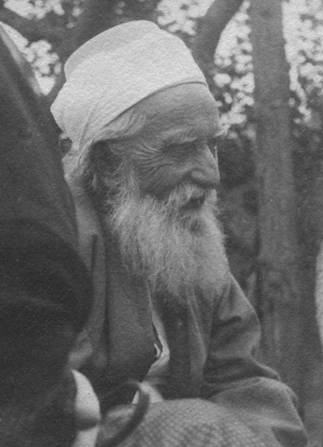
A retelling based on The Promulgation of Universal Peace, the record of 'Abdu'l-Bahá's public talks during His 1912 journey across North America. Short phrases in quotation marks are words preserved in that record.
In the spring of 1912, 'Abdu'l-Bahá crossed the ocean and travelled the length and breadth of the United States and Canada, speaking — in churches, in synagogues, in universities, in great public halls — wherever a door was opened to Him. For nearly forty years He had been a prisoner; now, in His freedom and in the last full strength of His life, He spent Himself pouring out the message of His Father before the Western world. The talks He gave in those nine months were gathered and preserved, and they form one of the great records of bold and sustained proclamation in the history of the Faith.
Among them, one address stands out for the sheer courage of its setting. In late April He came to Washington, the capital of the nation — and in 1912 Washington was a city sharply and brutally divided by race. Segregation was the rule and often the law: Black and white Americans were kept apart in their schools, their churches, their streetcars, their public life. Into that city 'Abdu'l-Bahá came carrying a single, unwelcome, world-overturning idea: that humanity is one.
He did not whisper it in private. On the twenty-third of April He went to Howard University — the great institution founded for the education of Black Americans — and there, in Rankin Chapel, He addressed an immense gathering. The audience was itself a kind of scandal in that time and place: a great crowd of students, teachers, and guests, Black and white together in one hall, come to hear the visitor from the East. Standing among them was the devoted Bahá'í teacher Louis Gregory, himself a Black American of brilliant gifts, whose lifework would be the proclaiming of this very unity across a hostile land. And from the platform 'Abdu'l-Bahá looked out over that mingled sea of faces and proclaimed the oneness of humanity to its very face.
He began not with reproach but with joy. He told them, with evident gladness, that He was happy — for He saw before Him "white and black sitting together." That single sentence, spoken aloud in that city, was itself an act of bold utterance. The surrounding world had decreed that such a sight should not be; the laws and the customs of the place were built to keep those faces apart. And here was the Master, before the eyes of all, naming that forbidden sight as a cause of rejoicing — refusing, by His very gladness, to grant the division any reality at all.
Then He spoke the truth He had crossed an ocean to bring. There are, He declared, no whites and blacks before God. "All colours are one," He said, "and that is the colour of servitude to God." He swept aside, in a few words, the entire towering structure of racial pride and racial contempt. Before God — in the one place where it finally matters — the distinctions men had built into walls and laws simply did not exist. There was, He taught, only one distinction worth the name, and it was open to every soul of every colour: nearness to God, the servitude that ennobles. Colour of skin was, in the realm of the spirit, of no account whatever. The heart was what counted; and a pure heart shines through any complexion.
To make the truth vivid He turned, as He so often did, to the world of nature. A garden, He said, is not made beautiful by a single colour. Imagine a garden in which every flower were the same hue — how dull, how lifeless it would be. It is precisely the many colours of the flowers, set side by side, that make a garden lovely; the variety is the very source of its charm and its display. So it is with humankind. "The world of humanity, too," He proclaimed, "is like a garden, and humankind are like the many-coloured flowers." The differences of race that men had turned into reasons for hatred were, rightly seen, the adornment of the human garden — not a problem to be erased but a beauty to be cherished. The diversity was not the wound. The wound was the failure to see the diversity as beauty.
Consider what it meant to say these things, in that room, in that year. The proclamation of oneness was not, in 1912 Washington, a safe sentiment that cost the speaker nothing. It cut directly against the deepest assumptions and the hardest interests of the society all around. To stand before a mixed audience and declare that the colour line was nothing before God, that Black and white seated together was a thing to rejoice over, that the races were equally the cherished flowers of one garden — this was to throw the plain Word of God against the whole weight of an entrenched injustice. 'Abdu'l-Bahá did it without hedging and without fear, in the most public way the occasion allowed.
And He did more than describe a truth; He set in motion the work of living it. It was at His urging that the American believers, in the years that followed, took up the cause of unity between the races as a central labour of their community — gathering Black and white together for open conventions of fellowship at a time when such gatherings were rare and even dangerous, and sending teachers like Louis Gregory across the segregated land to carry the message in person. The word spoken in Rankin Chapel did not stay in Rankin Chapel. It became a living movement, because a proclamation, once truly made, asks to be obeyed.
This is why the Feast of Qawl — the Feast of Speech — may pause over that April afternoon. Here the power of the spoken Word is seen at one of its sharpest edges: not the consoling of friends, but the open naming of a truth that the hearers' whole world was arranged to deny. 'Abdu'l-Bahá did not wait for the age to be ready for the oneness of humanity. He stood up in the divided capital and proclaimed it as already true — there are no whites and blacks before God; all colours are one — and in the proclaiming He gave the truth a foothold in the world from which it has never since been wholly dislodged.
This is a retelling. For the fuller account, see The Promulgation of Universal Peace by 'Abdu'l-Bahá.
Cite this story
'Abdu'l-Bahá. (1912). *The Promulgation of Universal Peace*. Bahá'í Publishing Trust. https://www.bahai.org/library/authoritative-texts/abdul-baha/promulgation-universal-peace/
Record yourself reading this story
Recording stays on this device only. Nothing is uploaded.
Related stories
A Convention for Oneness: The Word Spoken in Washington, 1921
At 'Abdu'l-Bahá's own request, a Washington hostess with no experience in such matters set out to gather Black and white Americans together to proclaim their oneness. In May 1921 over a thousand souls of both races filled a hall for the first Convention for Amity between the Races — and there the Master's message, carried fresh from Haifa, declared that no more important gathering had been held since the beginning of time.
Louis George Gregory
Gregory was instrumental in arranging for two major speaking engagements for ‘Abdu’l-Bahá in Washington DC to an audience of more than a thousand in Rankin Chapel at Howard University, and that evening to a large gathering of the Bethel…
A Garden of Many Flowers: 'Abdu'l-Bahá in Paris
In a Paris drawing-room in the autumn of 1911, 'Abdu'l-Bahá answered the world's fear of difference with the image of a garden. A garden of one single flower, He said, would be dull; it is the many colours that make it beautiful. So it is with the human family — and the diversity that men turn into hatred was meant to be the very source of beauty.
The First Word in the West: 'Abdu'l-Bahá at the City Temple
On a Sunday evening in September 1911, after forty years of imprisonment and exile, 'Abdu'l-Bahá rose in the pulpit of the City Temple in London and gave the first public address of His life in the Western world — a few quiet sentences, proclaimed before a crowded congregation, that opened the teaching of the Cause in the West.