Two Dreams Before the Master's Passing
Shoghi Effendi, God Passes By, (1944), Bahá'í Publishing Trust · Read original
When in Bahá'í history
Haifa (today: Haifa, Israel)
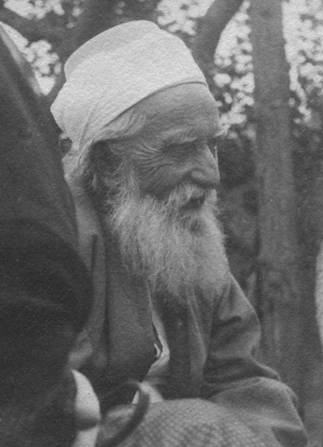
A retelling based on God Passes By by Shoghi Effendi, chapter XXI, with two details from The Passing of 'Abdu'l-Bahá by Lady Blomfield and Shoghi Effendi, as quoted in H. M. Balyuzi's 'Abdu'l-Bahá: The Centre of the Covenant. The words in quotation marks are quoted in those books.
Of the last months of 'Abdu'l-Bahá's life, Shoghi Effendi writes: "Through the dreams He dreamed, through the conversations He held, through the Tablets He revealed, it became increasingly evident that His end was fast approaching." Two of those dreams are recorded.
About two months before His passing He told His family of the first. "I seemed," He said, "to be standing within a great mosque, in the inmost shrine, facing the Qiblih, in the place of the Imám himself. I became aware that a large number of people were flocking into the mosque. More and yet more crowded in, taking their places in rows behind Me, until there was a vast multitude. As I stood I raised loudly the call to prayer. Suddenly the thought came to Me to go forth from the mosque."
When He found Himself outside, He said within Himself: "For what reason came I forth, not having led the prayer? But it matters not; now that I have uttered the Call to prayer, the vast multitude will of themselves chant the prayer."
A few weeks later, while He was staying alone in a room in the garden of His house, He told those around Him of a second dream. "I dreamed a dream," He said, "and behold, the Blessed Beauty came and said to Me: 'Destroy this room.'"
No one present understood it. According to the account by Lady Blomfield and Shoghi Effendi, His family had not been happy that He should be alone in that room at night, and they told Him they thought the dream meant He should leave it and come into the house. He smiled, "as though not agreeing with our interpretation." On the afternoon of Sunday, 27 November, when the Muftí of Haifa and the head of the Municipality called on Him, He spoke to them of Bahá'u'lláh and told them this second dream.
He passed away that night, in the early hours of Monday, 28 November 1921. Only then, Shoghi Effendi writes, "it became clear to them all that by the 'room' was meant the temple of His body."
This is a retelling. For the full account, see God Passes By by Shoghi Effendi, chapter XXI.
Cite this story
Effendi, S.. (1944). *God Passes By*. Bahá'í Publishing Trust. https://www.bahai.org/library/authoritative-texts/shoghi-effendi/god-passes-by/
Record yourself reading this story
Recording stays on this device only. Nothing is uploaded.
Related stories
The Master's Final Three Days
On Friday, 25 November 1921, 'Abdu'l-Bahá went to the noon prayer and gave alms to the poor. On Sunday, unable to leave the house, He received the Muftí and the Mayor of Haifa, and early on Monday He passed away.
Two Dreams Before the Master's Passing
In the last months of His life ‘Abdu’l-Bahá told of two dreams: in one He raised the call to prayer before a vast multitude and went out; in the other Bahá’u’lláh told Him, “Destroy this room.”
The Funeral of 'Abdu'l-Bahá
'Abdu'l-Bahá passed away in Haifa on 28 November 1921. At His funeral some ten thousand people of every religion and race followed His coffin up Mount Carmel to the Shrine of the Báb, where He was laid to rest.
Nabíl's Grief at the Ascension
'Abdu'l-Bahá tells how Nabíl-i-Zarandí, who had spent his life in the service of Bahá'u'lláh, was overwhelmed with grief when Bahá'u'lláh passed away in 1892, and could not bear to live on without Him.