The Will and Testament of 'Abdu'l-Bahá
Shoghi Effendi, God Passes By, (1944), Bahá'í Publishing Trust · Read original
When in Bahá'í history
Haifa (today: Haifa, Israel)
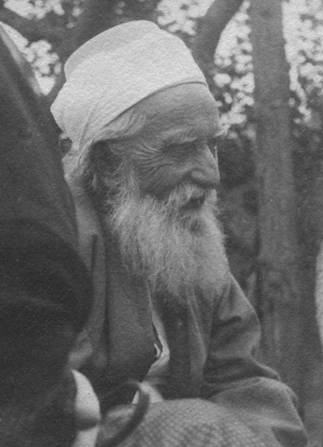
A retelling based on God Passes By by Shoghi Effendi, which describes the Will and Testament of 'Abdu'l-Bahá. Words in quotation marks are from God Passes By or from the Will itself in its authorized English translation; the account of its first reading is from The Priceless Pearl by Rúḥíyyih Khánum.
'Abdu'l-Bahá passed away in Haifa in the early hours of 28 November 1921. He left a Will and Testament. Shoghi Effendi describes the document as "signed and sealed by 'Abdu'l-Bahá; entirely written with His own hand; its first section composed during one of the darkest periods of His incarceration in the prison-fortress of Akká."
The Will is in three parts. Rúḥíyyih Khánum writes that the station it conferred on Shoghi Effendi, in that first section, was kept a closely guarded secret by 'Abdu'l-Bahá. On the document He added a note in His own hand: "This written paper hath for a long time been preserved under ground, damp having affected it."
On 3 January 1922 the Will was read aloud to nine men, most of them members of 'Abdu'l-Bahá's family. Its opening salutation honours "the most wondrous, unique and priceless pearl that doth gleam from out the Twin surging seas", words that refer to 'Abdu'l-Bahá's eldest grandson, Shoghi Effendi. Later the Will states plainly that after His passing the believers are "to turn unto Shoghi Effendi", who is "the Guardian of the Cause of God, he unto whom all the Aghsán, the Afnán, the Hands of the Cause of God and His loved ones must turn. He is the Interpreter of the Word of God."
The Will also provides for the Universal House of Justice, "to be universally elected and established." Of the Guardian and the House of Justice together it says that both are "under the care and protection of the Abhá Beauty, under the shelter and unerring guidance of the Exalted One." Then it adds: "Whatsoever they decide is of God."
Writing in 1944, Shoghi Effendi called the Will the Charter of the Administrative Order, "His greatest legacy to posterity, the brightest emanation of His mind." He explains that the Covenant of Bahá'u'lláh "had been instituted solely through the direct operation of His Will and purpose", while the Will and Testament of 'Abdu'l-Bahá "may be regarded as the offspring resulting from that mystic intercourse between Him Who had generated the forces of a God-given Faith and the One Who had been made its sole Interpreter and was recognized as its perfect Exemplar." He adds that the Will "may be regarded in some of its features as supplementary to no less weighty a Book than the Kitáb-i-Aqdas."
Bahá'u'lláh's own Book of the Covenant, opened nine days after His ascension in 1892, had directed the believers to turn to 'Abdu'l-Bahá. Twenty-nine years later 'Abdu'l-Bahá's Will, written in the same way in His own hand, told them where to turn after Him.
This is a retelling. For the fuller account, see God Passes By by Shoghi Effendi.
Cite this story
Effendi, S.. (1944). *God Passes By*. Bahá'í Publishing Trust. https://www.bahai.org/library/authoritative-texts/shoghi-effendi/god-passes-by/
Record yourself reading this story
Recording stays on this device only. Nothing is uploaded.
Related stories
Our Only Consolation
This dire calamity, this great affliction, the passing of ‘Abdu’l-Bahá, may our lives be sacrificed for His meekness, has shaken us to the very depths.
Staunch and Firm as the High Mountains
Although that supreme calamity, that great ordeal, the ascension of ‘Abdu’l-Bahá, put the torch to the harvest of our hearts, and brought down both our outer and inner beings, wedding us to grief and ceaseless pain, yet praised be God …
O God, My God!
O God, my God! Thou seest me immersed in the depths of grief, drowned in my sorrow, my heart on fire with the agony of parting, my inmost self aflame with longing.
O Comforter of Anguished Hearts
It is clear how that most dire of calamities, that most great disaster which was the ascension of ‘Abdu’l-Bahá, may our souls be sacrificed for His meekness, has set our hearts on fire and dissolved our very limbs and members in grief.