The Master's Final Three Days
Shoghi Effendi, God Passes By, (1944), Bahá'í Publishing Trust · Read original
When in Bahá'í history
Haifa (today: Haifa, Israel)
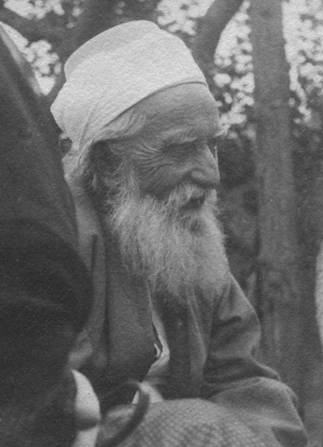
A retelling based on God Passes By by Shoghi Effendi, chapter XXI. Words in quotation marks are quoted in that history.
On Friday, 25 November 1921, despite great fatigue, 'Abdu'l-Bahá attended the noonday prayer at the mosque in Haifa and afterward distributed alms among the poor, as was His custom. He dictated some Tablets, the last He revealed. He blessed the marriage of a trusted servant, which He had insisted should take place that day, and He attended the usual meeting of the friends in His home.
On Saturday He felt feverish, and on Sunday He was unable to leave the house. That day a Pársí pilgrim was giving a feast at the Tomb of the Báb for the anniversary of the Declaration of the Covenant, and He sent all the believers to attend it. In the afternoon, despite growing weariness, He received the Muftí of Haifa, the Mayor and the Head of the Police "with His unfailing courtesy and kindness." That night, the last of His life, before He went to bed He asked after the health of every member of His household, of the pilgrims and of the friends in Haifa.
At 1:15 in the morning He got up, walked to a table in His room, drank some water and went back to bed. Later He asked one of His two daughters, who had stayed awake to care for Him, to lift up the net curtains, as He had difficulty in breathing. Some rose-water was brought to Him, and He drank it and lay down again. When He was offered food, He said distinctly: "You wish Me to take some food, and I am going?" A minute later He had passed away.
The news spread through the town and was sent by telegraph to distant parts of the world. The funeral was held on Tuesday morning. No fewer than ten thousand people, of every class, religion and race in the country, took part. His coffin was carried up the slopes of Mount Carmel on the shoulders of His loved ones to the Shrine of the Báb. There nine speakers, Muslim, Jewish and Christian, gave funeral orations, and His body was laid in a vault adjoining the one in which the remains of the Báb had been laid.
This is a retelling. For the full account, see God Passes By by Shoghi Effendi, chapter XXI.
Cite this story
Effendi, S.. (1944). *God Passes By*. Bahá'í Publishing Trust. https://www.bahai.org/library/authoritative-texts/shoghi-effendi/god-passes-by/
Record yourself reading this story
Recording stays on this device only. Nothing is uploaded.
Related stories
Two Dreams Before the Master's Passing
About two months before His passing, 'Abdu'l-Bahá told His family of a dream in which He raised the call to prayer in a great mosque. Weeks later He dreamed that Bahá'u'lláh came and said to Him, "Destroy this room."
The Greatest Holy Leaf After the Ascension
After 'Abdu'l-Bahá's passing, Shoghi Effendi, stricken with grief, left the Holy Land for a time and placed the affairs of the Faith under the headship of the Greatest Holy Leaf, Bahíyyih Khánum, who administered them in consultation with the Holy Family.
The Funeral of 'Abdu'l-Bahá
'Abdu'l-Bahá passed away in Haifa on 28 November 1921. At His funeral some ten thousand people of every religion and race followed His coffin up Mount Carmel to the Shrine of the Báb, where He was laid to rest.
The World's Condolences at the Master's Passing
When 'Abdu'l-Bahá passed away in Haifa in November 1921, messages of sympathy came from Winston Churchill, Viscount Allenby and the ministers of 'Iráq, and the High Commissioner for Palestine walked in His funeral procession among ten thousand mourners.