The World's Condolences at the Master's Passing
Shoghi Effendi, God Passes By, (1944), Bahá'í Publishing Trust · Read original
When in Bahá'í history
Haifa (today: Haifa, Israel)
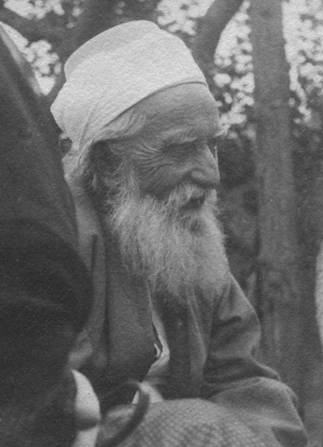
How this story reached us
- 1.God Passes By, account of the passing of 'Abdu'l-Bahá (gut/19275.txt lines 12230-12369); the knighthood and official visits at lines 12089-12103
A retelling based on God Passes By by Shoghi Effendi, which records the passing of 'Abdu'l-Bahá and the tributes that followed. Words in quotation marks are quoted from that history.
For most of His life 'Abdu'l-Bahá was an exile and a prisoner of the Ottoman state. After the British took Palestine in 1918, the British authorities expressed their appreciation of the part He had played in easing the suffering of the people of the Holy Land during the war, and a knighthood was conferred on Him at a ceremony held for His sake at the British Governor's residence in Haifa. General Allenby and Lady Allenby were His guests at Bahjí, and Sir Herbert Samuel called on Him several times.
'Abdu'l-Bahá passed away in Haifa in the early hours of 28 November 1921, in the seventy-eighth year of His age. On the Friday before, despite great fatigue, He had attended the noonday prayer at the mosque and afterwards given alms to the poor, as was His custom.
The news, Shoghi Effendi writes, "spread like wildfire throughout the town, and was flashed instantly over the wires to distant parts of the globe." Messages of sympathy poured in. Winston Churchill, the British Secretary of State for the Colonies, telegraphed the High Commissioner for Palestine, Sir Herbert Samuel, instructing him to "convey to the Bahá'í Community, on behalf of His Majesty's Government, their sympathy and condolence." Viscount Allenby, the High Commissioner for Egypt, asked that the family and the Bahá'í community be given his "sincere sympathy in the loss of their revered leader." The Council of Ministers in Baghdád instructed the Prime Minister to extend their "sympathy to the family of His Holiness 'Abdu'l-Bahá in their bereavement." General Congreve, Commander-in-Chief of the Egyptian Expeditionary Force, sent his deepest sympathy. Newspapers in several countries, among them the London Times, the New York World and Le Temps, paid tribute to Him.
Sir Herbert Samuel sent word at once that he wished to attend the funeral in person, in order, as he later wrote, to "express my respect for His creed and my regard for His person." The funeral took place on the morning of Tuesday, 29 November. Some ten thousand people took part, "representing every class, religion and race in that country." Behind the coffin walked the members of the family, the High Commissioner, Sir Ronald Storrs, Governor of Jerusalem, Sir Stewart Symes, Governor of Phoenicia, government officials, the consuls of various countries, and notables of Palestine, Muslim, Jewish, Christian and Druze. On Mount Carmel, after nine speakers of the Muslim, Jewish and Christian Faiths had given their orations, the High Commissioner drew close to the casket and, "with bowed head fronting the Shrine, paid his last homage of farewell." The other officials followed his example.
Afterwards Sir Herbert Samuel wrote that "a great throng" had "gathered together, sorrowing for His death, but rejoicing also for His life." Sir Ronald Storrs wrote: "I have never known a more united expression of regret and respect than was called forth by the utter simplicity of the ceremony."
In the week after His passing, from fifty to a hundred of the poor of Haifa were fed at His house every day. On the fortieth day, at a memorial feast held in His memory, the Governor of Phoenicia recalled "His dignified figure walking thoughtfully in our streets," His "courteous and gracious manner," His "love for little children and flowers," and His "generosity and care for the poor and suffering."
This is a retelling. For the fuller account, see God Passes By by Shoghi Effendi.
Cite this story
Effendi, S.. (1944). *God Passes By*. Bahá'í Publishing Trust. https://www.bahai.org/library/authoritative-texts/shoghi-effendi/god-passes-by/
Record yourself reading this story
Recording stays on this device only. Nothing is uploaded.
Related stories
The Funeral of 'Abdu'l-Bahá
'Abdu'l-Bahá passed away in Haifa on 28 November 1921. At His funeral some ten thousand people of every religion and race followed His coffin up Mount Carmel to the Shrine of the Báb, where He was laid to rest.
Laid to Rest Beside the Báb
In 1909 'Abdu'l-Bahá laid the remains of the Báb in the Shrine He had built on Mount Carmel. Twelve years later, after His own funeral, His coffin was lowered into a vault beside that of the Báb in the same Shrine.
The Master's Last Three Years
After the Great War lifted the danger to His life, 'Abdu'l-Bahá spent His last three years receiving pilgrims, revealing Tablets and helping the poor, until He passed away in November 1921.
Esslemont's Account of the Master's Funeral
Dr J. E. Esslemont, who had been 'Abdu'l-Bahá's guest in Haifa, describes His peaceful passing and a funeral attended by about ten thousand people of many faiths, which he saw as proof that His life's work had not been in vain.