The Master's Last Three Years
Shoghi Effendi, God Passes By, (1944), Bahá'í Publishing Trust · Read original
When in Bahá'í history
Haifa (today: Haifa, Israel)
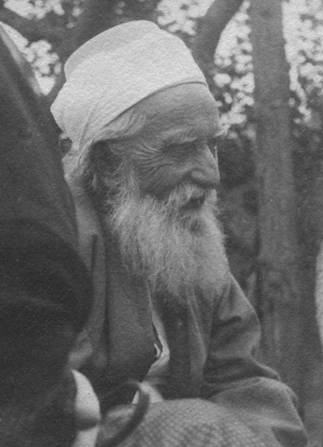
A retelling based on God Passes By by Shoghi Effendi, chapters XX and XXI. Words in quotation marks are quoted in that history.
The war of 1914–18 brought 'Abdu'l-Bahá fresh danger. Haifa was blockaded, and the people of the Holy Land suffered from the neglect and cruelty of the Ottoman authorities; Shoghi Effendi writes that their privations were greatly eased through 'Abdu'l-Bahá's generosity, foresight and care. The Turkish Commander-in-Chief, Jamál Páshá, had spoken of crucifying Him. When the British advanced on Haifa, General Allenby gave orders to ensure His safety.
With the end of the war, the danger that had threatened the Founders of the Faith and the Centre of the Covenant for sixty-five years was, in Shoghi Effendi's words, "completely and definitely lifted." 'Abdu'l-Bahá had three more years to live, and they were full of work.
The British authorities recognized what He had done to relieve suffering during the war and conferred a knighthood on Him at a ceremony held for the purpose at the residence of the British Governor in Haifa. General and Lady Allenby were His guests at lunch at Bahjí, and He took them to the Tomb of Bahá'u'lláh. Feisal, who shortly afterward became the ruler of 'Iráq, met Him at His house in Haifa. Sir Herbert Samuel called on Him several times, before and after becoming High Commissioner for Palestine.
Through the war most of the believers had been cut off from the Holy Land. Now pilgrims came from East and West "in comparative ease and safety" to visit the Holy Tombs in 'Akká and Haifa and to pay their homage to Him.
Among His Tablets of these years Shoghi Effendi names two of special weight: the Tablet to the Swiss scientist Auguste Forel, "one of the most weighty the Master ever wrote," and His reply to the Executive Committee of the "Central Organization for a Durable Peace," which He sent to The Hague by the hands of a special delegation. The Tablets of the Divine Plan, revealed during the war, were unveiled at the first American convention after it. In response, Hyde Dunn, at the age of sixty-two, left his home in California and, with his wife, settled as a pioneer in Australia, and Martha Root set out on the first of the journeys that would take her several times around the world. In 'Ishqábád the first Mashriqu'l-Adhkár, which 'Abdu'l-Bahá had initiated, was completed, and in Wilmette the excavations for the Mother Temple of the West were carried out.
He knew that His own time was short. At the close of His Western journeys He had written: "Friends, the time is coming when I shall be no longer with you. I have done all that could be done. I have served the Cause of Bahá'u'lláh to the utmost of My ability. I have labored night and day all the years of My life." About two weeks before His passing He told His gardener: "I also have finished My work. I can do nothing more. Therefore must I leave it, and take My departure."
Yet, Shoghi Effendi writes, "Till the very last day of His earthly life 'Abdu'l-Bahá continued to shower that same love upon high and low alike, to extend that same assistance to the poor and the down-trodden, and to carry out those same duties in the service of His Father's Faith, as had been His wont from the days of His boyhood." On the Friday before His passing, despite great fatigue, He attended the noonday prayer at the mosque, gave alms to the poor as was His custom, and dictated the last Tablets He revealed. He passed away in the early hours of 28 November 1921, in the seventy-eighth year of His age.
This is a retelling. For the full account, see God Passes By by Shoghi Effendi, chapters XX and XXI.
Cite this story
Effendi, S.. (1944). *God Passes By*. Bahá'í Publishing Trust. https://www.bahai.org/library/authoritative-texts/shoghi-effendi/god-passes-by/
Record yourself reading this story
Recording stays on this device only. Nothing is uploaded.
Related stories
Laid to Rest Beside the Báb
In 1909 'Abdu'l-Bahá laid the remains of the Báb in the Shrine He had built on Mount Carmel. Twelve years later, after His own funeral, His coffin was lowered into a vault beside that of the Báb in the same Shrine.
The Master's Last Friday
On the Friday before His passing in November 1921, 'Abdu'l-Bahá went to the noonday prayer and afterward, despite great fatigue, gave alms to the poor of Haifa as was His custom.
The Funeral of 'Abdu'l-Bahá
'Abdu'l-Bahá passed away in Haifa on 28 November 1921. At His funeral some ten thousand people of every religion and race followed His coffin up Mount Carmel to the Shrine of the Báb, where He was laid to rest.
The World's Condolences at the Master's Passing
When 'Abdu'l-Bahá passed away in Haifa in November 1921, messages of sympathy came from Winston Churchill, Viscount Allenby and the ministers of 'Iráq, and the High Commissioner for Palestine walked in His funeral procession among ten thousand mourners.