The Master's Last Friday
Shoghi Effendi, God Passes By, (1944), Bahá'í Publishing Trust · Read original
When in Bahá'í history
Haifa (today: Haifa, Israel)
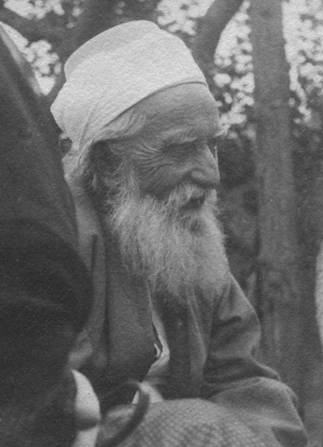
A retelling based on God Passes By by Shoghi Effendi, chapter XXI. One detail comes from The Passing of 'Abdu'l-Bahá by Lady Blomfield and Shoghi Effendi, as quoted in H. M. Balyuzi's 'Abdu'l-Bahá: The Centre of the Covenant. Words in quotation marks are quoted in those books.
For many years 'Abdu'l-Bahá gave alms to the poor on Fridays after the noonday prayer. During the Great War, Shoghi Effendi writes, the hardships of the people of the Holy Land were "greatly alleviated through the bountiful generosity, the foresight and the tender care of 'Abdu'l-Bahá."
By the autumn of 1921 He was very tired. About two weeks before His passing He said to His gardener: "I am so fatigued, the hour is come when I must leave everything and take My flight. I am too weary to walk." Even so, Shoghi Effendi records, "Till the very last day of His earthly life 'Abdu'l-Bahá continued to shower that same love upon high and low alike, to extend that same assistance to the poor and the down-trodden."
On Friday, 25 November 1921, three days before His passing, He went, despite great fatigue, to the noonday prayer at the mosque in Haifa. Afterward He distributed alms among the poor, as was His custom. The account of His last days by Lady Blomfield and Shoghi Effendi says that when He came out of the mosque He found the poor waiting for the alms, and: "This day, as usual, He stood, in spite of very great fatigue, whilst He gave a coin to every one with His own hands."
The rest of the day was full. He dictated some Tablets, the last He revealed. He blessed the marriage of a trusted servant, which He had insisted should take place that day, and He attended the usual meeting of the friends in His home. The next day He felt feverish. He passed away in the early hours of Monday, 28 November.
The poor of Haifa were remembered after He was gone. During the week after His passing, from fifty to a hundred of them were fed at His house every day. On the seventh day corn was distributed in His memory to about a thousand of them, "irrespective of creed or race," and more than a hundred were fed on the fortieth day, when a memorial feast was held in His memory.
This is a retelling. For the full account, see God Passes By by Shoghi Effendi, chapter XXI.
Cite this story
Effendi, S.. (1944). *God Passes By*. Bahá'í Publishing Trust. https://www.bahai.org/library/authoritative-texts/shoghi-effendi/god-passes-by/
Record yourself reading this story
Recording stays on this device only. Nothing is uploaded.
Related stories
The Master's Last Three Years
After the Great War lifted the danger to His life, 'Abdu'l-Bahá spent His last three years receiving pilgrims, revealing Tablets and helping the poor, until He passed away in November 1921.
The Funeral of 'Abdu'l-Bahá
'Abdu'l-Bahá passed away in Haifa on 28 November 1921. At His funeral some ten thousand people of every religion and race followed His coffin up Mount Carmel to the Shrine of the Báb, where He was laid to rest.
The World's Condolences at the Master's Passing
When 'Abdu'l-Bahá passed away in Haifa in November 1921, messages of sympathy came from Winston Churchill, Viscount Allenby and the ministers of 'Iráq, and the High Commissioner for Palestine walked in His funeral procession among ten thousand mourners.
Laid to Rest Beside the Báb
In 1909 'Abdu'l-Bahá laid the remains of the Báb in the Shrine He had built on Mount Carmel. Twelve years later, after His own funeral, His coffin was lowered into a vault beside that of the Báb in the same Shrine.