Esslemont's Account of the Master's Funeral
J. E. Esslemont, Bahá'u'lláh and the New Era, (1923), Bahá'í Publishing Trust · Read original
When in Bahá'í history
Haifa (today: Haifa, Israel)
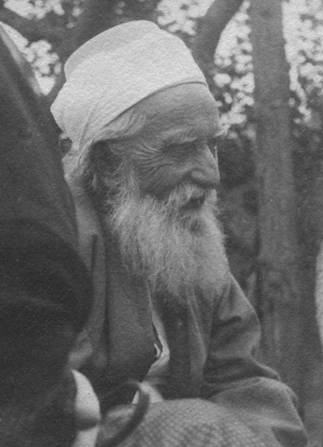
A retelling based on Bahá'u'lláh and the New Era by J. E. Esslemont (chapter 4 and the author's preface). Words in quotation marks are quoted from that book; its description of the funeral is itself quoted from The Passing of 'Abdu'l-Bahá by Lady Blomfield and Shoghi Effendi.
Dr John Esslemont was writing Bahá'u'lláh and the New Era when 'Abdu'l-Bahá invited him to Haifa and asked him to bring the manuscript. He spent two and a half months as His guest in the winter of 1919–1920. 'Abdu'l-Bahá discussed the book with him, had it translated into Persian, and before He passed away corrected some three and a half chapters of it. The book appeared in 1923.
Esslemont had watched the Master's daily life closely. "At that time," he wrote, "although nearly seventy-six years of age, He was still remarkably vigorous, and accomplished daily an almost incredible amount of work." On His afternoon walk or drive He would often "find opportunity by the way of seeing and ministering to some of the poor." During the war, Esslemont records, 'Abdu'l-Bahá had organized farming near Tiberias and so secured a great supply of wheat, by which "famine was averted, not only for the Bahá'ís but for hundreds of the poor of all religions in Haifa and Akká."
His activities, Esslemont writes, "continued with little abatement despite increasing bodily weakness and weariness up till the last day or two of His life." On Friday, 25 November 1921, He attended the noonday prayer at the mosque in Haifa and afterward gave alms to the poor with His own hands. Less than three days later, at about 1:30 in the morning on Monday, 28 November, He "passed away so peacefully that, to the two daughters watching by His bedside, it seemed as if He had gone quietly to sleep."
The funeral took place the next morning. The account Esslemont quotes names those who walked in it: the High Commissioner, Sir Herbert Samuel; the Governor of Jerusalem; the Governor of Phoenicia; the chief officials of the government; the consuls of various countries; "the heads of the various religious communities, the notables of Palestine, Jews, Christians, Moslems, Druses, Egyptians, Greeks, Turks, Kurds, and a host of His American, European and native friends, men, women and children, both of high and low degree ... all, about ten thousand in number." After two hours' walking up Mount Carmel they reached the garden of the Tomb of the Báb. There nine speakers, "all of them prominent representatives of the Muslim, Christian and Jewish communities, bore eloquent and moving witness to their love and admiration of the pure and noble life which had just drawn to its close."
Esslemont ends his account with this reflection:
Surely here was a fitting tribute to the memory of One Who had labored all His life for unity of religions, of races, of tongues—a tribute, and also a proof, that His lifework had not been in vain, that the ideals of Bahá'u'lláh, which were His inspiration, nay, His very life, were already beginning to permeate the world and to break down the barriers of sect and caste that for centuries had alienated Muslim, Christian, Jew, and the other diverse factions into which the human family has been riven.
This is a retelling. For the full account, see Bahá'u'lláh and the New Era by J. E. Esslemont, chapter 4, "The Passing of 'Abdu'l-Bahá."
Cite this story
Esslemont, J. E.. (1923). *Bahá'u'lláh and the New Era*. Bahá'í Publishing Trust. https://www.gutenberg.org/cache/epub/19241/pg19241-images.html
Record yourself reading this story
Recording stays on this device only. Nothing is uploaded.
Related stories
The Funeral of 'Abdu'l-Bahá
'Abdu'l-Bahá passed away in Haifa on 28 November 1921. At His funeral some ten thousand people of every religion and race followed His coffin up Mount Carmel to the Shrine of the Báb, where He was laid to rest.
A Blessing for the Springfield Convention
In November 1921 the Bahá'ís of Springfield, Massachusetts, cabled 'Abdu'l-Bahá for approval of a second race amity convention. He answered, "Approved; God confirms." The convention met on 5 and 6 December, a week after His passing.
The World's Condolences at the Master's Passing
When 'Abdu'l-Bahá passed away in Haifa in November 1921, messages of sympathy came from Winston Churchill, Viscount Allenby and the ministers of 'Iráq, and the High Commissioner for Palestine walked in His funeral procession among ten thousand mourners.
Laid to Rest Beside the Báb
In 1909 'Abdu'l-Bahá laid the remains of the Báb in the Shrine He had built on Mount Carmel. Twelve years later, after His own funeral, His coffin was lowered into a vault beside that of the Báb in the same Shrine.