"Approved; God Confirms": The Master's Last Word to the American Friends
Star of the West Editors, Star of the West, (1922), Bahai News Service · Read original
When in Bahá'í history
Springfield, Massachusetts (today: Springfield, Massachusetts, USA)
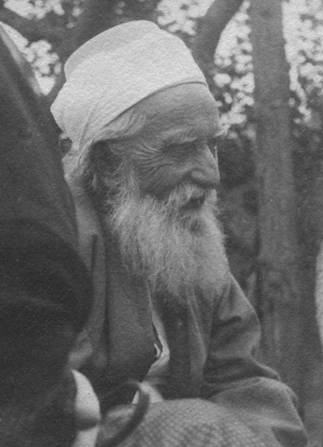
A retelling based on the contemporary record preserved in Star of the West, the early Bahá'í periodical, which printed the account of 'Abdu'l-Bahá's last cable to the American friends and of the convention they held in His memory. Short phrases in quotation marks are words preserved in that record.
In the last days of His earthly life, while the believers of the West could not yet imagine how near His passing was, 'Abdu'l-Bahá sent across the ocean a brief message of only a few words. It would prove to be, so far as the record shows, His last word of sanction upon a public service of the Bahá'ís of America — and it was a word about the oneness of the human family.
The story behind it begins earlier in 1921. That spring, at 'Abdu'l-Bahá's own prompting, the American believers had held in Washington the first Convention for Amity between the Coloured and White Races — a bold and, for that time and country, an almost unheard-of undertaking: black and white Americans meeting together, in public, as equals and as friends, under the banner of the unity of mankind. The Master had conceived it, urged it, and watched over it from afar. It had gone forward, and it had borne fruit.
Heartened by what the first gathering had achieved, the friends in Springfield, Massachusetts, resolved early in November to hold a second such convention. But they would not move without His blessing. So, after due thought and consultation, they did what the believers of that era always did when a great step was before them: they cabled 'Abdu'l-Bahá in Haifa, laying the plan before Him and asking His approval and confirmation.
Three days later, the answer came back across the wires. It was, in its entirety, the kind of message only He could send — utterly brief, and utterly full. "Approved; God confirms," it read, and it was signed simply, "ABBAS."
Two words of sanction, and the name He used for Himself: 'Abbás, the servant. In that small compass was everything the friends needed. Approved — the plan had His blessing. God confirms — and more than His blessing, the assurance that the very power of Heaven stood behind a work undertaken for the unity of the races. The believers had their answer, and they set about their preparations with joy.
They did not know what we know, reading the record now. They did not know that this cable was, as the Star of the West would later record, His last words affirming a public service by the Bahá'ís of America. They did not know that even as the wires carried His blessing westward, His strength in Haifa was failing. Within days of sending that confirmation, in the small hours of the twenty-eighth of November, 1921, 'Abdu'l-Bahá quietly breathed His last.
So the news of His passing reached the American friends in the very weeks they were arranging the convention He had just blessed. One can scarcely imagine the weight of that moment. They had cabled their Beloved for His sanction; He had given it; and almost in the same breath He was gone. The blessing and the bereavement arrived all but together. The little band of believers who had been preparing a gathering in joy now found themselves preparing it in grief, holding in their hands the last word He would ever send them.
And here is the steadfastness that gives the story its quiet glory: they went forward. They did not let their sorrow undo His instruction. In December of 1921, in the shadow of His passing, the second Convention for Amity between the Races was held in Springfield as planned. The friends carried out, in mourning, the very work their Master had confirmed in His final days. His blessing became, in effect, a charge laid upon them; and they kept faith with it. What He had approved, they accomplished — not in spite of His departure, but because of their love for the One who had departed.
There is a deep fitness in the fact that 'Abdu'l-Bahá's last recorded sanction of an American undertaking should have been for the unity of the races. Throughout His ministry He had taught that prejudice of every kind is a poison to be uprooted, and that the friendship of the diverse peoples of humanity is among the dearest purposes of God for this age. He had pressed this teaching upon the American believers with particular urgency, knowing the wounds their country carried. That His parting word to them should bless precisely this work — black and white meeting as one before the eyes of a sceptical nation — was, in a sense, a summing-up of all He had been trying to give them. It was as though, at the very threshold of His passing, He turned to the friends of the West and pointed them once more toward the work that mattered most.
The Star of the West, which through those grief-laden months was the friends' single steady line of news from the changing world centre at Haifa, preserved both the cable and the account of the convention held in its wake. Through its pages the scattered believers across North America — in great cities and in lonely towns where one or two souls might be the only Bahá'ís for many miles — learned not only that their Beloved had ascended, but that His last word to them had been a blessing upon their service and a summons to go on. They grieved; and they obeyed; and the work did not stop.
On the anniversary of His ascension, this small episode carries a large instruction. The Master is no longer among us in the body, as He was no longer among the Springfield friends after that November. But His guidance stands; His blessings stand; the works He confirmed remain to be carried forward. The faithful response to losing Him is the very one those early American believers gave: to take up the unfinished service, to keep the promise made to a departed Friend, and to labour on — sorrowing for His death, but rejoicing in His life, and resolved that His life-work shall not falter for the want of our faithfulness.
This is a retelling. For the fuller account, see Star of the West, the early Bahá'í periodical.
Cite this story
Editors, S. O. T. W.. (1922). *Star of the West*. Bahai News Service. https://bahai-library.com/star_of_the_west
Record yourself reading this story
Recording stays on this device only. Nothing is uploaded.
Related stories
Ten Thousand Mourners on Mount Carmel: The Funeral of 'Abdu'l-Bahá
On November 28, 1921, 'Abdu'l-Bahá ascended at His home in Haifa. The next day, before a procession of ten thousand mourners — Muslims, Christians, Jews, Druze — He was carried up the slopes of Mount Carmel to the Shrine of the Báb, where nine speakers from three faiths delivered His funeral orations.
A Proof His Life-Work Was Not in Vain: Esslemont on the Master's Passing
In an early classic of Bahá'í literature, the Scottish physician J. E. Esslemont set down for the West the account of 'Abdu'l-Bahá's passing — how peacefully He went, how every community of the land walked behind His coffin, and how that gathering of Jew, Christian, and Muslim was itself a living proof that His lifelong labour for unity had not been in vain.
The Homage of an Empire: The World's Tribute at the Master's Passing
For most of His life 'Abdu'l-Bahá had been a prisoner of the state. When He passed in Haifa in 1921, the very governments that had once exiled and confined Him hastened to do Him honour — telegrams of condolence from Winston Churchill and the British Crown, from Viscount Allenby, from the ministers of 'Iráq, and the High Commissioner himself standing among the mourners.
A Vault Within the Shrine: Where 'Abdu'l-Bahá Was Laid to Rest
At the end of the great funeral on Mount Carmel in 1921, 'Abdu'l-Bahá was laid to rest not in a tomb of His own but in a chamber of the Shrine of the Báb — the very Shrine He had laboured for years to raise over the remains of His Lord's Forerunner. The Builder of that holy House became one of its treasures.