The Last Audience at Bahjí
Shoghi Effendi, God Passes By, (1944), Bahá'í Publishing Trust · Read original
When in Bahá'í history
Bahjí (today: Bahjí, near 'Akká, Israel)
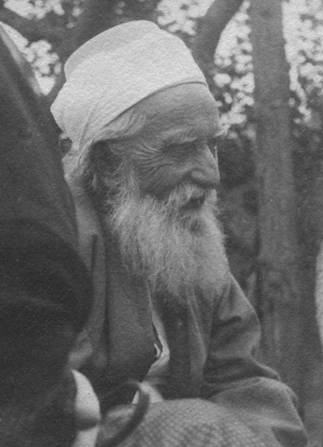
A retelling based on God Passes By by Shoghi Effendi, chapter XIII, "Ascension of Bahá'u'lláh." The words in quotation marks are Bahá'u'lláh's own, as recorded in that history.
In the last years of His life Bahá'u'lláh lived at the Mansion of Bahjí, outside 'Akká. Shoghi Effendi writes that nine months before His ascension He had, as 'Abdu'l-Bahá attested, voiced His desire to depart from this world, and that from then on the tone of His remarks to those who met Him made it increasingly clear that the end of His earthly life was near, though He did not speak of it openly.
On the night preceding the eleventh of Shavvál 1309 A.H. (8 May 1892) He contracted a slight fever. It rose the next day and then subsided, and for a time He went on receiving some of the friends and pilgrims. Then the fever returned in a more acute form, and His condition grew steadily worse.
Six days before He passed away, Bahá'u'lláh summoned to His presence the entire company of believers who had gathered in the Mansion, several pilgrims among them. He lay in bed, leaning against one of His sons. It proved to be their last audience with Him. Shoghi Effendi records that He addressed the weeping crowd gently and affectionately:
"I am well pleased with you all. Ye have rendered many services, and been very assiduous in your labors. Ye have come here every morning and every evening. May God assist you to remain united. May He aid you to exalt the Cause of the Lord of being."
To the women gathered at His bedside, members of His own family among them, He spoke similar words of encouragement. He assured them that in a document He had entrusted to the Most Great Branch, 'Abdu'l-Bahá, He had commended them all to His care. Later in the same history Shoghi Effendi explains that Bahá'u'lláh had alluded to His Covenant in this farewell to His family, and that during His last illness He had entrusted to 'Abdu'l-Bahá the document He called "the Book of My Covenant." Written entirely in His own hand, it was unsealed on the ninth day after His ascension.
Bahá'u'lláh ascended at dawn on 29 May 1892, in the seventy-fifth year of His age. Bahá'ís observe the anniversary each year as the Ascension of Bahá'u'lláh.
This is a retelling. For the full account, see God Passes By by Shoghi Effendi, chapters XIII and XIV.
Cite this story
Effendi, S.. (1944). *God Passes By*. Bahá'í Publishing Trust. https://www.bahai.org/library/authoritative-texts/shoghi-effendi/god-passes-by/
Record yourself reading this story
Recording stays on this device only. Nothing is uploaded.
Related stories
The Book of the Covenant
Bahá'u'lláh wrote His Will and Testament, the Kitáb-i-'Ahd, in His own hand and entrusted it to 'Abdu'l-Bahá during His last illness. Opened nine days after His ascension, it directed His family and followers to turn to the Most Mighty Branch.
The Ascension of Bahá'u'lláh
Thus simply and serenely did Bahá’u’lláh pass the evening of His life on earth until, after an attack of fever, He passed away on the 29th of May, 1892, at the age of seventy-five.
Nabíl's Grief at the Ascension
'Abdu'l-Bahá tells how Nabíl-i-Zarandí, who had spent his life in the service of Bahá'u'lláh, was overwhelmed with grief when Bahá'u'lláh passed away in 1892, and could not bear to live on without Him.
Nabíl and the Tablet of Visitation
After Bahá'u'lláh's ascension, 'Abdu'l-Bahá asked the chronicler Nabíl to select passages from Bahá'u'lláh's Writings to form the Tablet of Visitation, the text now recited in the Shrines of Bahá'u'lláh and the Báb.