Two Days in Minneapolis and St. Paul
Mírzá Maḥmúd-i-Zarqání, Mahmúd's Diary: The Diary of Mírzá Maḥmúd-i-Zarqání, (1998), George Ronald
When in Bahá'í history
Minneapolis (today: Minneapolis, Minnesota, USA)
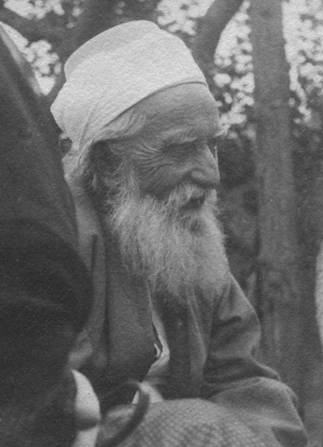
A retelling based on Mahmúd's Diary: The Diary of Mírzá Maḥmúd-i-Zarqání.
On 17 September 1912 'Abdu'l-Bahá and His party took the train from Chicago to Minneapolis. At nine in the evening, a few stations short of the city, Mr Albert Hall and some of the friends boarded the train to greet Him. At Minneapolis another group of friends and some journalists were waiting. The Master told them He was very tired and would see them the next morning, and went to the Hotel Plaza, which faced a park with a lake. When the friends told Him that many ministers and other prominent people of the city had sent invitations, He replied:
We cannot stay more than two days. We come and in each city we create a stir, scatter some seeds, awaken the people, inform them of the Most Great Call and then leave.
The next day the assembly hall of the hotel became a meeting place for the friends. He spoke to them, answered questions from the audience about socialism, and gave interviews to newspaper reporters. A Jewish rabbi called and asked Him to speak in his synagogue. "I have come from your original homeland, Jerusalem," the Master told him. "I passed forty-five years in Palestine, but I was in prison." He was also the guest of the Commercial Club, where prominent members gathered round to hear Him explain the laws of God. That evening He gave an address at the synagogue, setting out proofs of the truth of Christ and of Muhammad.
On 19 September He visited a museum, where He looked at small tear vials from ancient Phoenicia and remarked, "See how these bottles have outlasted the bodies of men under the earth." In the afternoon there was a meeting at the home of Mr Hall, attended by philosophers, professors and clergymen, where He spoke on the oneness of mankind. Then Dr Clement Woolson took Him by automobile the fifteen miles to St. Paul. On the way the Master praised the cleanliness and beauty of the Mississippi River and the green hills and gardens. At the Woolson home He spoke to the assembled friends about nature's lack of perfection and its recreation through divine education. Afterwards He walked in the garden, where children came up to ask about His country; He gave each of them some coins. He then returned to Minneapolis for an evening meeting at the Hall home. Transcripts of the talks at both homes are published in The Promulgation of Universal Peace.
On Friday, 20 September, before leaving, He counselled the friends: "You must have deep love for one another. Go to see each other and be consoling friends to all." At eight in the morning He left for the station. The friends were sad at His departure, and He told them, "I shall never forget you. You are always in my mind," and urged them to be kind to the poor. At St. Paul station Dr Woolson came to say goodbye. The train reached Omaha two hours after midnight.
A retelling based on Mahmúd's Diary: The Diary of Mírzá Maḥmúd-i-Zarqání (entries for 17–20 September 1912). For the fuller account, see the original.
Cite this story
Maḥmúd-i-Zarqání, M.. (1998). *Mahmúd's Diary: The Diary of Mírzá Maḥmúd-i-Zarqání*. George Ronald.
Record yourself reading this story
Recording stays on this device only. Nothing is uploaded.
Related stories
Scattering Seeds in the Twin Cities
'Abdu'l-Bahá could stay only two days in Minneapolis and St. Paul. In that time He spoke at His hotel, a club, a synagogue and two friends' homes.
The Answer at Ford Hall
In Boston in 1912, a speaker warned a large audience that a false Christ had come to America. 'Abdu'l-Bahá, speaking next, told them of the truth of all the Prophets of God, and especially of Christ.
A Question at Temple Emanu-El
In a San Francisco synagogue, 'Abdu'l-Bahá spoke about Moses and then asked His Jewish listeners why they should not also praise Christ and Muḥammad.
Two Pathways
In a large church in Philadelphia, 'Abdu'l-Bahá spoke about two pathways, the way of nature and the way of religion, and said that religion must bring people together.