Scattering Seeds in the Twin Cities
Mírzá Maḥmúd-i-Zarqání, Mahmúd's Diary: The Diary of Mírzá Maḥmúd-i-Zarqání, (1998), George Ronald
When in Bahá'í history
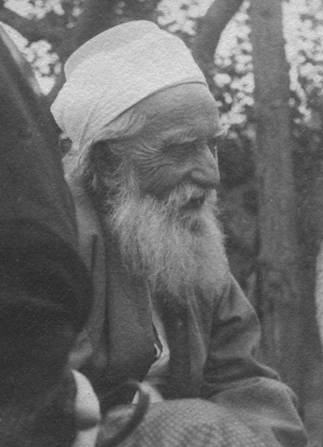
A retelling for children, based on Mahmúd's Diary (entries for 17-20 September 1912).
One September evening in 1912, 'Abdu'l-Bahá was traveling by train from Chicago to the city of Minneapolis, with the small group of friends who traveled with Him. A few stations before the city, a man named Albert Hall and some other friends climbed aboard to welcome Him.
When the train arrived, more friends and some newspaper reporters were waiting. 'Abdu'l-Bahá was very tired. He told them He would see them in the morning, and went to His hotel, which looked out on a park with a lake.
The friends told Him that many ministers and important people in the city had invited Him. But 'Abdu'l-Bahá explained that He could stay only two days. He said:
We come and in each city we create a stir, scatter some seeds, awaken the people, inform them of the Most Great Call and then leave.
The next morning, the hall of His hotel filled with friends, and He answered their questions. Newspaper reporters came to interview Him. A Jewish rabbi visited and asked Him to speak in his synagogue. 'Abdu'l-Bahá told the rabbi, "I have come from your original homeland, Jerusalem," and explained that He had spent forty-five years in the Holy Land, but in prison. He spoke to the members of a businessmen's club, and that evening He gave a talk in the synagogue.
The next day He visited a museum and looked at some tiny bottles from ancient Phoenicia. Long ago, people had kept their tears in them when someone they loved had died, and the bottles were buried with the dead. "See how these bottles have outlasted the bodies of men under the earth," He said.
That afternoon, professors, ministers and other guests came to Albert Hall's home to hear Him speak about the oneness of all people. Then a doctor named Clement Woolson took Him by automobile to the neighboring city of St. Paul. On the way, 'Abdu'l-Bahá praised the Mississippi River and the green hills and gardens.
At Dr Woolson's house, He spoke to the friends. Then He took a walk in the garden. Some children came up and politely asked Him where He was from and why He had come. He talked with them kindly and gave each of them a few coins. One tiny boy slid down from his father's lap, ran to 'Abdu'l-Bahá and said, "I love you first and then my father."
That evening He drove back to Minneapolis for one more meeting at Albert Hall's home.
The next morning, before He left, He gave the friends some advice: "You must have deep love for one another. Go to see each other and be consoling friends to all." The friends were sad to see Him go. He comforted them, saying, "I shall never forget you. You are always in my mind." He also asked them to be kind to the poor. Then the train carried Him away toward Omaha.
This is a retelling for children. For the fuller account, see "Two Days in Minneapolis and St. Paul".
Cite this story
Maḥmúd-i-Zarqání, M.. (1998). *Mahmúd's Diary: The Diary of Mírzá Maḥmúd-i-Zarqání*. George Ronald.
Record yourself reading this story
Recording stays on this device only. Nothing is uploaded.
Related stories
Two Days in Minneapolis and St. Paul
In September 1912 'Abdu'l-Bahá spent two days in Minneapolis and St. Paul, speaking at His hotel, the Commercial Club, a synagogue and the homes of Albert Hall and Dr Clement Woolson.
Back in New York
After traveling across America and back, 'Abdu'l-Bahá returned to New York in November 1912 and welcomed the many friends and visitors who came to see Him before He sailed away.
The Last Weeks in New York
After His journey to California and back, 'Abdu'l-Bahá returned to New York in November 1912 and received crowds of friends and seekers until He sailed on the Celtic on 5 December.
The Chronicler of the Master’s Journey
Mírzá Maḥmúd-i-Zarqání completed the first volume of his chronicle of ‘Abdu’l-Bahá’s 1912 journey in America at the end of 1913; at his sudden death the Guardian cabled that his outstanding services would shine evermore.