The Master at Niagara Falls
Mírzá Maḥmúd-i-Zarqání, Mahmúd's Diary: The Diary of Mírzá Maḥmúd-i-Zarqání, (1998), George Ronald
When in Bahá'í history
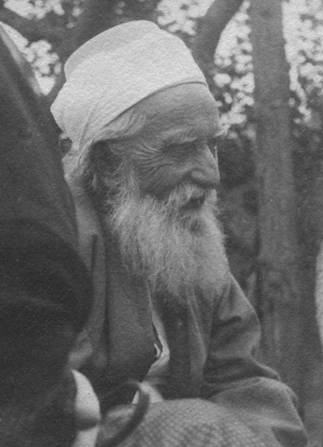
A retelling for children, based on Mahmúd's Diary (entries of September 9 and 10, 1912).
'Abdu'l-Bahá came to the city of Buffalo late at night, after a long, dusty train ride from Canada. He was very tired. But He said that in the path of God we must think of our troubles as blessings.
The next day, many people came to see Him, and newspaper reporters came one after another. In the afternoon, because some of His companions asked, He took the trolley, a kind of streetcar, all the way out to Niagara Falls. It was a long ride, and each ticket cost fifty cents.
Mahmúd, who wrote the diary, and the other friends from Persia had never seen such huge waterfalls. The river pours over the edge from a great height. Mahmúd wrote that the crashing water threw up spray that looked like a great sandstorm.
'Abdu'l-Bahá went to the edge and admired the falls. He remembered Bahá'u'lláh. In Mázindarán, in Persia, there were small waterfalls that Bahá'u'lláh loved so much that He would camp beside them for several days.
Then 'Abdu'l-Bahá said that so much electricity could be made from this water that it would be enough for the whole town, and that it was very good for the health.
He sat on the bank of the river and ate some pears and grapes. Then He walked in the park. His friends asked Him to stay there for a few days. But He said it was not possible, not even for half a day. "We have no time for amusement," He told them. "We must keep ourselves engaged in our work."
He sat on a bench in the park and told His friends that He had washed His hair with warm water and no soap. He asked them to come and feel how clean and soft it was. They touched it, and it was as soft as silk.
On the trolley ride back, someone read Him what the newspapers were saying about His arrival. That evening He gave a talk about love and unity between the peoples of the East and the West. Later, as He walked past the lighted shop windows, He came to a place where some poor people had gathered, and He gave money to each one.
This is a retelling for children. For the fuller account, see "'Abdu'l-Bahá at Niagara Falls".
Cite this story
Maḥmúd-i-Zarqání, M.. (1998). *Mahmúd's Diary: The Diary of Mírzá Maḥmúd-i-Zarqání*. George Ronald.
Record yourself reading this story
Recording stays on this device only. Nothing is uploaded.
Related stories
'Abdu'l-Bahá at Niagara Falls
On 10 September 1912, during His stay in Buffalo, 'Abdu'l-Bahá took the trolley to Niagara Falls, recalled the small waterfalls Bahá'u'lláh had loved in Mázindarán, and told His companions He could not stay even half a day.
The Answer at Ford Hall
In Boston in 1912, a speaker warned a large audience that a false Christ had come to America. 'Abdu'l-Bahá, speaking next, told them of the truth of all the Prophets of God, and especially of Christ.
Summer Days in the Hills
When 'Abdu'l-Bahá went to stay in the green hills of New Hampshire, His hostess hoped He could rest. But He said He had come to work and to serve, and He welcomed the many people who came to see Him.
'Abdu'l-Bahá in Boston
'Abdu'l-Bahá visited Boston three times in 1912. He addressed the Unitarian conference at Tremont Temple and the Free Religious Association at Ford Hall, spoke to journalists about peace, and later stayed a week at Malden.