Roses at the Turkish Embassy
Mírzá Maḥmúd-i-Zarqání, Mahmúd's Diary: The Diary of Mírzá Maḥmúd-i-Zarqání, (1998)
When in Bahá'í history
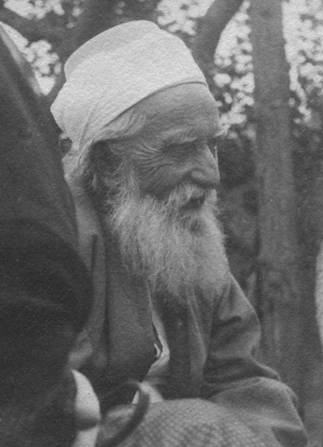
How this story reached us
- 1.Mahmúd's Diary, entry for Thursday 25 April 1912 (Washington), with note 58 and the biographical notes on 'Abdu'l-Bahá and Sultan 'Abdu'l-Ḥamíd II; 'Abdu'l-Bahá's words on forty years in prison are from the entry for 1 December 1912
- 2.The Diary of Juliet Thompson, Washington, April 1912: the reception given by 'Alí-Qulí Khán and her earlier meeting with Díyá Páshá, and the dinner at the Turkish Embassy on 25 April
A retelling based on Mahmúd's Diary by Mírzá Maḥmúd-i-Zarqání, with details from The Diary of Juliet Thompson. Words in quotation marks are as those two diaries record them.
On the evening of Thursday, 25 April 1912, in Washington, the Turkish Ambassador, Díyá Páshá, gave a dinner in honour of 'Abdu'l-Bahá. Mírzá Maḥmúd, who kept the diary of the Master's journey, calls it a royal feast. Most of the Persian companions were invited, as were many dignitaries, all in formal dress.
The Master had spent forty years a prisoner. In New York later that year He said, "For forty years I was in a prison for promulgating universal peace and the oneness of humanity," and He named the Sháh of Persia and the Sultán of Turkey as the powers that had opposed those teachings. The notes to Mahmúd's Diary add that in 1901 Sultan 'Abdu'l-Ḥamíd II had confined Him and His family within the walls of 'Akká, and that He was freed by the Young Turks' revolution of 1908. The Sultan was deposed the following year. Four years after His release, 'Abdu'l-Bahá was the guest of honour at the embassy of the same empire.
Juliet Thompson was at the dinner. "Never have I seen such a beautiful table," she wrote. Hundreds of roses lay the whole length of it, sweeping up from the head and the foot to a great mound in the centre, where the Master sat, facing His host. He wore His usual white, with a honey-coloured 'abá.
Juliet had known Díyá Páshá before. A few months earlier, at the request of his daughter-in-law, an American friend of hers, she had told him of the Bahá'í teachings. She had to speak in French, and he looked sceptical the whole time, until she said that through the Bahá'í teaching she had become a Muslim, and spoke of Muhammad with reverence. Then he left the table and came back with a very old Qur'án on illuminated parchment. "No Christian eye but yours," he said, "has ever looked upon this."
Earlier that week, at the Persian Embassy, where 'Alí-Qulí Khán and his wife Florence held a reception for the Master, Díyá Páshá had stood beside Juliet while the Master spoke. Afterwards he turned to her and said, "This is irrefutable. This is pure logic." He went on with 'Abdu'l-Bahá to a second reception, at the home of Mrs Parsons, and Juliet saw them enter the hall together hand in hand.
At the embassy dinner, Maḥmúd writes, the Master gave a short talk "with the utmost majesty and beauty" on the influence of the words of the Manifestations of God and their all-conquering power. Juliet noticed that Díyá Páshá watched Him "with eyes full of tears, his keen old hawk's face strangely softened."
The ambassador then read a statement he had written in praise of his guest and presented it to Him. Maḥmúd copied it into the diary:
He has suffered and sacrificed everything for the purpose of disseminating good qualities for humanity. He has now honored us by His presence. His Honor, 'Abdu'l-Bahá, is unique in our age and is highly esteemed and treasured by all of us.
Juliet heard him call the Master "the Light of the world, the Unique One of the age."
"I am not worthy of this," said the Master, very simply.
Then He answered the ambassador. "This night is a very blessed night," He said, "worthy of the utmost praise and joy for many reasons." They were in a country famous for its prosperity and freedom. "Second, we are in a house which is connected to the great Ottoman Power." They were the guests of an ambassador whose character He praised. And the gathering itself showed the love and unity possible between East and West. Two marriages at that table joined them, as Juliet notes: Díyá Páshá's son, Díyá Bey, had married an American, Carey, and 'Alí-Qulí Khán of the Persian Embassy had married Florence. The Master said: "This is a proof that the Orient and Occident can meet, love and unite."
He spoke of the oneness of mankind, and of imitations and prejudices that had hidden the Sun of Reality like clouds, and said that those clouds would soon be wholly removed. "The standard of the oneness of humanity will be unfurled, the tabernacle of the universal peace will be raised, and this world will become another world." He thanked the ambassador for bringing people of so many nationalities together in his home.
At the close of the dinner the ambassador rose again to show his respect, and, Maḥmúd records, "accompanied the Master to His carriage with the utmost humility and esteem."
As Juliet said goodnight to Díyá Páshá, he looked at her through a mist of tears and said: "Truly, He is a Saint."
This is a retelling. For the full accounts, see Mahmúd's Diary (entry for 25 April 1912) and The Diary of Juliet Thompson.
Cite this story
Maḥmúd-i-Zarqání, M.. (1998). *Mahmúd's Diary: The Diary of Mírzá Maḥmúd-i-Zarqání*.
Record yourself reading this story
Recording stays on this device only. Nothing is uploaded.
Related stories
Not by Hygienic Laws
On 13 May 1912 'Abdu'l-Bahá lay ill in New York with a high fever. Asked by Juliet Thompson whether He must still go to the peace meeting at the Hotel Astor, He answered that He worked by the confirmations of the Holy Spirit, and went.
The Prince on the Terrace
At Thonon in 1911 Zillu's-Sultán, whose orders had sent Bahá'ís to their deaths, met 'Abdu'l-Bahá, Who embraced him and told him never to think of the past again. Later one of the prince's sons wept over his family's deeds.
No Taxes in the Kingdom of God
In New York on 13 April 1912 a young single-taxer asked ‘Abdu’l-Bahá what message to take to his friends. The Master laughed and told him that in the Kingdom of God there is plenty of land and no taxes.
The Peace Society Meeting at the Hotel Astor
On 13 May 1912, ill with a high fever, ‘Abdu’l-Bahá still went to speak at the New York Peace Society’s meeting at the Hotel Astor, telling Juliet Thompson that He worked by the confirmations of the Holy Spirit.