The Prince on the Terrace
Juliet Thompson, The Diary of Juliet Thompson, (1947)
When in Bahá'í history
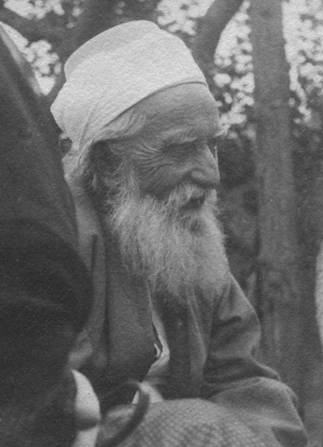
How this story reached us
- 1.The Diary of Juliet Thompson, Thonon entries of August 1911 (narr/wrapped/thompson_diary.txt lines 2272-2276, the Hotel du Parc; lines 2452-2476, Zillu's-Sultán on the terrace and Prince Bahrám at lunch; lines 2956-2962, the elder son; notes 86-87 at lines 5406-5409)
A retelling based on The Diary of Juliet Thompson by Juliet Thompson. Words in quotation marks are quoted from the diary.
In August 1911 'Abdu'l-Bahá was staying at the Hotel du Parc at Thonon, on Lake Geneva: a large white hotel with two oleander trees at its entrance and a green terrace with a marble balustrade above the lake. Juliet Thompson, who was in London, received a telegram from Him on 22 August: "COME HERE." She arrived on the 24th and watched Him pass among the hotel guests, "unrecognized but not unfelt."
The day before she arrived, Zillu's-Sultán had come over from Geneva for a few hours. He was the eldest son of Náṣiri'd-Dín Sháh, and would have succeeded to the throne of Persia but for the fact that his mother was not of royal blood. It was through his orders, Juliet writes, that the two Bahá'ís known as "The King of the Martyrs" and "The Beloved of the Martyrs", and at least a hundred others, had been put to death. Now the royal family was in exile, and Zillu's-Sultán and his sons were living in Geneva.
He went straight to the Hotel du Parc. Hippolyte Dreyfus, the husband of Juliet's friend Laura, had met him years before in Persia, visiting him in his tent during a hunting trip. Now Hippolyte was standing in the doorway when he saw the prince coming up the steps. 'Abdu'l-Bahá was on the terrace, pacing up and down a little distance away. The prince greeted Hippolyte, then turned a startled look toward the Master.
"Who is that Persian nobleman?" he asked.
"That," answered Hippolyte, "is 'Abdu'l-Bahá."
"And now Zillu's-Sultán spoke very humbly," Juliet records. "Take me to Him," he begged.
Hippolyte told Juliet that the prince mumbled out excuses for what he had done. "But the Master took him in His arms and said: 'All those things are in the past. Never think of them again.'" Then 'Abdu'l-Bahá invited the prince's two sons to spend a day with Him.
So the younger son, Prince Bahrám Mírzá, came to lunch while Juliet was there. She thought him a beautiful boy, like a Persian miniature, and also that he had no manners at all. After lunch the Master insisted, over their protests, that Juliet and Laura leave the room before Him, and the young prince walked out ahead of them both. 'Abdu'l-Bahá said afterward, "Bahrám Mírzá bad níst": Prince Bahrám is not bad.
When they returned to the white and rose-coloured room, the Master seated Juliet on His left and the prince on His right, and coffee was brought. It was served to the prince first. To Juliet's surprise he rose and offered his cup to her. She urged him to keep it. "No," he replied solemnly, "it has two lumps of sugar in it. I don't like two lumps of sugar."
Early on the morning of Juliet's last visit to the Master at Thonon, the elder son, Sultán Ḥusayn Mírzá, came to see Him. After a long private talk with 'Abdu'l-Bahá the prince rushed into the room of Tamaddunu'l-Mulk, the Persian believer who had travelled from London with Juliet, threw himself down on the couch and wept bitterly.
"If only I could be born again," he sobbed, "into any other family than mine! When I think that my own father has massacred so many Bahá'ís; that it was through my grandfather's orders that thousands of Bábís were slaughtered and the Báb Himself executed, I cannot endure the blood that flows in my veins. If only I could be born again!"
Years later, in 1947, Juliet added a note to her diary. She had heard that Sultán Ḥusayn Mírzá had become a Bahá'í and was serving the Cause with great zeal in Persia. His younger brother, Prince Bahrám, had died in the First World War, on a torpedoed ship.
This is a retelling. For the fuller account, see The Diary of Juliet Thompson by Juliet Thompson.
Record yourself reading this story
Recording stays on this device only. Nothing is uploaded.
Related stories
Be Happy in the Present
On a drive near Thonon in August 1911, 'Abdu'l-Bahá bought violets from peasant children and stopped at a waterfall. When Juliet Thompson wished she could follow Him all her life, He told her to be happy in the present.
Roses at the Turkish Embassy
In April 1912, four years after the Ottoman Empire released 'Abdu'l-Bahá from prison, its ambassador in Washington gave a dinner in His honour, read Him a tribute, and walked Him to His carriage.
The Master and the Persian Princes
At Thonon in 1911 ‘Abdu’l-Bahá embraced the exiled prince Ẓillu’s-Sulṭán, whose family had persecuted the Bahá’ís, and asked to meet his sons; the elder of them later became a Bahá’í.
No Taxes in the Kingdom of God
In New York on 13 April 1912 a young single-taxer asked ‘Abdu’l-Bahá what message to take to his friends. The Master laughed and told him that in the Kingdom of God there is plenty of land and no taxes.