Not by Hygienic Laws
Juliet Thompson, The Diary of Juliet Thompson
When in Bahá'í history
How this story reached us
- 1.The Diary of Juliet Thompson (narr/thompson_diary.txt, entry "13 May 1912"; wrapped copy scratchpad/wrap/thompson_diary.txt lines 3563-3572)
- 2.The Diary of Juliet Thompson (entry "11 May 1912": return to New York from Washington, Cleveland and Chicago; scratchpad/wrap/thompson_diary.txt line 3542)
- 3.Mahmud's Diary (narr/mahmud.txt, entry for Monday, May 13, 1912; wrapped copy scratchpad/wrap/mahmud.txt lines 1575-1597)
- 4.Mahmud's Diary (scratchpad/lib/mahmuds-diary.txt; entry for Sunday, May 12, 1912, Montclair, wrapped copy scratchpad/wrap/mahmud.txt lines 1394-1433; entry for Tuesday, May 14, 1912, Lake Mohonk, wrapped copy lines 1603-1621)
- 5.'Abdu'l-Bahá: The Centre of the Covenant by H. M. Balyuzi, ch. on New York, pp. 191-192 (scratchpad/lib/abdul-baha-centre-of-covenant-balyuzi.txt lines 5700-5706): 12 May "very fatigued and almost exhausted", Montclair and Grace Methodist Episcopal Church; Professor A. V. Williams Jackson of Columbia
- 6.The Promulgation of Universal Peace (gut/19285.txt lines 5554-5566 and 5570-5573, 5614-5655, also scratchpad/lib/canon/19285.txt: talk of 13 May 1912 at the Hotel Astor; lines 11409-11416: talk of 17 August 1912 at Green Acre)
A retelling based on The Diary of Juliet Thompson by Juliet Thompson, with details from Mahmúd's Diary, H. M. Balyuzi's 'Abdu'l-Bahá: The Centre of the Covenant and The Promulgation of Universal Peace. Words in quotation marks are as those books record them.
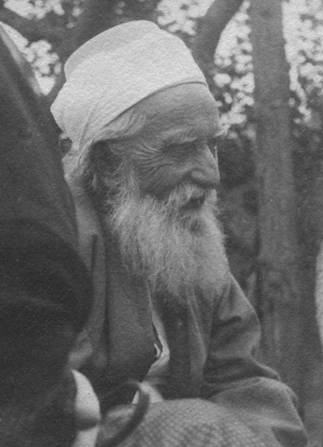
On 13 May 1912 the New York Peace Society held a meeting at the Hotel Astor, and 'Abdu'l-Bahá was to be its guest of honour.
The Master had come back to New York only two days earlier, after visiting Washington, Cleveland and Chicago. On the morning of 12 May, Mírzá Maḥmúd recorded, He remarked over tea: "Although we have not had sufficient rest yet we have to go to Montclair today to speak at the Unity Church there." Balyuzi writes that He was "very fatigued and almost exhausted," yet He went by ferry and train to Montclair, New Jersey, spoke from the pulpit of the Unity Church, returned to New York, and in the evening addressed the International Peace Forum at Grace Methodist Episcopal Church.
That morning He was in bed. Juliet Thompson, who was with Him all morning, wrote that He was "really too ill to have gone," suffering from complete exhaustion, with a high temperature. Sitting beside Him, she asked: "Must You go to the Hotel Astor when You are so ill?"
"I work by the confirmations of the Holy Spirit," He answered. "I do not work by hygienic laws. If I did," He laughed, "I would get nothing done."
He went. Mírzá Maḥmúd, who kept a diary of the Master's travels, wrote that the moment He entered the hall the audience broke into cheers so hearty that the walls echoed. By his account some two thousand people were present. When he and Mírzá Valíyu'lláh Khán-i-Varqá tried to follow, there was no room, but people who saw their Persian fezes knew whose servants they were and helped them through the crowd, so that they could reach 'Abdu'l-Bahá and record His words. Many in the audience welcomed Him with flowers.
Juliet described the platform. The Master sat at the centre of the high stage, with Dr Percy Grant on His right and Rabbi Stephen Wise on His left. "Oh, the symbolism of that," she wrote: "the Jewish rabbi, the Christian clergyman, with the Centre of the Covenant between, on the platform of the World Peace Conference."
Maḥmúd listed the speakers who welcomed Him. Mrs Anna Garland Spencer introduced Him as the Prophet of the East and the Messenger of Peace. Dr Grant spoke of the calamities that had befallen Him and of His imprisonment. The Consul General of Persia, Mr Topakyan, called Him the Beauty of God and the Glory of the East. Professor A. V. Williams Jackson of Columbia University, an orientalist who had visited Persia, said that peace, prosperity and security would only be attained through this Cause. Rabbi Wise, the president of the society, explained the meaning of 'Abdu'l-Bahá's name and welcomed Him warmly.
When the Master stood, Maḥmúd wrote, excitement rippled through the audience. He was tired from His many engagements and from the journey, and His voice was hoarse. He began: "Although I felt indisposed this afternoon, yet because I attach great importance to this assembly and was longing to see your faces, I have come."
Then He spoke of peace. "Today there is no greater glory for man than that of service in the cause of the Most Great Peace," He said. "Peace is light, whereas war is darkness. Peace is life; war is death." He told them that Bahá'u'lláh had likened Adam, the parent of mankind, to a tree on which all people are the leaves and blossoms, and had pronounced every prejudice, religious, racial, patriotic or political, "the destroyer of the body politic."
He told them that Bahá'u'lláh had suffered every ordeal to establish these principles. He had been imprisoned and exiled from Persia to Baghdád, Constantinople and Adrianople, and finally to the prison of 'Akká. From that prison He had written to the kings and rulers of the earth, summoning them to international agreement and "explicitly stating that the standard of the Most Great Peace would surely be upraised in the world." "This has come to pass," the Master told the gathering. "Man can withstand anything except that which is divinely intended and indicated for the age and its requirements." Maḥmúd wrote that the audience was deeply moved.
Afterwards, Juliet wrote, "the Master shook hands with the whole audience, with every one of those thousands of people!"
Maḥmúd recorded that during that day 'Abdu'l-Bahá said repeatedly: "Although I say always that I am 'Abdu'l-Bahá, a servant of God, still people refer to me as a messenger and a prophet. It would be better if they would not attribute such titles to me."
The next day, 14 May, He left for Lake Mohonk, four hours from New York by train, for a three-day peace conference. On its first evening His name stood at the head of the programme, and He spoke for about twenty minutes, the time allotted to Him. The audience applauded for a long time and asked Him to go on, Maḥmúd wrote, "but because He was tired He apologized and with a gesture of His hand bestowed kindness on all."
Three months later, speaking at Green Acre in Maine, He said of His journey: "Although the body was weak and not fitted to undergo the vicissitudes of crossing the Atlantic, yet love assisted us, and we came here. At certain times the spirit must assist the body."
This is a retelling. For the fuller account, see The Diary of Juliet Thompson by Juliet Thompson (entry for 13 May 1912) and Mahmúd's Diary (entries for 12 to 14 May 1912).
Record yourself reading this story
Recording stays on this device only. Nothing is uploaded.
Related stories
Roses at the Turkish Embassy
In April 1912, four years after the Ottoman Empire released 'Abdu'l-Bahá from prison, its ambassador in Washington gave a dinner in His honour, read Him a tribute, and walked Him to His carriage.
The Peace Society Meeting at the Hotel Astor
On 13 May 1912, ill with a high fever, ‘Abdu’l-Bahá still went to speak at the New York Peace Society’s meeting at the Hotel Astor, telling Juliet Thompson that He worked by the confirmations of the Holy Spirit.
Let Them Come Now
Worn out after seeing a hundred and forty people and speaking at the Mortens’ home in New York, ‘Abdu’l-Bahá went up to rest, but crowds followed. When Juliet Thompson asked to shut the door, He gently said to let them come.
The Chronicler of the Master’s Journey
Mírzá Maḥmúd-i-Zarqání completed the first volume of his chronicle of ‘Abdu’l-Bahá’s 1912 journey in America at the end of 1913; at his sudden death the Guardian cabled that his outstanding services would shine evermore.