Six Principles at the Hotel Schenley
'Abdu'l-Bahá, The Promulgation of Universal Peace, (1922), Bahá'í Publishing Trust · Read original
When in Bahá'í history
Pittsburgh (today: Pittsburgh, Pennsylvania, USA)
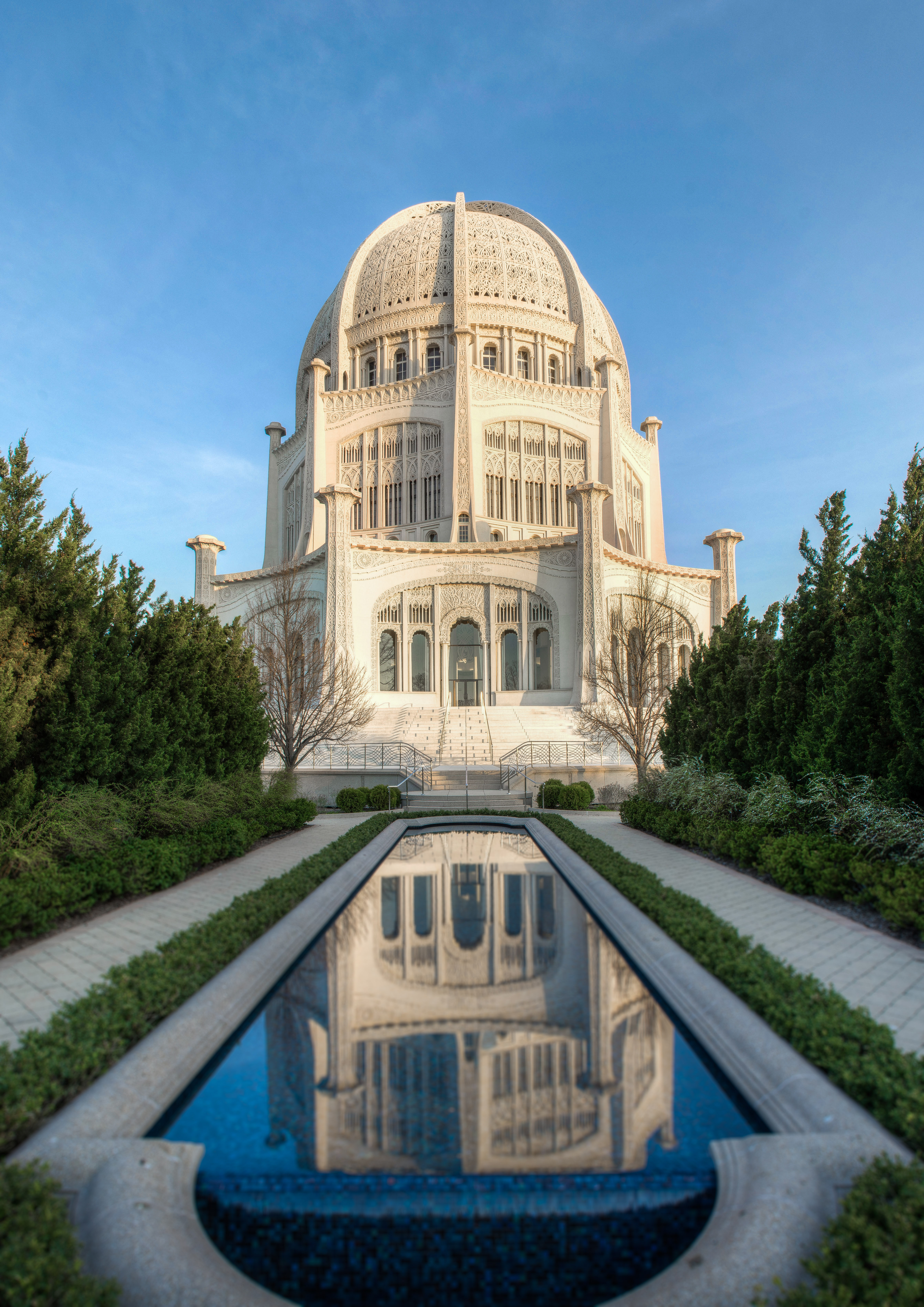
‘Abdu’l-Bahá reached Pittsburgh around noon on May 7, 1912, and stayed at the Hotel Schenley. That evening the friends held a large meeting at the hotel. Suzanne Beatty took the notes of His talk that survive in The Promulgation of Universal Peace. He said He would give a brief exposition of the fundamental principles of Bahá’u’lláh’s teachings, and He numbered six of them in turn.
After recalling how Bahá’u’lláh had removed the enmities among the peoples of Persia, He gave the first principle, the investigation of truth. Truth or reality is not multiple; it is not divisible. If mankind investigates it, all should agree and be united, for the different religions have one truth underlying them.
The second principle was the oneness of the world of humanity: all are servants of God and belong to one family. It was here that He gave a measure of human worth.
The noblest of men is he who serves humankind, and he is nearest the threshold of God who is the least of His servants.
The third principle He named was the oneness of religion and science. Any religious belief which is not conformable with scientific proof and investigation, He said,
is superstition, for true science is reason and reality, and religion is essentially reality and pure reason.
The fourth was the readjustment and equalization of the economic standards of mankind, so that the poor would no longer live in distress while others lived in luxury far beyond their needs. The fifth was the abandoning of religious, racial, patriotic and political prejudices. The sixth was the equality of man and woman: Bahá’u’lláh, He said, has revealed that woman must be given the privilege of equal education with man. Educated women, He added, would be the greatest factor in establishing universal peace, for a mother will refuse to give her sons for sacrifice upon the field of battle.
Beyond these six He spoke of the education of all members of society, and then of peace itself, which diplomacy and patriotism alone could not secure:
Universal peace is an impossibility through human and material agencies; it must be through spiritual power.
Material civilization, He said, advances good and evil together; only when it is joined with divine civilization will the happiness of mankind be assured.
A retelling based on The Promulgation of Universal Peace (talk of 7 May 1912 at the Hotel Schenley, Pittsburgh; notes by Suzanne Beatty), with details of the day from Mahmúd’s Diary. For the fuller account, see the original.
Cite this story
'Abdu'l-Bahá. (1922). *The Promulgation of Universal Peace*. Bahá'í Publishing Trust. https://www.bahai.org/library/authoritative-texts/abdul-baha/promulgation-universal-peace/
Record yourself reading this story
Recording stays on this device only. Nothing is uploaded.
Related stories
At the Theosophical Society in Paris
Since my arrival in Paris, I have been told of the Theosophical Society, and I know that it is composed of honoured and respected men.
This Radiant Century
In the estimation of historians this radiant century is equivalent to one hundred centuries of the past.
Universal Peace
This recent war has proved to the world and the people that war is destruction while Universal Peace is construction; war is death while peace is life; war is rapacity and bloodthirstiness while peace is beneficence and humaneness …
Sarah’s Vision of Peace
Sarah Farmer's vision of Green Acre as a place of peace and learning for all races and religions found its true purpose when she met 'Abdu'l-Bahá in 'Akká in 1900, and He visited Green Acre in 1912.