Peace Is Light, War Is Darkness
'Abdu'l-Bahá, The Promulgation of Universal Peace, (1922), Bahá'í Publishing Trust · Read original
When in Bahá'í history
New York (today: New York, NY, USA)
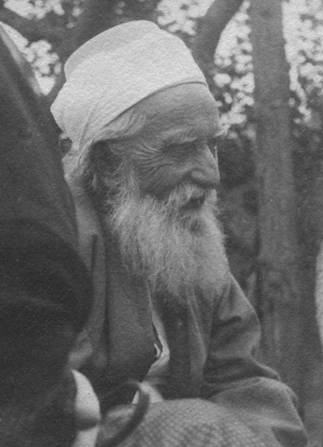
On the evening of 13 May 1912 ‘Abdu’l-Bahá was the guest of the New York Peace Society at a reception in the Hotel Astor. Mírzá Maḥmúd, who was there to record His words, counted some two thousand people in the hall. Mrs. Anna Garland Spencer introduced ‘Abdu’l-Bahá as the Prophet of the East and the Messenger of Peace, and several other speakers welcomed Him. Maḥmúd notes that the Master was tired from His many talks and His voice was hoarse. He also records that ‘Abdu’l-Bahá repeatedly said that although He always called Himself ‘Abdu’l-Bahá, a servant of God, people still spoke of Him as a messenger and a prophet, and that it would be better if they did not give Him such titles.
He told the audience that He had felt indisposed that afternoon, but had come because He attached great importance to their assembly and longed to see their faces. Then He said:
Today there is no greater glory for man than that of service in the cause of the Most Great Peace. Peace is light, whereas war is darkness. Peace is life; war is death.
In former centuries, He said, a war between two nations might cost ten or twenty thousand lives; now the destruction of a hundred thousand in a single day was possible, and a whole nation could be wiped out in a short time. He hoped that, now the science of war had reached such proficiency, the energies of mankind would turn in the coming centuries to peace and brotherhood.
He spoke of the Báb and Bahá’u’lláh, who had devoted Their lives to international peace and love among mankind, and recalled Bahá’u’lláh’s words:
Bahá’u’lláh, addressing all humanity, said that Adam, the parent of mankind, may be likened to the tree of nativity upon which you are the leaves and blossoms.
Bahá’u’lláh, He said, had called prejudice, whether religious, racial, patriotic or political, the destroyer of the body politic. From the prison of ‘Akká He had written to the kings and rulers of the earth, summoning them to international agreement.
He closed with a hope for the new century: that in times to come people would look back and say that "the twentieth century was the century of lights, the twentieth century was the century of life, the twentieth century was the century of international peace."
A retelling based on The Promulgation of Universal Peace ('Abdu'l-Bahá), talk of 13 May 1912 at the reception by the New York Peace Society, Hotel Astor (notes by Esther Foster), with details from Mahmúd's Diary (13 May 1912). For the fuller account, see the originals.
Cite this story
'Abdu'l-Bahá. (1922). *The Promulgation of Universal Peace*. Bahá'í Publishing Trust. https://www.bahai.org/library/authoritative-texts/abdul-baha/promulgation-universal-peace/
Record yourself reading this story
Recording stays on this device only. Nothing is uploaded.
Related stories
The Master Arrives in New York
When the Cedric reached New York on 11 April 1912, reporters came aboard to ask 'Abdu'l-Bahá why He had come. He told them His object was universal peace and the unity of humankind.
Farewell Aboard the Celtic
On December 5, 1912, Mahmúd's Diary records, a great crowd of believers from New York and other cities filled the lounge of the SS *Celtic* to bid 'Abdu'l-Bahá farewell. In His parting address He summed up the teaching of His American journey: the whole earth is one globe, and all nations one family.
The Peace Society Meeting at the Hotel Astor
On 13 May 1912, ill with a high fever, ‘Abdu’l-Bahá still went to speak at the New York Peace Society’s meeting at the Hotel Astor, telling Juliet Thompson that He worked by the confirmations of the Holy Spirit.
Shall Man Fight for the Tomb?
Near the end of a long address at Stanford University in 1912, ‘Abdu’l-Bahá asked why anyone would fight and kill over the earth, which is in the end only our grave.