A Bond Between Persia and America
'Abdu'l-Bahá, The Promulgation of Universal Peace, (1922), Bahá'í Publishing Trust · Read original
When in Bahá'í history
Washington, D.C. (today: Washington, D.C., USA)
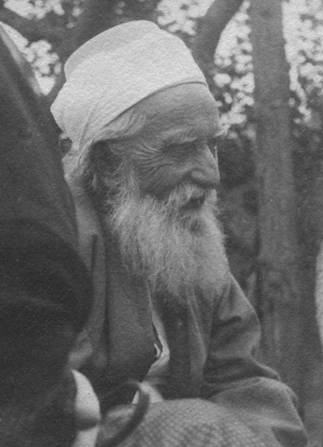
On April 20, 1912, ‘Abdu’l-Bahá addressed the Orient-Occident-Unity Conference at the Public Library Hall in Washington, D.C. Joseph H. Hannen took the notes that survive in The Promulgation of Universal Peace. One of the objects of the conference was to establish a bond between Persia and America, and the Master began there. He was, He said, an Oriental who had come to meet the people of the Occident, and He hoped that the material civilization of America might find a home in Persia, and the spiritual civilization of Persia a response in America.
He then turned to cooperation as the natural foundation of human life. A tree, or some animals, may live alone, He said, but this is impossible for man.
In his life and being cooperation and association are essential. Through association and meeting we find happiness and development, individual and collective.
When there is intercourse between two villages, He said, each advances; when two cities communicate, both progress; and when two countries reach a reciprocal basis of agreement, their interests find great development.
Above all this, He said, a great love would bind these two remote peoples, for Bahá’u’lláh had proclaimed the oneness of humanity. Addressing all mankind, He had said:
Ye are all leaves of one tree and the drops of one sea.
The world of humanity, He said, has been expressed by Bahá’u’lláh as a unit, as one family.
The Master then spoke of how He came to be free to travel. He had been, He said, in the prison of Sulṭán ‘Abdu’l-Ḥamíd until the Committee of Union and Progress raised the standard of liberty in Turkey and His fetters were removed. Were it not for that Committee, He told them, He would not be with them that night, and He asked His hearers to pray for assistance and confirmation on its behalf.
Near the end He spoke of the nation He was visiting.
May this American democracy be the first nation to establish the foundation of international agreement. May it be the first nation to proclaim the universality of mankind.
He closed by promising to supplicate God for assistance and confirmation on their behalf.
A retelling based on The Promulgation of Universal Peace (talk of 20 April 1912 at the Orient-Occident-Unity Conference, Public Library Hall, Washington, D.C.). For the fuller account, see the original.
Cite this story
'Abdu'l-Bahá. (1922). *The Promulgation of Universal Peace*. Bahá'í Publishing Trust. https://www.bahai.org/library/authoritative-texts/abdul-baha/promulgation-universal-peace/
Record yourself reading this story
Recording stays on this device only. Nothing is uploaded.
Related stories
O Ye Who Are the Chosen Ones of the Abhá Kingdom!
O ye who are the chosen ones of the Abhá Kingdom!
Every Era Hath a Spirit
O thou beloved maidservant of God! Thy letter was received and its contents revealed the fact that the friends, in perfect energy and vitality are engaged in the propagation of the heavenly teachings.
O Thou Lover of Humanity!
O thou lover of humanity! Thy letter was received and its contents imparted spiritual significances.
The Standard of the Most Great Peace
O ye beloved ones of Abdul-Baha! This servant longeth to write a special Tablet to each one of the friends of God—but what can be done!