The Prophets as the First Educators
'Abdu'l-Bahá, The Promulgation of Universal Peace, (1922), Bahá'í Publishing Trust · Read original
When in Bahá'í history
Chicago (today: Chicago, Illinois, USA)
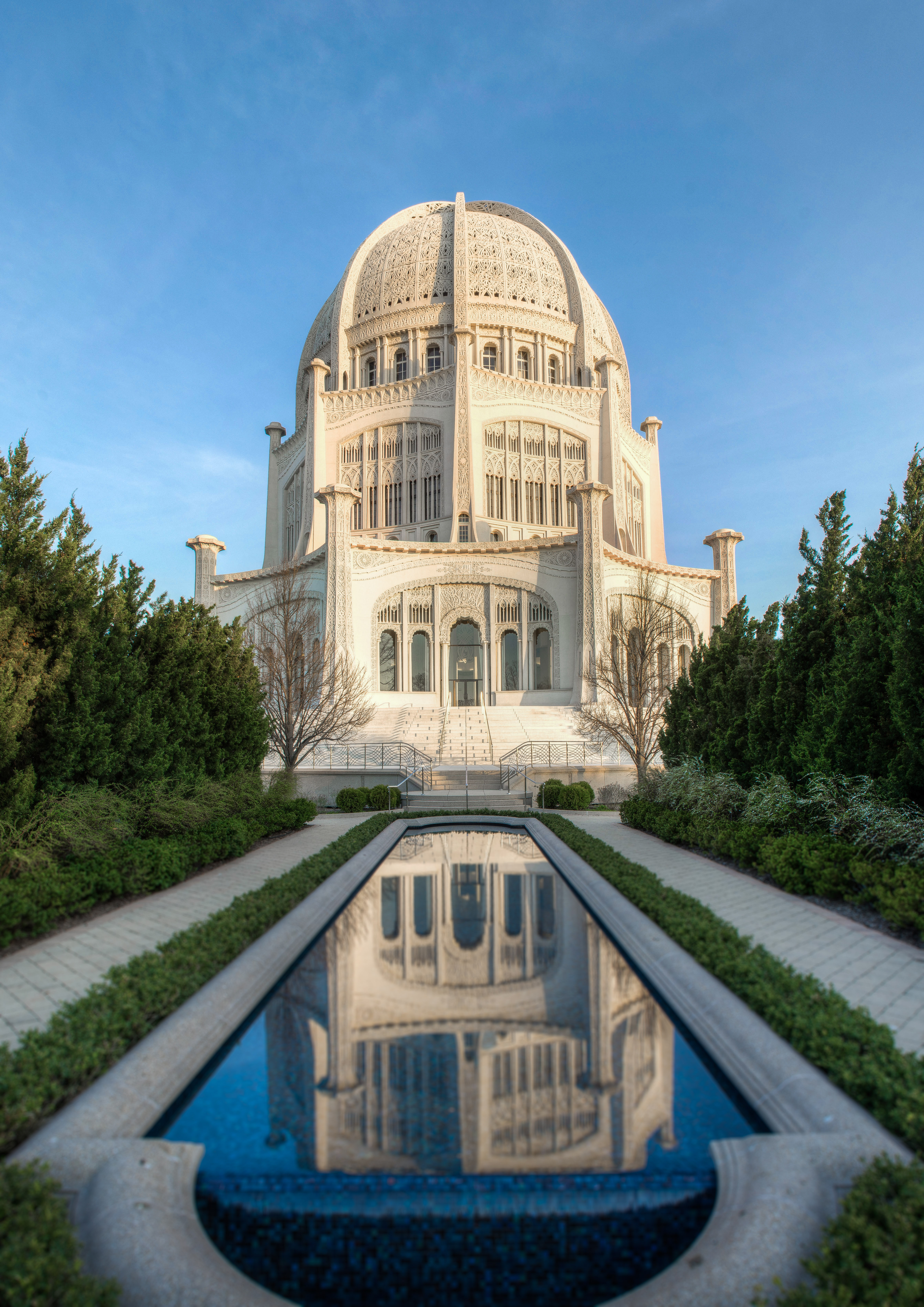
On 3 May 1912 ‘Abdu’l-Bahá spoke on education at the Hotel Plaza in Chicago. Marzieh Moss took the notes that survive in The Promulgation of Universal Peace.
He began with the view of the philosophers that the differences between the highest and lowest of humankind are due to education, and that education makes the ignorant wise and the tyrant just. Then He said:
The Prophets of God are the first Educators. They bestow universal education upon man and cause him to rise from the lowest levels of savagery to the highest pinnacles of spiritual development.
The philosophers, He went on, are educators too, but at most they have educated themselves and a limited number around them. "They have been incapable of universal education." They have not raised any nation from savagery to civilization.
He added that individuals differ in natural capacity. Ten children of the same age, taught in the same school and given the same food, will show "separate and distinct degrees of capability and advancement." Yet, although capacities are not the same, every member of the human race is capable of education.
Christ, He said, was an Educator of humanity who taught by the power of the Holy Spirit. As a witness to what His teaching achieved, He cited Galen, the Greek physician of the second century, who was not a Christian. Galen had written that the followers of Jesus the Nazarene were "truly imbued with moral principles which are the envy of philosophers," and that day and night they strove "that they may contribute to the welfare of humanity."
The forms and imitations that crept in later, He said, were clouds that obscured the Sun of Reality.
The forms and superstitions which appeared and obscured the light did not affect the reality of Christ.
Christ had said, "Put up thy sword into the sheath," yet wars were later fought in His name, and scholars and scientists were persecuted: "he who proclaimed the revolution of the earth was imprisoned." There was need, He said, of turning back to the original foundation. Bahá’u’lláh had renewed the essence of the teachings of all the Prophets, and ‘Abdu’l-Bahá commended His Hidden Words to His hearers:
The preface announces that it contains the essences of the words of the Prophets of the past, clothed in the garment of brevity, for the teaching and spiritual guidance of the people of the world. Read it that you may understand the true foundations of religion and reflect upon the inspiration of the Messengers of God. It is light upon light.
A retelling based on The Promulgation of Universal Peace ('Abdu'l-Bahá), talk of 3 May 1912 at the Hotel Plaza, Chicago (notes by Marzieh Moss). For the fuller account, see the original.
Cite this story
'Abdu'l-Bahá. (1922). *The Promulgation of Universal Peace*. Bahá'í Publishing Trust. https://www.bahai.org/library/authoritative-texts/abdul-baha/promulgation-universal-peace/
Record yourself reading this story
Recording stays on this device only. Nothing is uploaded.
Related stories
The Stainless Mirror
Praise be to Him through Whose splendours the earth and the heavens are aglow, through Whose fragrant breathings the gardens of holiness that adorn the hearts of the chosen are trembling for joy, to Him Who hath shed His light and brightened the face of the firmament.
The Prophets as Gardeners
Speaking at the Maxwell home in Montreal on September 2, 1912, 'Abdu'l-Bahá compared human nature left untrained to land overgrown with thorns, and the Prophets of God to Gardeners who turn the wild field into an orchard.
Why Humanity Needs an Educator
In *Some Answered Questions*, 'Abdu'l-Bahá argues that the mineral, vegetable, animal and human worlds all need an educator, and that humanity needs a Universal Educator, at once its material, human and spiritual educator, whose power is divine.
The Need of an Educator
When we consider existence, we see that the mineral, vegetable, animal and human worlds are all in need of an educator.