The Prophets as Gardeners
'Abdu'l-Bahá, The Promulgation of Universal Peace, (1922), Bahá'í Publishing Trust · Read original
When in Bahá'í history
Montreal (today: Montreal, Canada)
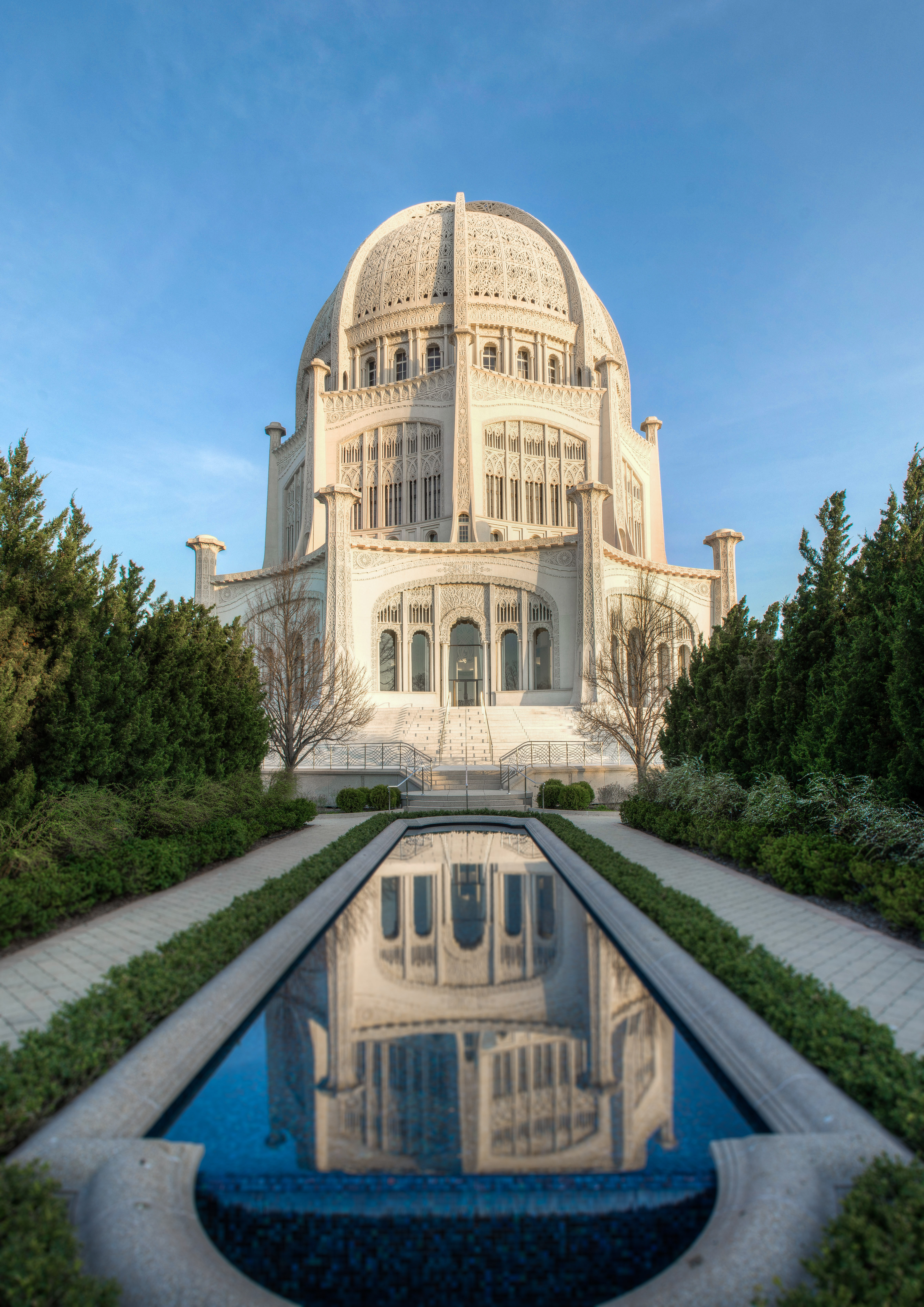
‘Abdu’l-Bahá arrived at the home of William Sutherland Maxwell and May Maxwell at 716 Pine Avenue West in Montreal on the evening of August 30, 1912, and on September 2 He spoke there to the friends. The talk, from stenographic notes, is in The Promulgation of Universal Peace. He began with nature.
Nature is the material world. When we look upon it, we see that it is dark and imperfect.
A piece of land left in its natural condition, He said, is covered with thorns and thistles and becomes like a jungle. The forests in their primal state are dim and impenetrable; it is man who clears them and plants fruitful trees, until the wild woodland becomes an orchard and a garden.
The same, He went on, is true of the human being.
If man himself is left in his natural state, he will become lower than the animal and continue to grow more ignorant and imperfect.
Left without education and training, He said, man can become more depraved than the animal; it is education that lifts him out of ignorance into knowledge and out of savagery into kindness.
He pointed to the fruits of education around them. The telegraph, the phonograph and the telephone lay latent in nature, but would never have come forth had not man, through education, discovered the laws that govern them. The difference between the ignorant man and the philosopher, He said, is that the first has not been lifted out of his natural condition, while the second has been trained and educated.
God, He said, has sent forth the Prophets to quicken the soul of man.
The mission of the Prophets of God has been to train the souls of humanity and free them from the thralldom of natural instincts and physical tendencies.
The Prophets, He said, are like Gardeners, and the world of humanity is the field of Their cultivation. They straighten the crooked branches, make the fruitless trees fruitful, and gradually transform the wild, uncultivated field into a beautiful orchard.
He then pointed to the city where He was speaking. Montreal itself, in its early history, had been wild, rocky, uncultivated land, with vast forests stretching in every direction. What had caused a great city to spring up there? Not nature, He said, but the human mind.
Toward the close He said where the glory of man lies.
The glory of man is in the knowledge of God, spiritual susceptibilities, attainment to transcendent powers and the bounties of the Holy Spirit.
The Maxwell house was later designated a Bahá’í shrine.
A retelling based on The Promulgation of Universal Peace (talk of 2 September 1912 at the home of Mr. and Mrs. William Sutherland Maxwell, Montreal). For the fuller account, see the original.
Cite this story
'Abdu'l-Bahá. (1922). *The Promulgation of Universal Peace*. Bahá'í Publishing Trust. https://www.bahai.org/library/authoritative-texts/abdul-baha/promulgation-universal-peace/
Record yourself reading this story
Recording stays on this device only. Nothing is uploaded.
Related stories
May Maxwell and the Montreal Community
Before travelling to the West of America, ‘Abdu’l-Bahá wished first to visit Montreal, where May Maxwell, founder of the first Bahá’í community in France, had established the first permanent Bahá’í community in Canada.
A Guest Room Fit for the Master
Sutherland Maxwell, not yet a Bahá’í, planned to lodge ‘Abdu’l-Bahá in a Montreal hotel. The day before He arrived, he bought new furniture for the largest bedroom, and he met the Master at the train and begged Him to stay in his home.
May Maxwell’s Choice
In 'Akká 'Abdu'l-Bahá asked May Maxwell whether she would like a child, and she answered that she chose whatever God chose. In 1910 her daughter Mary was born, and the Master urged her to raise the child as a real Bahá'í.
Why Humanity Needs an Educator
In *Some Answered Questions*, 'Abdu'l-Bahá argues that the mineral, vegetable, animal and human worlds all need an educator, and that humanity needs a Universal Educator, at once its material, human and spiritual educator, whose power is divine.