Economic Justice in Montreal
Star of the West Editors, Star of the West, (1922), Bahai News Service · Read original
When in Bahá'í history
Montreal (today: Montreal, Canada)
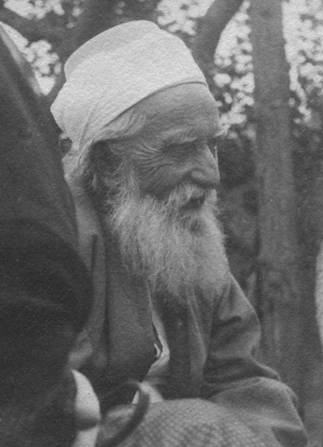
'Abdu'l-Bahá reached Montreal on the evening of August 30, 1912. It was His only visit to Canada. Mahmúd's diary records that on the evening of September 3 He spoke to a meeting of the Socialist Club. The chairman, who was speaking when He arrived, stepped forward, took His hand and led Him to the podium, and the president introduced Him with the words, "Now, 'Abdu'l-Bahá will teach us the principles of brotherhood, prosperity and the upliftment of the poor." Mahmúd describes the address as being on economics and the adjustment of society according to the principle of moderation. The audience broke into applause during it, and after it every answer to their questions brought more applause. The meeting ran so late that the audience itself began to worry that continuing might harm His health.
The text of an address on economics that 'Abdu'l-Bahá gave in Montreal in 1912 was published ten years later in Star of the West under the title "Economic Happiness for the Human Race." It begins with cooperation. A tree or a bird may live alone, but a man living alone in the wilderness will starve. The reason, He said, is that "mankind has been created from one single origin, has branched off from one family. Thus in reality all mankind represents one family."
He compared this family to a body:
If one member of the members be in distress or be afflicted with some disease all the other members must necessarily suffer. For example, a member of the human organism is the eye. If the eye should be affected that affliction would affect the whole nervous system.
Yet in the human family some members were comfortable and others in the direst misery, some clothed in costly garments while others lacked food and shelter. The reason, He said, was that the household lacked a law that would ensure the well-being of all, and Bahá'u'lláh had given teachings on this question.
The solution begins with the farmer. In every village there should be a general storehouse with five sources of revenue: a graduated tithe on surplus income, a revenue from animals, a share of the minerals, the estates of those who die without heirs, and any treasure found in the land. A farmer whose income only equals his expenses pays nothing; the larger the surplus, the larger the share. A farmer whose expenses exceed his income receives what he needs from the storehouse, and the orphans, the crippled, the poor, the blind, the old and the deaf are provided for. "In the village no one will remain in need or in want." Trustees elected by the villagers manage it, and any surplus goes to the national treasury.
Degrees would remain, He said, as in an army there are generals and soldiers, but all must enjoy comfort and welfare.
God is kind to all. The good pleasure of God consists in the welfare of all the individual members of mankind.
A retelling based on 'Abdu'l-Bahá's address on economics given in Montreal in 1912, published as "Economic Happiness for the Human Race" in Star of the West, vol. 13, no. 9 (December 1922), with details from Mahmúd's Diary. For the fuller account, see the originals.
Cite this story
Editors, S. O. T. W.. (1922). *Star of the West*. Bahai News Service. https://bahai.works/Star_of_the_West/Volume_13/Issue_9
Record yourself reading this story
Recording stays on this device only. Nothing is uploaded.
Related stories
Vaḥíd Kashfí, Nephew of Vaḥíd
A nephew of Vahid Darabi found certitude after long years of study, visited ‘Abdu’l-Bahá in ‘Akká, taught the Faith in America and Persia, and served the Cause until his passing in 1959.
Public Finance
‘Abdu’l-Bahá suggests that each town and village or district should be entrusted as far as possible with the administration of fiscal matters within its own area and should contribute its due proportion for the expenses of the general government.
Except the House of God
'Abdu'l-Bahá sent Sulaymán Khán to Qum with a letter promising the banished Prime Minister, Amínu's-Sultán, his return to power. The promise came true, but the Minister later failed to protect the believers of Yazd.
Blessed Are the Poor
On 19 April 1912 'Abdu'l-Bahá spoke to three hundred homeless men at the Bowery Mission in New York, then stood at the end of the aisle and pressed coins into the hand of each man as he filed past.