The Days Are Many, the Sun Is One: At the Church of the Divine Paternity
'Abdu'l-Bahá, The Promulgation of Universal Peace, (1922), Bahá'í Publishing Trust · Read original
When in Bahá'í history
New York (today: New York, NY, USA)
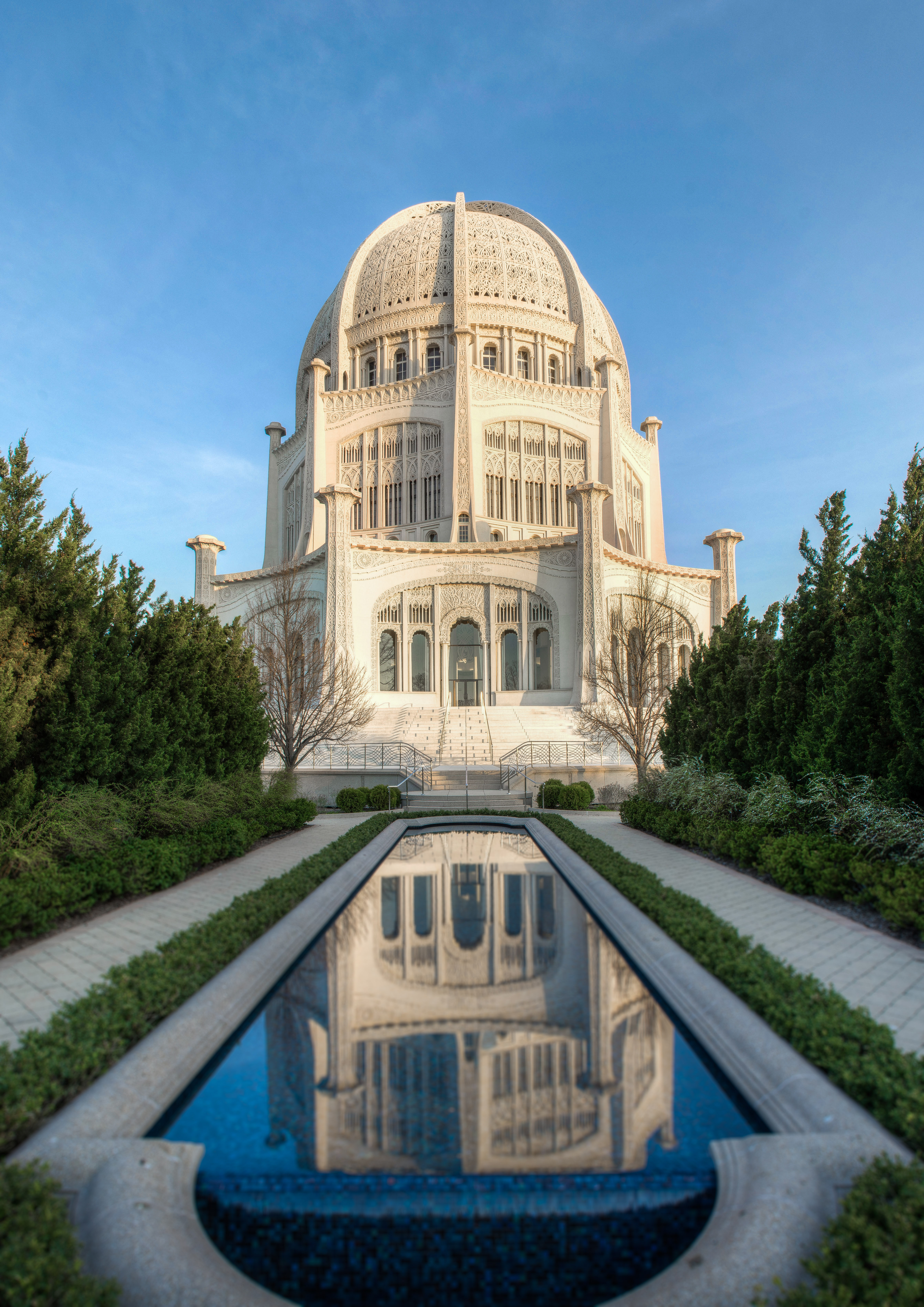
On the evening of May 19, 1912, ‘Abdu’l-Bahá addressed a Universalist congregation at the Church of the Divine Paternity on Central Park West, New York. Esther Foster took the notes preserved in The Promulgation of Universal Peace. The setting was apt: a church whose theology already reached toward the universal.
The Master began with the image that would stay with the audience:
Religions are many, but the reality of religion is one. The days are many, but the sun is one.
Reality, He said, does not admit of multiplicity. There is only one truth; there are only innumerable approaches to it. The various holy Manifestations who have come — Krishna, Moses, Christ, Muḥammad, the Báb, Bahá’u’lláh — are as the sun, which shines forth from different dawning points. The dawn changes with the season; the sun does not.
From this He drew two consequences that the Universalists in the hall would have heard with relief and shock at once. The first concerned reason:
If religion does not agree with science, it is superstition and ignorance; for God has endowed man with reason.
A faith that requires the believer to deny what reason can see is not a faith — it is a habit. Religion, properly understood, never comes into final conflict with science, because both are investigations of the same single reality.
The second consequence concerned hatred:
If [religion] become the cause of hatred and strife, its absence is preferable.
This was a hard sentence for a religious congregation. The Master did not soften it. The purpose of religion is unity. Where it produces division, it has been corrupted into its own opposite — and where it has been corrupted into its own opposite, it would be better that it not exist at all than that it continue in that form.
He closed by recounting how, in Persia under Bahá’u’lláh, Christian and Muslim, Jew and Zoroastrian had been brought into a single fellowship where the old hostilities had simply ceased to operate. Such a unity was possible, He told the New York audience, because the foundation that produced it was real. The same recognition was asked of the West.
Source: 'Abdu'l-Bahá, The Promulgation of Universal Peace, talk of May 19, 1912 at the Church of the Divine Paternity, New York. Notes by Esther Foster. Public domain text from the Bahá'í Reference Library.
Cite this story
'Abdu'l-Bahá. (1922). *The Promulgation of Universal Peace*. Bahá'í Publishing Trust. https://www.bahai.org/library/authoritative-texts/abdul-baha/promulgation-universal-peace/
Record yourself reading this story
Recording stays on this device only. Nothing is uploaded.
Related stories
A Question for Two Thousand Friends
Standing before a huge crowd in a great synagogue, 'Abdu'l-Bahá asked one gentle, brave question that no one there had expected to hear.
Why Not Praise Christ and Muḥammad: 'Abdu'l-Bahá at Temple Emanu-El
On October 12, 1912, 'Abdu'l-Bahá addressed an audience of approximately 2,000 at Temple Emanu-El in San Francisco — the largest synagogue on the Pacific coast — and asked the gathered Jews, with all the courtesy of a guest and all the firmness of a prophet's son, why they had not yet honoured Christ and Muḥammad as the heirs of Moses.
The Doctor Who Read His Way to Certainty: John Esslemont
An Aberdeen physician in failing health, trained to weigh evidence and trust nothing he could not examine, found a small pamphlet about the Bahá'í Faith in a sanatorium. He did not simply believe it. He studied for years, learned Persian late in life to read the Writings in the original, and wrote the careful introduction by which the English-speaking world would come to know the Cause.
True Shepherds Gather, They Do Not Scatter: Fanwood, 1912
At the Town Hall in Fanwood, New Jersey on May 31, 1912, 'Abdu'l-Bahá named the chaos of the modern world as a chaos produced by religion itself — by the partisanship of sects clinging to inheritance rather than searching for truth. The true Manifestations, He said, are shepherds; their work is to gather, never to scatter.